
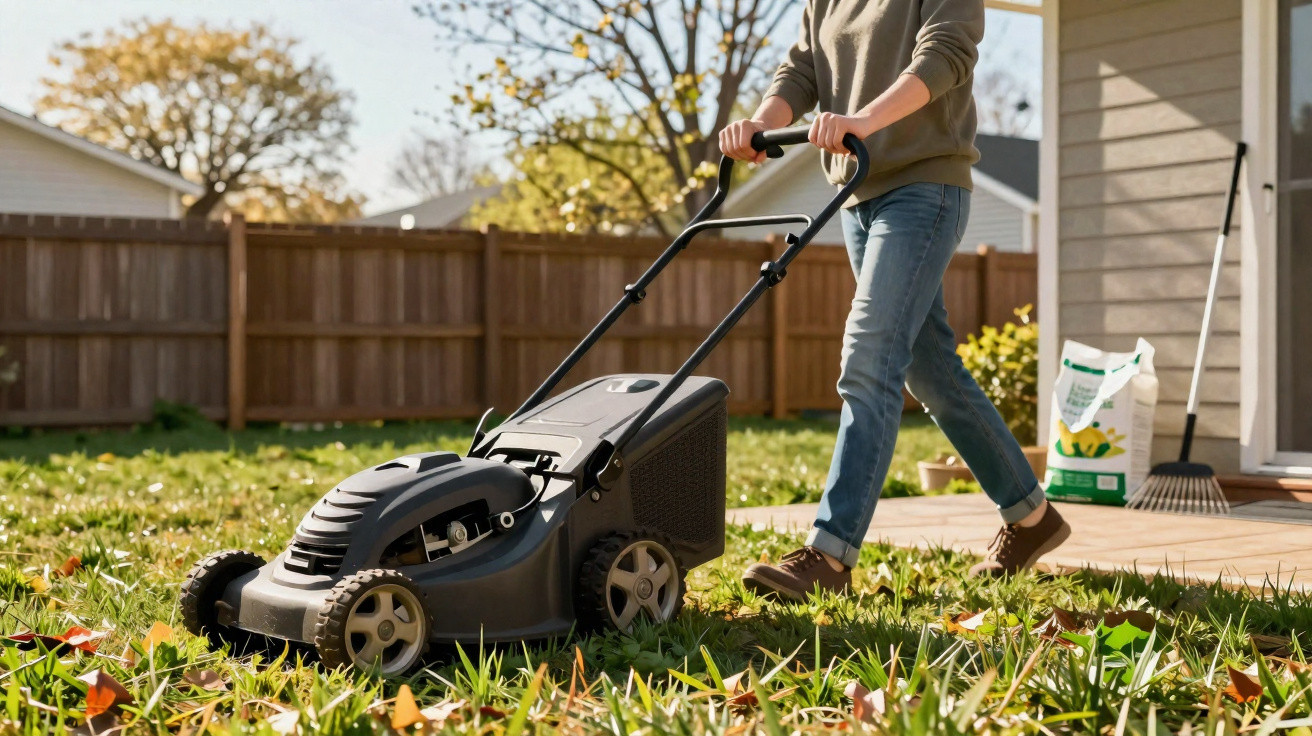
If you find yourself wondering each year why your neighbour’s lawn stays richly green even during the hottest summer weeks, the answer is rarely an expensive specialist fertiliser. The real difference usually starts much earlier in the year - in March, when most amateur gardeners are still hesitating. One small job, done at the right time and in the right way, lays the foundation for a thick, resilient carpet of grass.
Why a gentle first cut in March changes everything
After winter, the sward is often matted and untidy: dead blades, flattened grass, brown tips, with bits of fallen leaves caught in between. The lawn looks dull and patchy. This is exactly where the first spring mow helps - but it needs to be cautious rather than drastic.
"A very high, gentle spring mow acts like a wake-up call for the lawn: it removes winter debris and kick-starts new growth."
When you only trim the very top of the blades, several things happen:
- The base of each blade gets more light.
- The plant responds with fresh shoots and stronger branching.
- The sward thickens and closes gaps in the soil.
- The ground is better protected from drying out and from weeds.
Over time, this builds the much-admired “carpet effect”. In a dense lawn, unwanted plants struggle to establish because they lack both light and space. At the same time, the soil stays moist for longer, as the grass cover works like natural sun protection.
The biggest trap: cutting too low
After winter, many people want to “start from scratch” and set the mower far too low. The payback often arrives just a few weeks later.
If you mow too short, the soil is left exposed. That is when three issues combine:
- The sun dries the ground out more quickly.
- Weed seeds get light and take off.
- The sensitive growth zone of the grass - the crown - is left uncovered and becomes vulnerable to frost.
A late cold snap can then turn whole sections grey or even make them look “scorched”. Instead of a lush green lawn, you end up with uneven, dull patches that are difficult to bring back.
When the right moment in March has arrived
The key question is not “Which date?”, but “How far along is the lawn, really?” Calendar dates are only a rough guide. Weather and soil condition are what matter.
Garden experts point to several clear signs that your lawn is ready for its first cut:
- After you step on it, the blades spring back up.
- The area is mostly a clear green, with hardly any winter-grey left.
- The soil is dry enough - not muddy and not frozen.
- Daytime temperatures are regularly above about 10 °C.
- The grass height is around 11 to 12 centimetres.
In milder parts of the country, this point is often reached in late March. In colder areas or at higher elevations, it may shift into April. If you follow the lawn’s condition rather than a fixed date, you protect the sward and avoid stressing the plants.
How to set your lawnmower correctly for the first cut
Before you run the mower over the lawn, a quick equipment check is worthwhile:
- Sharpen the blade: Dull blades tear the grass, while sharp ones cut cleanly. A clean cut yellows less and is less prone to fungal disease.
- Clean the underside: Old grass and dirt under the mower disrupt airflow and worsen the finish.
- Set the cutting height to maximum: For the first pass, use the highest or second-highest setting.
"For the spring cut, a simple rule of thumb applies: never remove more than one third of the blade length."
If the lawn is 11 to 12 centimetres tall, aim for a cutting height of roughly 7 to 8 centimetres. That can feel “too high” at first, but it pays off throughout the season: the grass stays stronger, and the lawn copes better with drought stress and foot traffic.
How to mow properly on the day
On the day of the first mow, one calm, single pass is enough. Rushing tends to do more harm than good:
- Only mow when the grass is dry - wet grass clogs the blade and housing, leaving a ragged cut.
- Walk at a moderate pace so the blade can catch each blade cleanly.
- On slopes, mow across the slope rather than up and down to avoid damaging the sward.
At this higher cutting height, the clippings can be left on the lawn as long as they are spread thinly. They break down quickly and return nutrients to the soil - a natural, fine mulch. Only if thick piles form should you rake them out or remove them, so the grass underneath does not suffocate.
What is ideal after the first cut
If you want to get a little more out of your lawn, the period after the spring cut is a good time for two gentle add-ons:
Light raking or using a spring-tine rake
A careful pass with a spring-tine rake loosens surface debris and moss. More air reaches the soil, and the roots respond with fresh growth. The key is not to dig in - just skim the surface.
Targeted fertilising
After mowing, the grass moves into a growth phase. A moderate spring feed with an emphasis on nitrogen supports this. Follow the dose on the packet - overfeeding quickly creates soft growth that is more prone to disease.
Why this one step shapes your summer lawn
A few weeks after the first cut, it becomes obvious whether March was used well. A lawn that was gently prompted early behaves noticeably differently:
- It closes gaps faster.
- It yellows later during hot spells.
- It recovers more quickly after wear.
- It offers less opportunity for weeds and moss.
If you skip the first cut - or cut far too low - you begin the season with a weakened sward. Fixing problems later costs time, patience, and often money.
Practical examples for different garden types
In a heavily used family garden with children playing and a paddling pool, it is especially worthwhile to focus on gentle lawn care in March. A dense sward acts like a natural protective layer, coping better with footprints and dry periods.
If you maintain an ornamental garden and want the most even look possible, you can gradually reduce the cutting height after the first high cut, lowering it step by step every one to two weeks. This helps the lawn adjust to the desired final height without showing stress damage.
Risks if you ignore the timing
If you mow while the soil is still very wet, you risk deep wheel ruts and tearing the sward. Those spots often remain trouble areas for the whole season. The same applies to mowing too early in cold weather: the plants lose leaf mass, but low temperatures prevent meaningful regrowth.
The opposite extreme is also unhelpful: if you delay the first mow well into April or May, you can suddenly be facing grass up to knee height. Then you must shorten it in several passes; otherwise the blades flop over, begin to rot, or smother the lawn underneath.
How to combine the March trick with other care steps
A gentle March first cut fits well into a longer-term lawn plan. If you overseeded in autumn, for example, you benefit in particular: young grasses are not brutally scalped, but eased into the normal mowing routine.
In gardens where moss is a frequent problem, the high first cut can be paired with targeted moss treatment in spring. The denser sward that develops from this start later deprives moss of the conditions it needs. With just a few coordinated actions, you can build a stable, hard-wearing lawn that looks noticeably fresher all summer than areas where nothing happens in March.



Comments
No comments yet. Be the first to comment!
Leave a Comment