
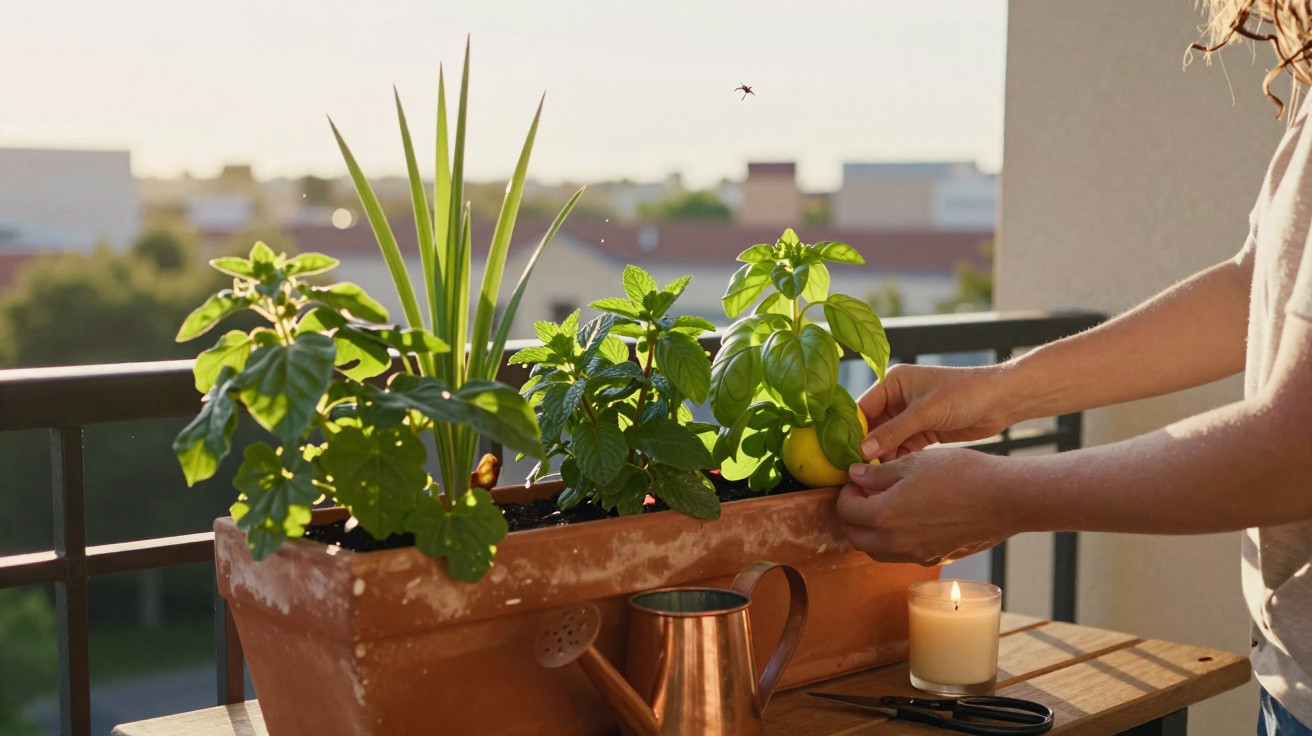
Anyone with a balcony knows the mood-killer all too well.
Rather than fogging yourself with sprays or lighting pungent mosquito coils, you can protect your outdoor seating area with herbs. Certain plants create an invisible scented barrier that confuses mosquitoes - while also turning your balcony into a small fragrance haven.
How herbs outsmart mosquitoes
Mosquitoes do not land on us by chance. They navigate using two main cues: the carbon dioxide in our breath and the familiar scent of human skin. This is exactly where aromatic plants come into play.
They release essential oils into the air. These fragrances mask or “blur” the signals that normally draw mosquitoes in, making people harder for the insects to pinpoint.
“Researchers have been able to show: correctly positioned fragrant plants reduce the number of mosquitoes in their immediate area by up to 45 per cent.”
The effect does not come from a single “miracle plant”, but from a blend of different essential oils that irritate mosquitoes’ sensory organs. To us it smells pleasant; to biting insects it is a kind of interference haze.
Scented geraniums: the quietly brilliant classic for the window ledge
When people think of “window boxes against mosquitoes”, geraniums often come to mind. The catch is that standard balcony geraniums with red flowers do very little when it comes to mosquito protection.
What matters is a particular fragrant variety: the so-called rose geranium (Pelargonium graveolens), often sold as a scented geranium. It produces attractive flowers too, but its real strength sits in the leaves.
If you gently rub them - or even just brush past - a strong aroma rises: a blend of rose and citrus notes. That specific scent profile helps deter mosquitoes.
“Scented geraniums placed by windows and doors act like an invisible curtain - especially if you briefly knead the leaves between your fingers in the evening.”
If space is tight, a single pot on the window ledge works well. With more room on the balcony, longer planters allow several plants to sit side by side. The more continuous the “scent band”, the better the result.
Lemongrass: a tropical tool with an immediate effect
Many people know lemongrass from Asian cooking, but the fragrance behind it also troubles mosquitoes. The plant contains high levels of lemon-scented compounds that affect insects’ nervous systems.
In shops, “lemongrass” and other “lemon-scented plants” are not always labelled clearly. What matters is that the leaves smell distinctly of lemon when crushed - that is usually a sign of a high proportion of effective oils.
- Position: warm, sunny, sheltered from wind
- Container: a fairly large pot, as the plant forms plenty of roots
- Benefits: a scented barrier against mosquitoes, plus a fresh aroma for teas and Asian dishes
Paired with scented geraniums, it creates a strong first line of defence along balcony railings or right beside the seating table.
Cooking meets mosquito protection: lemon basil and peppermint
Lemon basil – a protective plant with a gourmet bonus
Lemon basil is a small summer all-rounder. It looks more understated than classic pesto basil, but its citrus scent is noticeably stronger.
That aroma makes it unpleasant for mosquitoes, while giving us interesting flavours at the same time:
- a fresh lift in fruit salads
- flavour for fish dishes and marinades
- ideal for chilled summer teas or lemonades
Several pots around the dining table strengthen the protection. When guests are over, you can pluck a few leaves straight from the pot into a drink - practical and decorative.
Peppermint – powerful scent, powerful roots
Peppermint is among the toughest herbs you can grow on a balcony. Its high menthol content produces that familiar cool mint scent - and for many mosquitoes it is simply too much.
“A vigorous peppermint in a pot gives you two effects at once: a scent wall against mosquitoes and fresh leaves for a mojito, tea or infused water.”
The downside is that peppermint spreads fast. If you put it in a planter, you will quickly find it pushing out other plants. So a good balcony rule of thumb is: keep mint in its own pot and move it between other plants as needed.
The perfect balcony planter: how to combine the plants
You get the strongest effect when several of these species are grouped closely together. Their aromas overlap to form a broad “carpet of scent”.
A possible set-up for a standard balcony planter could look like this:
- at both ends: one scented geranium each as a focal point and “scent pillar”
- in the middle: a clump of lemongrass, or a smaller lemon-scented plant for height
- along the edge and in between: several bunches of lemon basil
- in front or behind: a pot of peppermint, in its own container, incorporated into the arrangement
This creates a balanced look with varied heights and leaf shapes: upright stalks, bushy herbs, and decorative geranium foliage. At the same time, the scent spreads at different levels - from near the floor up to nose height.
Where the pots should actually go
Fragrant plants do not protect an entire garden; they work best at close range. Studies indicate the strongest effect is within a radius of around two metres of the plants.
That is why it pays to think strategically:
- frame the balcony table and chairs with pots
- stock window ledges - especially in the bedroom - with scented geraniums
- hang pots above seating areas
- place larger containers with lemongrass or mint at floor level
“The more height levels the plants occupy, the denser the scent shield mosquitoes have to pass through.”
A small trick for last-minute evenings outside: before you sit down, run your hand over the leaves once. That prompts the plants to release a lot of fragrance in a short time.
Spring care: keeping your herbs as reliable allies
For a strong scent, the plants need light. Around five hours of sunshine a day is a useful guide. They will grow in bright shade, but they develop noticeably less aroma.
When it comes to watering, moderate and considered beats constantly damp soil. Letting the compost dry slightly between waterings encourages many herbs to produce more essential oils. The one exception is basil, which is more sensitive to dryness and prefers a bit more regular watering.
If you plant in spring, the herbs have time to establish a stable root system. By the peak mosquito season in high summer, they are robust enough to release plenty of fragrance.
Added value for your balcony and everyday life
This “anti-mosquito planting” changes the whole feel of the space. Your balcony becomes not just a functional refuge, but somewhere you actually want to cook, read, work or host friends. Instead of chemical odours, the air carries citrus, rose and mint notes.
Other creatures benefit too: bees and other pollinators visit many of these herbs when they flower. That supports biodiversity without you having to give up your own protection.
If you fancy taking it a step further, combine the mosquito-protection plants with classic kitchen herbs such as thyme or rosemary. They contribute less to mosquito control, but they round out the range of aromas - and conveniently provide even more fresh ingredients for summer cooking.
With a little planning, a few pots and the right placement, a balcony can become a place where mosquitoes have very little chance - and where evenings outdoors feel relaxed again, without constant swatting and itching the next morning.





Comments
No comments yet. Be the first to comment!
Leave a Comment