
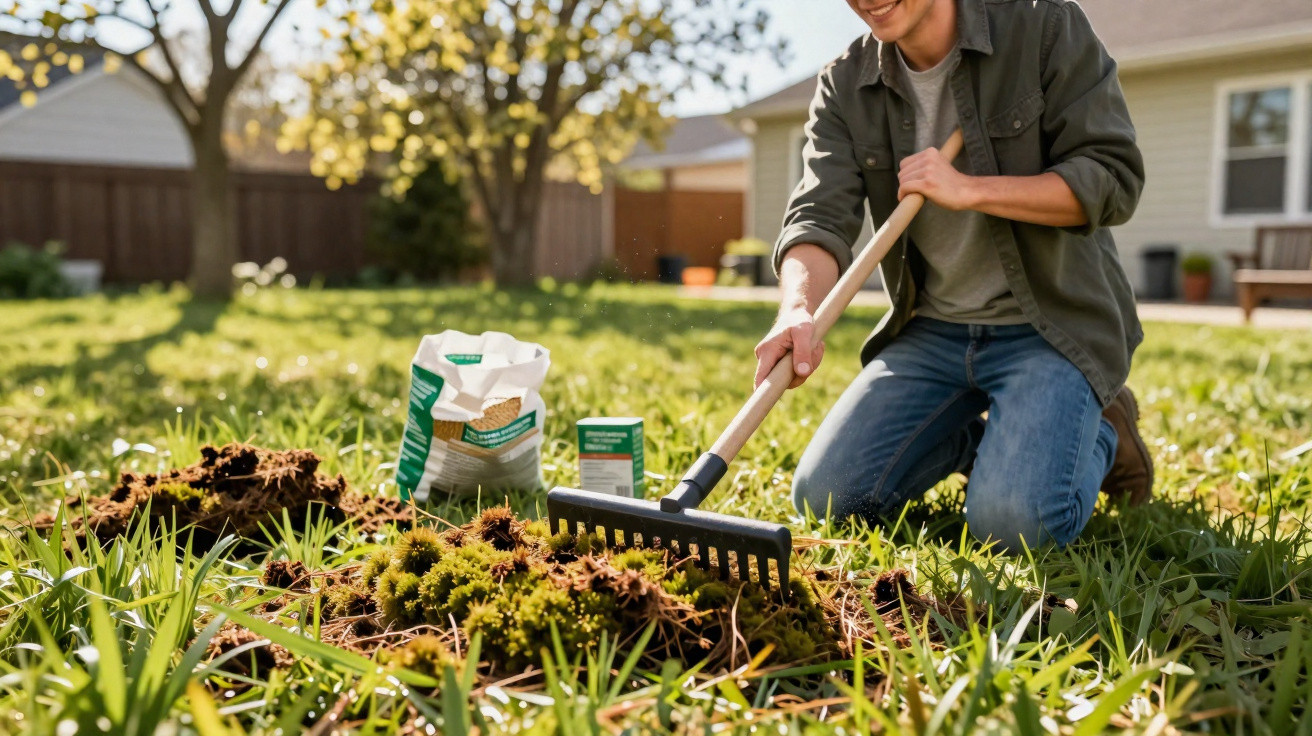
With two straightforward tools, you can turn things around surprisingly quickly.
When moss starts to take over, plenty of amateur gardeners reach for harsh chemicals or so‑called miracle cures found online. In reality, a healthy, dense lawn mainly needs good timing, a few deliberate actions - and exactly two tried‑and‑tested tools from the shed. Used correctly, they remove the conditions moss relies on for the long term.
Why moss suddenly shows up all over the lawn in spring
Moss is not a “wicked weed” - it is a survivor. It takes advantage of any weakness in the lawn to spread. Wherever grass is thin, stressed or has disappeared altogether, moss can quickly form a continuous carpet.
Typical conditions that allow moss to gain the upper hand include:
- Compacted soil: grass roots get too little air and water sits in the ground.
- Waterlogging: puddles after rain, poor drainage, clay soil.
- Acidic soil: low pH, for example from lots of conifers or a lack of liming.
- Shady areas: little sun and lawns that stay damp for a long time.
- Cutting too short: a “golf lawn” cut down to razor height seriously weakens the grass.
In late winter and early spring, lawns are especially vulnerable. Grass has been battered by cold, wet weather and low light, is slow to get going - and that is exactly when moss gets moving. Specialists consider the period from the end of winter into early spring the best moment to act: grass is about to restart and can reclaim newly opened patches quickly.
“Moss only disappears for good when the lawn becomes stronger than the ‘competitor’. Everything is about giving the grass home advantage again.”
The two tools almost every lawn owner needs
You do not need an expensive fleet of machines to achieve a thick, low‑moss lawn. Two basic tools are what matter - and they are enough even for a small garden:
- Lawn rake or scarifying rake - to pull moss and old thatch out of the surface.
- Lawn aerator - to open up the soil so air, water and nutrients can move down more easily.
A rake with sharp, usually slightly curved tines scrapes moss, old clippings and matted plant material out of the sward. That gives the grass light and space again, allowing new blades to grow.
The aerator - whether it is a fork, a hand tool with spikes, or a spiked roller - tackles compaction. It punches holes into the ground so water drains away instead of lingering on the surface. Roots receive more oxygen and grow deeper.
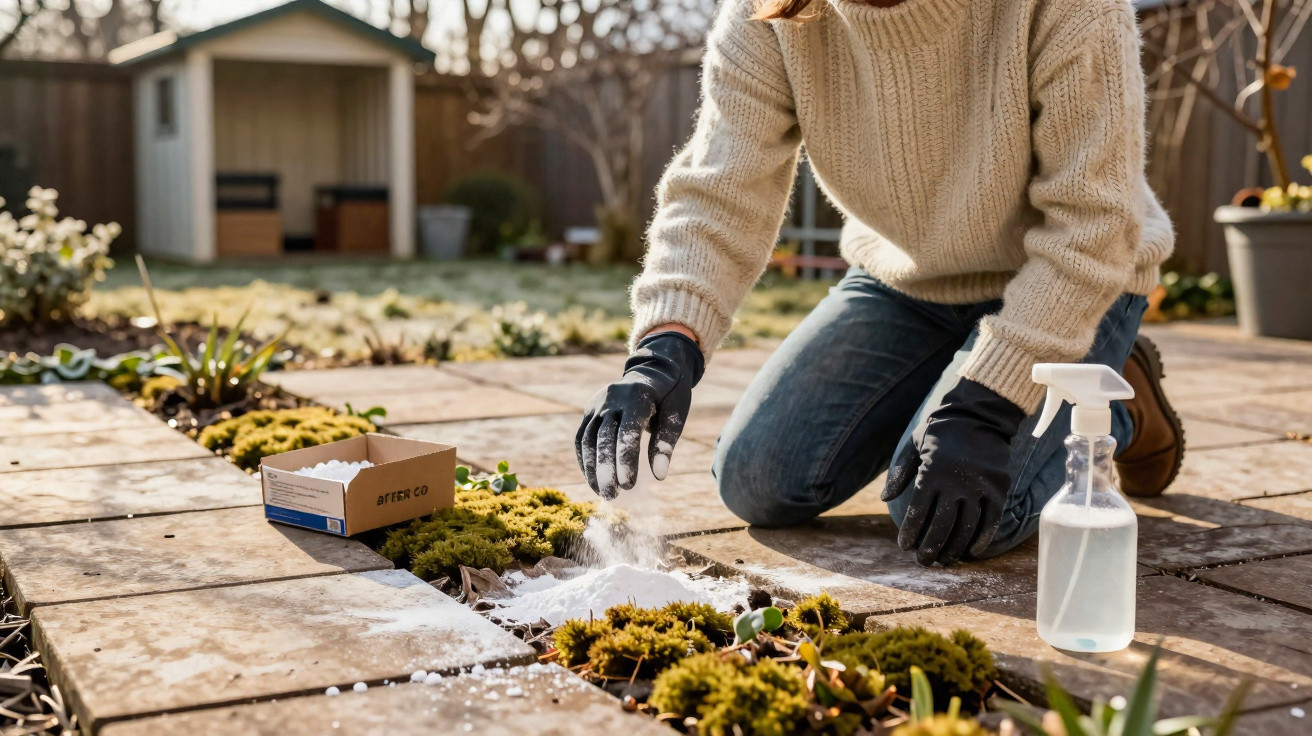
Many manufacturers also sell additional products containing iron and nutrients that weaken moss and encourage grass growth. If you use one of these, it should always be paired with mechanical work. Spraying or spreading alone is not enough - dead moss has to be physically removed from the lawn.
The right moment: not too early, not too late
A common mistake is starting at full intensity in a freezing March. The soil is still cold, the grass is effectively dormant, and the weather is unsettled. At this stage, the lawn does not cope well with tough interventions such as heavy scarifying.
A useful rule of thumb:
- The ground should no longer be frozen.
- Daytime temperatures should be reasonably mild and stable.
- The sward should show the first clear signs of growth.
If you want to play it safe, wait for a spell of more consistent spring temperatures. The lawn will then repair damage faster, bare patches will green up far more quickly, and moss will genuinely be pushed back.
Step by step: how to tackle moss in the lawn
1. Mow higher - do not scalp
Before raking or aerating, many people cut the lawn too short. That only weakens the grass further. A better approach is to mow to around 4–5 cm. This still makes the work manageable, but leaves enough leaf area for photosynthesis.
2. Rake out moss and thatch thoroughly
Next, use a lawn rake or scarifying rake. Work in long, overlapping passes, staying fairly shallow - it is better to go gently several times than to be brutal once. The aim is to pull moss and dead material out of the lawn without slicing into the surface like a rotavator.
Afterwards, collect and remove the loosened debris carefully. Anything left behind blocks new shoots and reduces airflow.
3. Aerate: give the soil air
Once the surface is cleaned, the soil can “breathe”. Now it is time for the aerator. This is especially worthwhile in areas where water often gathers or where the lawn is regularly walked on, such as along paths or near play equipment.
Use a garden fork or a dedicated aerator to punch holes. On heavy soils, it can be worth filling the holes with sand. This helps keep the structure more open so water drains faster.
| Problem area | Recommended action |
|---|---|
| Deep shade | Moss-tolerant grass mix, mow higher, water less |
| Compacted clay soil | Aerate, work in sand, loosen regularly |
| Waterlogging after rain | Improve drainage, use an aerator, adjust watering |
| Heavy use (children, dogs) | Hard-wearing play-lawn mix, overseed, adjust mowing height |
4. Optional: weaken moss with iron products
Many moss treatments combine iron with nitrogen. The moss darkens, dries out and becomes easier to rake away, while the grass starts growing more quickly. Important: follow the instructions, do not apply in intense heat or strong sunshine, and keep children and pets away during the treatment period.
5. Do not forget overseeding and nutrients
Wherever you can see more soil than green after raking and aerating, targeted overseeding is worthwhile. Specialist repair or shade mixes close gaps faster. Lightly working the seed in with a rake and watering carefully helps it germinate.
A correctly dosed lawn fertiliser - ideally with slow release - supports the plants over the coming weeks. Strong growth is the best protection against fresh moss cushions.
Why regular care matters more than any “miracle solution”
Many lawn owners hope for a single product that ends their moss issue permanently. In practice, a simple routine repeated over time is far more effective:
- In spring: mow higher, rake out moss, aerate, overseed gaps, fertilise as needed.
- In summer: water evenly but not excessively, and keep to the right cutting height.
- In autumn: repeat lightly with gentler raking, aerate if required, and consider liming if the soil is very acidic.
“If you put a few hours into using a rake and aerator twice a year, you will cut the moss problem far more than with any one-off ‘shock treatment’.”
Additional tips: cutting height, watering, soil check
Day to day, three factors determine whether moss can return:
- Cutting height: avoid cutting shorter than about 4 cm. In shade, stay closer to 5 cm.
- Watering: water less often but more deeply. Constantly dampening the surface encourages moss and shallow roots.
- Soil reaction: a simple pH test from a DIY store shows whether the soil is too acidic. If it is, a modest application of lime may help.
If parts of your garden are very shady, you will never eliminate moss completely. In those spots, alternative choices can make more sense - for example shade-tolerant ground cover plants, ornamental beds, or deliberately natural areas. There, moss can even be an attractive feature, while the main play or lounging lawn is kept in brighter sections.
Over time, the effort pays off: a robust, deep‑rooted lawn copes better with dry spells, looks recovered sooner after each winter, and needs fewer emergency fixes. Two simple tools - a rake and an aerator - form the core team for a lawn that is not only green, but genuinely strong and resilient.


Comments
No comments yet. Be the first to comment!
Leave a Comment