
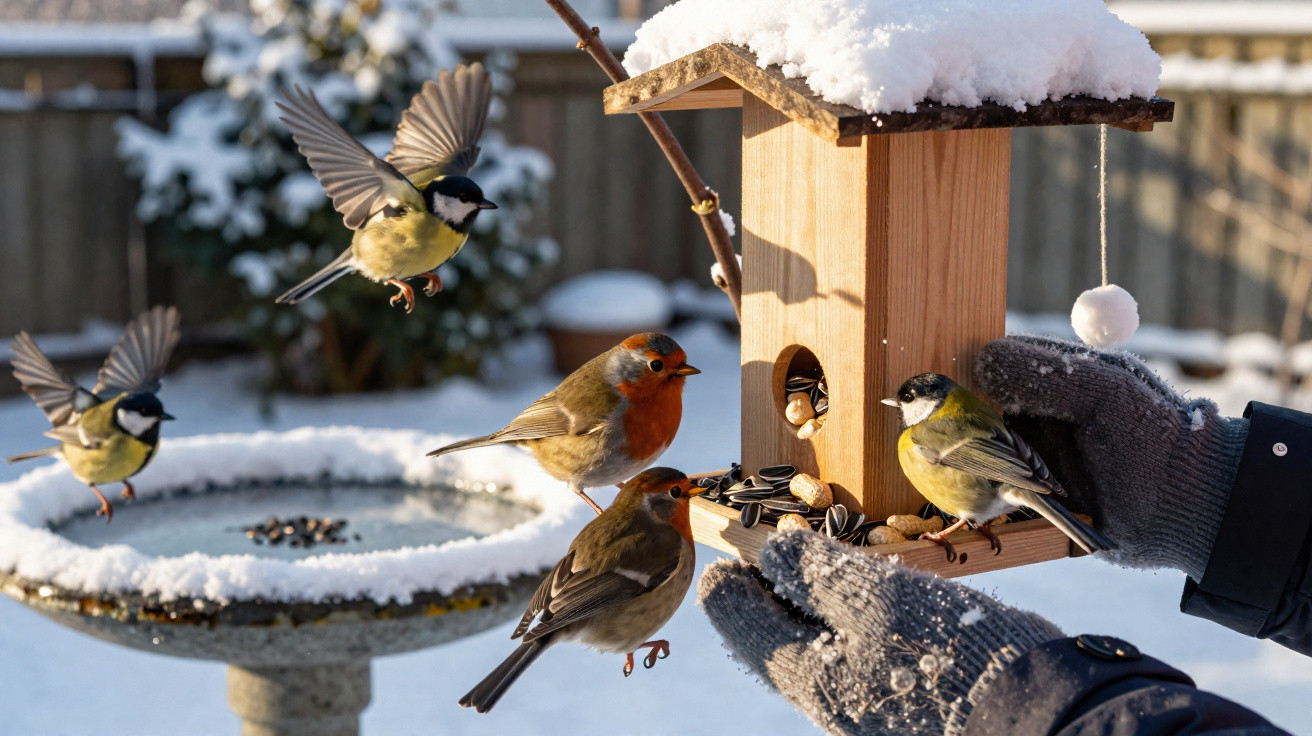
By February, gardens can seem still and nearly deserted.
For the tiniest birds, however, every icy night is an unforgiving challenge. While we count down to spring, many garden birds are running out of chances. Natural food supplies are at their lowest, temperatures may drop suddenly, and a few grams of body weight can determine whether a bird survives until March. One particular seed, frequently overlooked or replaced with inexpensive mixes, may be the difference between survival and death.
February is the real crunch time for garden wildlife
January may feel like the heart of winter, yet February is often the most severe month for small birds in the UK and North America. The slightly longer daylight hours can make us believe the worst weather is over. For wildlife, that false impression can be deadly.
By late winter, berries in hedgerows have been picked clean, many insects remain dormant and frozen soil keeps worms out of reach. Birds that depended on autumn and early-winter food stores are now left with very little.
For a blue tit, goldcrest or chickadee that weighs only a few grams, a bright but freezing night creates an energy crisis. Certain species may lose up to 10% of their body weight overnight simply by keeping warm enough to stay alive.
In February, the food you put out is no longer a casual treat. It is part of a survival strategy.
This is an ecological bottleneck: natural resources are depleted while the cold persists. Carefully chosen garden food can help sustain local bird populations through this brief but hazardous period.
Why protein isn’t the priority when the temperature crashes
Birds maintain exceptionally high body temperatures, often above 40°C. Keeping this stable in a freezing wind requires a continual supply of fuel. At this stage of the year, birds are not focused on growing or raising young; their priority is retaining body heat.
Protein-rich food by itself is therefore insufficient. Protein supports growth, feather replacement and muscle development, but it is not the most effective source of warmth. On icy February nights, birds need concentrated energy that is available immediately.
This is where many people who feed garden birds make mistakes. Bread crusts, cheap “wild bird” blends full of wheat, and table leftovers can appear generous. In practice, they may make birds feel full without providing enough calories to get through the night.
Feeding the wrong foods in late winter is a bit like trying to heat a draughty house with a handful of twigs.
Instead, the priority should be calorie-dense foods rich in fat, which birds can rapidly turn into heat.
The black gold of the feeder: why high-fat seeds rule February
The most effective adjustment you can make in February is to fill feeders with fat-rich seeds. Of all the available choices, one is the winter MVP: black sunflower seed.
Black sunflower seed: small shell, big impact
Black sunflower seeds are different from the striped seeds commonly sold for gardens. Black seeds have thinner shells and contain considerably more oil. Small beaks can open them more easily, while gaining far more from each seed.
Every seed is a compact energy source. Birds can replenish reserves lost overnight quickly, which is vital when they may need several substantial feeds before dusk simply to survive until morning.
Unsalted peanuts: the heavyweight backup
Along with black sunflower seeds, plain peanuts, also known as groundnuts or monkey nuts, provide another important winter lifeline. They contain plentiful fat and calories that birds can use straight away.
- They must be unsalted.
- They must not be oil-roasted or flavoured.
- They should be supplied in a suitable mesh peanut feeder to reduce choking risks, particularly for young birds.
When offered properly, sunflower hearts (de-husked seeds), black sunflower seeds and unsalted peanuts create an “emergency ration kit” for the hardest weeks of the year.
In late winter, oily seeds and peanuts are the closest thing birds have to central heating.
How to build a February “survival menu” for your feeder
Choosing the right seeds is only part of the task. How you provide food can either reduce or increase the chances of disease, injuries and waste.
| What to do | Why it matters |
|---|---|
| Use hanging tube feeders for sunflower seeds | Keeps seeds dry and away from droppings, reducing disease spread. |
| Offer peanuts in a metal mesh feeder | Prevents birds from swallowing whole nuts, which may be dangerous for chicks and small species. |
| Remove plastic netting from fat balls | Stops birds becoming entangled by their legs or claws and dying trapped. |
| Clean feeders regularly | Reduces the chance of infections such as salmonella at busy feeding stations. |
| Feed morning and early afternoon | Helps birds recover after the night and build reserves before dusk. |
Avoid salty food completely. Birds’ kidneys cannot process much salt, meaning crisps, salted nuts, bacon rind, processed food and most table scraps should never be put on a bird table. Bread is poor-quality food too: it fills birds up while providing little nourishment and may swell in the stomach.
Fat blocks and cheap mixes: reading the small print
Shop shelves are packed with fat balls, suet cakes and “winter mixes” that appear suitable, but their quality differs greatly.
Some inexpensive fat products contain fillers such as sand or calcium grit. These lower the total energy value and can deceive shoppers. Choose products that list suet or vegetable fat near the top of the ingredients, and where genuine seeds are clearly visible rather than only dust and grain.
Many cheaper seed blends are bulked out with wheat, maize and split peas. Numerous garden birds will either leave these untouched or scatter them on the ground, where they can rot or draw rats. A modest amount of high-quality oily seed will often be more beneficial than a large bag of fillers.
Don’t forget water: the invisible crisis in a hard frost
When ponds and birdbaths freeze over, finding liquid water can become as difficult as finding food. Birds need water to swallow dry seeds and maintain their feathers. Clean, properly aligned feathers hold air and work like a duvet.
A shallow dish of unfrozen water can be almost as valuable as a full feeder on a frosty morning.
Set a small, shallow dish close to the feeding area, refilling it with lukewarm water when temperatures remain below zero. Never add salt or antifreeze. Instead, replace the water regularly and break up any ice that forms.
How your February feeding shapes spring in your garden
The birds using your feeders now are the same birds that may soon sing from your hedges and raise chicks there. Birds that come through winter in good condition can secure better territories, make stronger nests and feed their young more dependably.
Reliable access to high-fat seeds such as black sunflower and unsalted peanuts can move individuals from “just surviving” to “fit enough to breed.” Across a neighbourhood, this may result in more breeding pairs of tits, finches and robins, alongside a more resilient overall local population.
Practical scenarios and small adjustments that matter
Picture a clear February night at –5°C. A blue tit settles down to roost at dusk. If it found only low-energy food during daylight hours, its fat reserves could be exhausted before dawn, forcing it into torpor or leaving it too weak to feed properly the following morning. Swap those limited calories for a consistent supply of sunflower hearts and peanuts, and that same bird may wake with sufficient energy to forage, preen and escape predators.
If space or money is limited, concentrate on three essentials: one good-quality feeder, one high-energy seed, ideally black sunflower or hearts, and a shallow dish of water. Even a small balcony or compact urban garden can become an essential late-winter service station for visiting birds.
For families, feeding birds in February can also be a way to involve children. Putting out seeds, washing feeders and observing which species visit can turn a bleak month into a practical science lesson about weather, energy and survival. The consequences for birds are serious, yet our actions are straightforward: the right seed, provided in the right way, at the right point in the year.

Comments
No comments yet. Be the first to comment!
Leave a Comment