
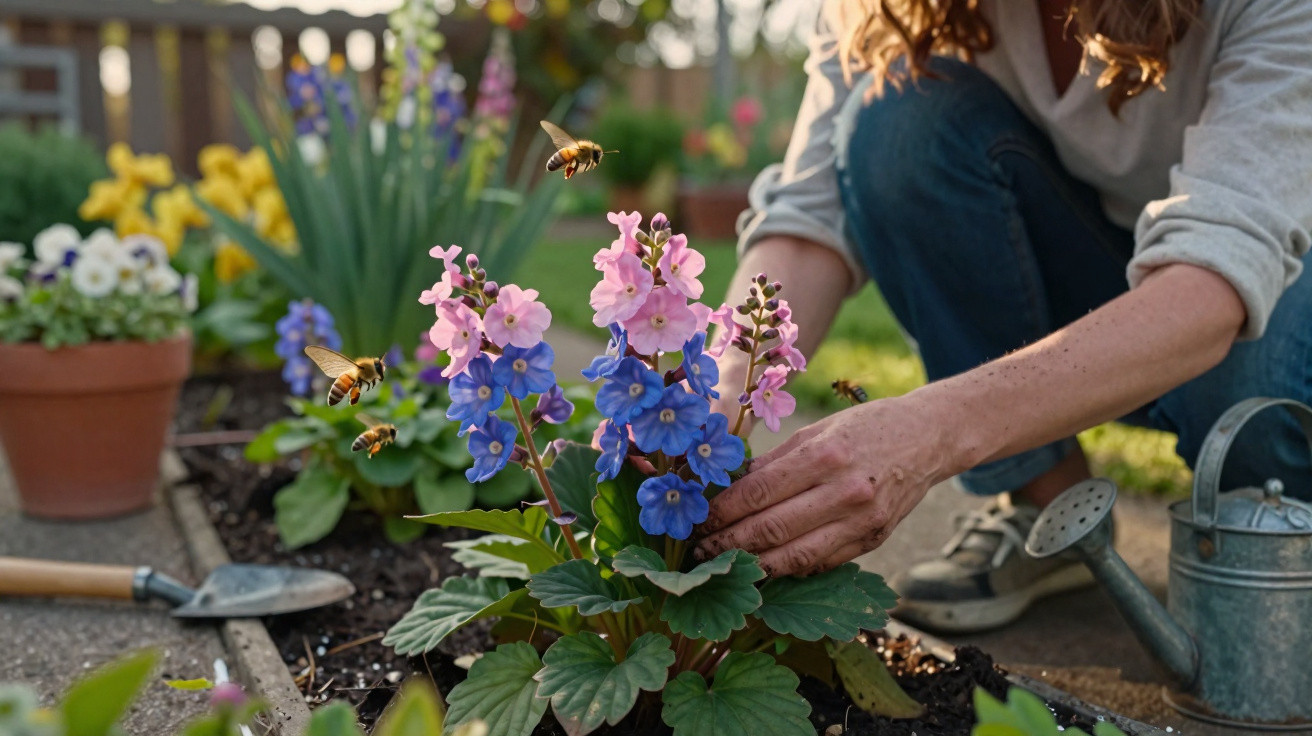
A perennial with huge value for bees is often hiding in exactly those spots.
When people think of bee-friendly spring flowers, they usually picture bright, sunny patches. The darker, cooler corners of the garden - where hardly anything seems to bloom - are often overlooked. Yet it’s precisely there that an understated, tough perennial for partial shade can make sure bumblebees, wild bees and other pollinators find dependable food very early in the year.
Why Lungwort is a game-changer for shade beds
We’re talking about Lungwort (Pulmonaria), a hardy perennial that originally comes from open woodland. It typically grows to around 20–30 cm and forms dense, rounded clumps. Its signature feature is the green foliage, often spotted with silvery markings, which stays attractive for a long time and visually brightens shady areas.
The real surprise, though, is the flowering. Depending on the variety, Lungwort opens its tubular blooms from late winter into early spring. While the rest of the garden can still look bare, small clusters of flowers appear and gradually shift in colour from pink to blue. For pollinators, it’s an early-spring signal with serious pulling power.
"Lungwort flowers provide plenty of nectar early in the year - exactly when bumblebees and wild bees urgently need energy."
Many well-known nectar plants such as phacelia or borage prefer full sun and tend to flower later. Shadier sections can be left without much on offer for months. Lungwort bridges that gap - quietly, reliably and year after year.
How Lungwort supports bumblebees, wild bees and butterflies
In spring, every day matters for pollinators. Bumblebee queens and overwintering wild bees wake as soon as temperatures soften and need to rebuild their reserves quickly. Without early flowers, there’s a real risk they simply run out of energy before the garden properly gets going.
The shape of Lungwort’s blooms is no accident: they are small tubes filled with nectar. Species with longer tongues benefit in particular:
- Bumblebees, especially dark earth bumblebees and tree bumblebees
- Wild bees with longer tongues
- Some early butterfly species
For these insects, Lungwort is like a filling station in partial shade. While many shade beds are still doing nothing, it provides an early, concentrated food source. Planting several clumps creates a genuine "hotspot" in the garden that pollinators return to again and again.
The ideal spot in the garden: shade yes, pitch-dark no
Because Lungwort comes from deciduous woodland, it thrives in conditions that mirror its natural habitat. The best positions are bright shade to partial shade, such as:
- The north-facing side of a house or wall
- Beneath deciduous trees or larger shrubs
- Along the edges of loosely structured hedges
A gentle wash of morning or evening sun is beneficial. Harsh afternoon sun - especially on hot summer days - can quickly damage the leaves. Under dense conifers, Lungwort often survives, but it tends to flower much less, which means fewer insects are drawn in.
The soil conditions Lungwort actually needs
Unlike many Mediterranean perennials, Lungwort doesn’t want dry, poor soil. It performs best in:
- Fresh soil that stays evenly, lightly moist
- Humus-rich, loose composty ground
- Free-draining soil with no waterlogging
Before planting, it pays to loosen the soil deeply and work in mature compost. This creates a fertile, airy environment where the roots can spread quickly.
"If you treat Lungwort to compost, you’ll get dense clumps, a longer flowering period and a noticeably louder springtime buzz in return."
Leave roughly 30–40 cm between plants. Over time, the clumps widen and knit together into a closed, living carpet - one that suits not only insects but also small creatures living in and on the soil.
Low-effort and long-lived: keeping the nectar buffet stocked each year
Lungwort is widely considered an easy-going perennial that doesn’t demand much. A few simple tasks each year are enough to keep it thriving.
Watering, feeding and cutting back - the basics
- Watering: During prolonged dry spells, don’t allow the soil to dry out completely. Young plants, in particular, can suffer if the ground is allowed to bake hard.
- Feeding: Once a year in early spring, lightly work in a thin layer of compost. Strong, nitrogen-heavy fertilisers mainly drive leaf growth - at the expense of flowers.
- Tidy-up cut: Remove spent flower stems and yellowing leaves regularly. The bed looks better, and the plant puts more energy into fresh buds.
As the years pass, older clumps can be divided. This refreshes the plant, stops it thinning in the centre and provides free new plants for other parts of the garden.
With the right neighbours, the whole garden becomes a pollinator magnet
Lungwort has its biggest impact when it’s part of a well-thought-out, continuous sequence of flowers. The goal is simple: from late winter through to autumn, there should always be somewhere in the garden offering food for pollinators.
Smart planting partners for Lungwort
Perennials and bulbs that overlap with Lungwort or take over immediately afterwards work especially well:
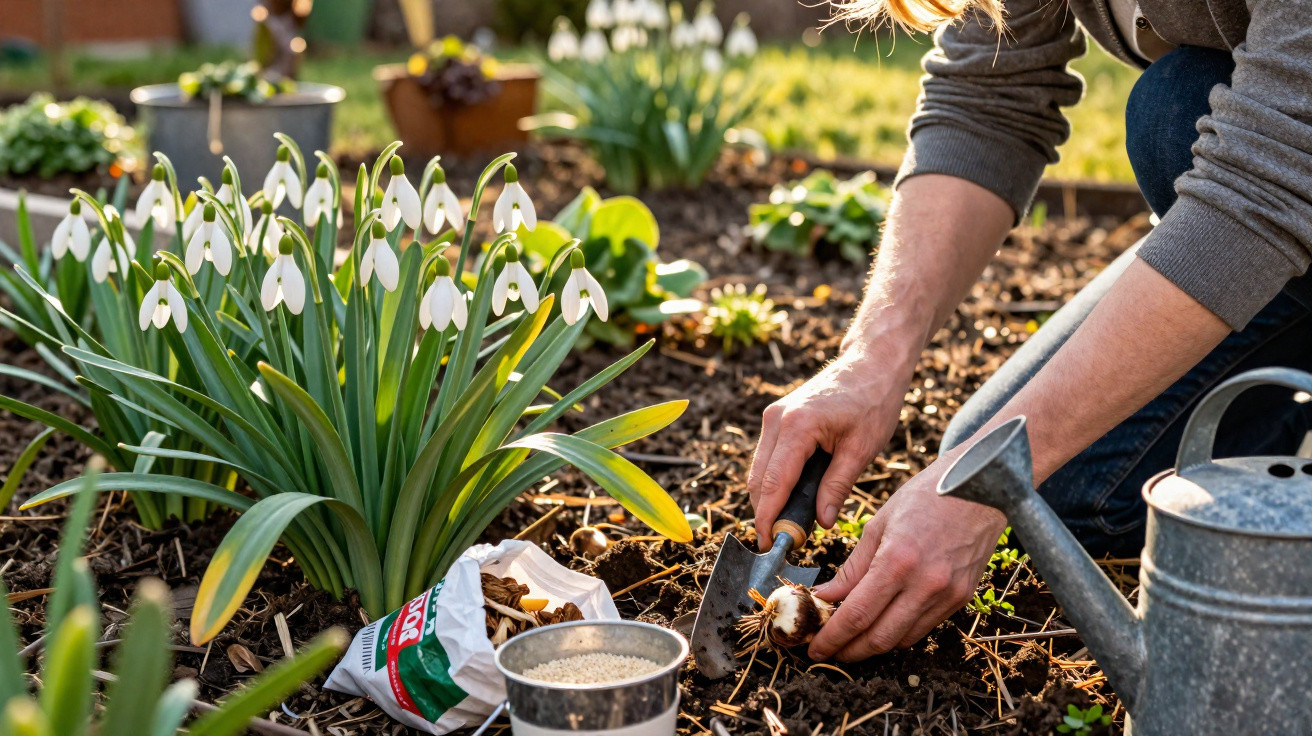
- Early bulbs such as crocuses, snowdrops and winter aconites provide nectar before Lungwort properly gets going.
- Myosotis (forget-me-not) then fills gaps with a blue carpet of flowers.
- Aubrieta on wall tops or stony edges adds extra colour and nectar sources.
- Later in the year, geranium (cranesbill) and autumn asters take the baton, ensuring bees can still find food right to the end of the season.
"If you set up a true 'flower relay' in the garden, you give pollinators an uninterrupted menu - Lungwort is the starting gun."
Why shady areas have enormous potential for nature conservation
Many gardeners focus their insect-friendly planting on sunny borders, and shaded patches are quickly written off as problem areas. Yet these neglected corners hold real potential: they can become calmer refuges, with fewer disturbances from people and pets.
With Lungwort, ferns, woodland grasses and other shade perennials, you can create a semi-natural mini-biotope. The planting keeps the soil covered, retains moisture and provides shelter for insects, spiders and small animals. If you also leave a few dead branches or set aside a small pile of decaying wood, biodiversity increases noticeably.
A few practical tips for maximum impact in the garden
If you want to use Lungwort deliberately to bring more life into the garden, these hands-on pointers make a difference:
- Plant in small groups rather than as single specimens - insects respond more strongly to larger "islands" of flowers.
- Avoid chemical sprays nearby so pollinators aren’t put at risk.
- In autumn, leave some fallen leaves around the plants. Many beneficial insects overwinter underneath.
- For new plantings, choose robust, straightforward varieties rather than heavily bred rarities with weaker nectar value.
Follow these steps and a once-gloomy shade bed becomes a lively starting point for the gardening year. Lungwort not only brings early colour; it also acts like an invitation for bumblebees, wild bees and butterflies to treat the whole garden as a new regular feeding territory.




Comments
No comments yet. Be the first to comment!
Leave a Comment