
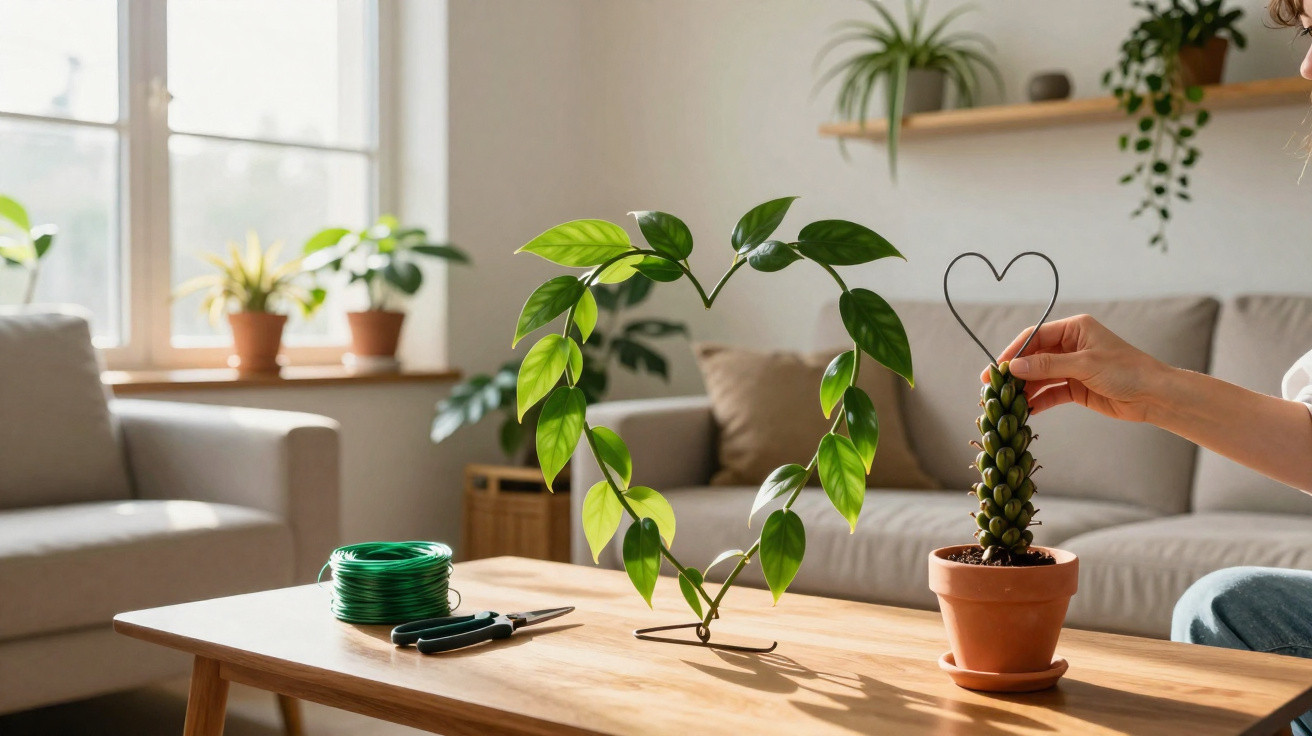
With a single simple adjustment, it can become a living artwork that genuinely everyone notices.
In many homes there’s one sitting somewhere: a spider plant, half-forgotten, trailing off a sideboard and doing little more than filling a gap because it’s so easy to keep alive. Yet this unassuming houseplant has huge styling potential. With a few deliberate tweaks, it can be turned into a green sculpture that looks like it belongs in a design studio - with no specialist tools and no horticultural training.
The spider plant: an unassuming classic with hidden showpiece potential
The spider plant (botanical name: Chlorophytum comosum) comes from South Africa and is widely considered the perfect beginner plant. It copes with the odd care mistake, is non-toxic for pets, and keeps growing reliably even in semi-shade. Most of the time it ends up in a hanging pot or perched on top of a cupboard, quietly doing its job.
Its hallmark is the long, narrow leaves and the fine, arching runners that spill over the edge. At their tips sit small rosettes - the plantlets (also called offsets). Those runners are exactly what makes the transformation possible.
“From the trailing runners of a spider plant you can shape hearts, circles and even braided columns - almost like using wire, only alive.”
If you don’t simply let those flexible runners hang, but guide them intentionally, you suddenly get crisp, graphic outlines that feel like modern plant installations. The key is to redirect the plant’s natural growth gently rather than forcing it into place.
Seeing the plant as a living sculpture
The crucial mindset shift is this: a spider plant isn’t only a potted plant - it’s a material. Its long runners behave like soft cables that can be routed in almost any direction, provided you work with a light touch.
The runners don’t crease straight away. If you bend slowly using both hands, you can feel how far the tissue will comfortably give. That makes the plant ideal for creating clean, graphic shapes - even in tight spaces.
Instead of letting the foliage sprawl across a table top, you can lift the volume upwards. The result is a vertical sculpture that needs very little surface area yet immediately catches the eye.
Building shapes with wire: hearts, rings and small wreaths
The simplest approach uses a lightweight metal frame. A slightly thicker aluminium wire is ideal: firm enough to hold its shape, but easy to bend by hand without tools.
- Bend the aluminium wire into a ring, heart or oval
- Overlap the ends and twist them together
- Push the frame into the potting mix or secure it to the pot rim
- Loosely lay the longer spider plant runners around the wire
- Fasten with soft plant ties or raffia
If your plant already has lots of plantlets on the runners, begin shaping from the upper part of the form. The rosettes act like visual highlights and help define the outline. You don’t have to keep every small rosette: spare plantlets can be cut off and potted up separately - over time, that can also help build a fuller base in the main pot.
“A plain metal ring wrapped with spider plant runners quickly becomes a green focal point on the dining table - without an expensive designer pot.”
Where these plant sculptures look best
A lush wreath made from spider plant runners works brilliantly as a centrepiece on a dining table. The plantlets can drape slightly without blocking anyone’s view. A heart made from spider plant runners looks especially good:
- on a hall chest of drawers as a welcoming feature
- on a sideboard in the living room
- as a green surprise on a gift table or buffet
Smaller shapes can even sit on a bedside table. If you have a very narrow shelf, a slim, tall form creates a calm but striking accent.
The braided column: turning a rampant plant into a green totem
If you prefer to work upwards, you can gather several long runners and braid them. For this, you’ll also need a sturdy wooden cane to act as the backbone.
At a glance, the process looks like this:
- Choose three to five of the longest runners
- Push the wooden cane into the centre of the pot
- Lay the runners loosely around the cane and bring them together at the top
- Braid like plaiting hair, without pulling the runners too tight
- Secure the finished braided column every few centimetres with ties
Once you’ve created a green column, the spider plant - normally wide and cascading - suddenly appears slim and architectural. A plant totem like this fills narrow spots beside the sofa, next to a TV unit, or at the side of a bookcase, without making the room feel crowded.
“A braided spider plant column uses vertical space - ideal for small flats with limited floor space.”
Where the column makes the biggest impact
A few typical places it works well:
- beside an armchair as a calm, green “lamp without light”
- at the end of a low unit to soften hard edges visually
- in a small bedroom corner instead of adding another floor lamp
- on a stool in the bathroom, provided there’s enough daylight
In very small rooms, a mini column in a compact pot can be a better fit. On a bedside table or side table, it becomes a clear statement that feels surprisingly present despite its size.
Care after shaping: keeping the plant in top condition
After bending, braiding and fixing, the spider plant benefits from a little extra support to restore its energy. If you add a liquid fertiliser combination with nitrogen and potassium to the watering can, you’ll strengthen both leaf growth and roots. It’s best kept fairly weak in concentration, but given a little more regularly.
Key points to keep in mind:
| Aspect | Recommendation |
|---|---|
| Watering | Keep the compost slightly moist; avoid waterlogging |
| Light | Bright, but not in harsh, constant midday sun |
| Feeding | Low-dose liquid feed every 2–4 weeks |
| Temperature | Ideal: 18–24 °C; not consistently below about 13 °C |
In very mild areas where the temperature doesn’t drop below roughly 13 °C for extended periods, a spider plant can move outdoors during the warm season - to a balcony or terrace, for example. Outside, the plants benefit from moving air and daylight and often grow noticeably more vigorously.
Using plantlets to build a denser base
The many plantlets on the runners annoy some owners, but they come with a clear advantage: they can be used to create a much fuller base in the pot. To do this, separate individual plantlets with a sharp, clean knife and push them straight into the compost around the parent plant.
The result is a rich cushion of leaves at the bottom, while the shaped runners rise above as a ring, heart or column. The whole thing looks like a deliberately designed plant installation rather than a houseplant that’s simply grown however it pleased.
How far can you go? Risks and limits when shaping
As flexible as a spider plant is, it still needs boundaries. Runners should never be bent so hard that crease marks appear or the surface tears. Injuries like that weaken the plant and make rot more likely.
If you’re unsure, work in stages: shape the runner a little, wait a few days, then bend a bit further. Ties must be soft - raffia, jute twine or purpose-made plant ties are suitable. Hard wire can cut into the tissue and leave pressure marks.
One more thing: the more dramatic the sculpture, the more important routine checks become. Tighten loose fixings in time, and loosen ties that have become too tight so the runners aren’t constricted.
Why the spider plant works so well for this
Spider plants grow quickly, tolerate mistakes, and respond fast to changed conditions. If you form a heart, within a few weeks you can see the plantlets thicken and the outline become more pronounced. That makes the whole project feel less theoretical and more like a creative, hands-on craft.
Unlike strict bonsai-style shaping, nothing here needs to be cut back with precision. The basic form comes from guiding the runners rather than heavy pruning. That removes the fear many hobby growers have about getting started at all.
The practical takeaway is simple: the “boring” standard plant in the living room can become a genuine decorative feature with minimal materials. A piece of wire, a wooden cane and a few soft ties are all you need to turn a spider plant into a green artwork that noticeably elevates a room.

Comments
No comments yet. Be the first to comment!
Leave a Comment