
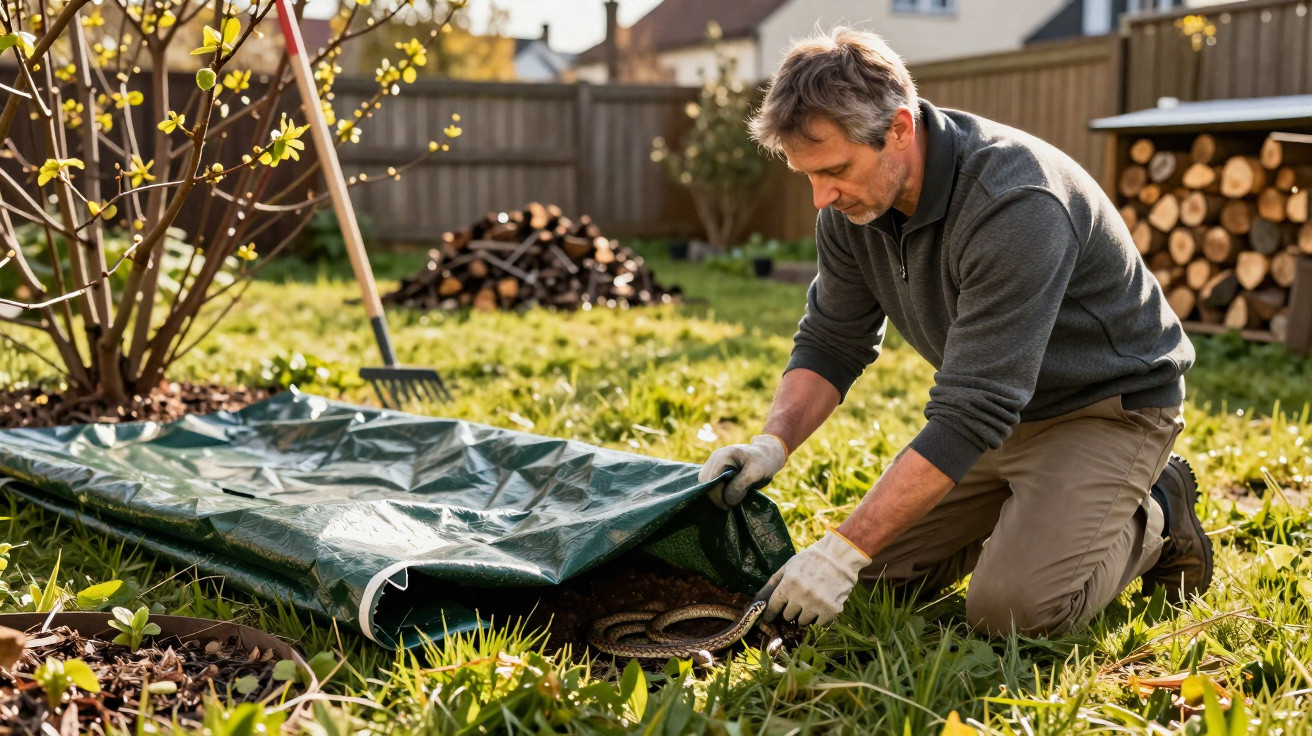
When the sun returns in spring, garden jobs kick off everywhere: mowing the lawn, getting beds ready, hauling furniture out of the shed. One humble bit of kit often gets left lying flat on the ground-and without anyone noticing, it can turn into an ideal hiding place for snakes, just a few metres from the patio, children’s play area or front door.
Why snakes are so fond of this garden accessory
In many gardens the trigger is the same: a spread-out tarpaulin or plastic sheet, often dark-coloured, lying over the lawn, on a compost heap or across a stack of logs-flat, warm, and seemingly harmless.
For snakes, that combination is spot on. Reptiles are cold-blooded and rely on their surroundings to manage body temperature. After winter dormancy they look for sheltered spots around 25 to 30 °C, out of the wind and with a little moisture in the soil.
"A dark sheet on the ground works like a natural radiator: sun above, warmth and cover underneath-perfect for snakes."
The dark surface absorbs the sun’s rays, the soil holds on to the heat, and the thin layer of air beneath stays still. That creates a small microclimate that’s clearly warmer than the surrounding area. From the patio, it just looks like a dark rectangle. Underneath, though, a grass snake (Ringelnatter) or another native species can be warming itself-out of sight, but very close to the house.
Other “snake magnets” in the garden: it’s not only tarpaulins
A tarpaulin is only one example. Many gardens have several of these flat “hideouts”, often left in place for years:
- old metal sheets or corrugated metal laid directly on the soil
- fibre-cement sheets or large wooden boards left on the lawn
- log piles without a base, sitting straight on the ground
- compost heaps covered with plastic sheeting or boards
All of these items create low, protected cavities with warm air and dark corners. Those are exactly the places snakes retreat to-after basking, while shedding their skin, or when hunting mice and other small animals.
Spring tidy-up in the garden: how to reduce snake hiding places
If you want to make the area around your home safer, the best approach is a methodical one. It’s essentially a thorough spring clean-just outdoors:
- Collect up tarpaulins, plastic sheets and netting when they’re not in use.
- If you still need a tarpaulin, pull it tight and anchor it securely instead of leaving it loose.
- Raise log piles onto pallets or stones, at least 20 cm off the ground.
- Remove old metal sheets, fibre-cement and large boards from the immediate living area.
- Mow the grass regularly around the house, patio, seating areas and ponds.
The fewer flat, dark hiding spots there are right next to the house, the less appealing the area becomes for snakes. They are then more likely to move to quieter corners of the plot-or elsewhere entirely.
"Snakes don’t want contact with people. If you remove their favourite hiding places, you significantly reduce the risk of an encounter."
Store it properly: how a tarpaulin doesn’t become a snake trap
A tarpaulin isn’t dangerous in itself-it just needs to be handled sensibly. The key point is simple: don’t leave it lying flat on the ground for long periods.
After using it, it’s best to do the following:
- Shake the tarpaulin out thoroughly so no animals are sitting on it or inside folds.
- If it’s damp, let it dry briefly to prevent mould and smells.
- Roll or fold it neatly.
- Secure it with a strap or rope.
- Store it in a closed space such as a garage, shed or cellar, ideally on a shelf or hung on a hook at head height.
The same applies to larger sheets and boards: they shouldn’t be left flat on the soil. Ideally, lean them upright against a wall or store them on a sturdy support indoors. That way you remove several attractive hiding places for reptiles in one go.
What to do if there’s a snake under the tarpaulin anyway
Even with care, it can happen: the tarpaulin stayed out for a few days, you go to put it away-and a snake is suddenly coiled underneath. In that moment, your reaction determines whether things stay calm or turn risky.
Basic rules in this situation:
- Keep your distance-at least 2 to 3 m.
- Don’t make sudden movements; don’t step towards it and don’t try to grab it by hand.
- Lift the tarpaulin only using a long handle (rake, broom, branch); stand to the side and don’t lean over it.
- Step back slowly and give the snake a clear escape route.
"Most native snake species are shy and only bite if they feel directly threatened or cornered."
Trying to hit a snake or kill it with a tool puts you dangerously close to the animal. In addition, in many countries there can be legal consequences, as numerous snake species are strictly protected. If you’re unsure, contact local authorities or nature conservation groups who can assess the location and arrange expert help.
How dangerous are snakes in German gardens really?
Many people immediately think of highly venomous species when they hear “snake”. In Central Europe, however, what you typically encounter in a garden are harmless species such as the grass snake or the smooth snake. They can be startling when they appear suddenly, but they are generally not dangerous to humans.
Venomous species are less likely to come close to homes. Even where they do occur, they usually bite only if you touch them, step on them or crowd them. Keeping your distance and not lashing out greatly reduces the risk.
Designing a garden that’s wildlife-friendly but safe
Plenty of people want a garden that feels natural and supports wildlife. That can still go hand in hand with a safe setting. The solution is to divide the space into zones:
- Right by the house: keep the grass short; don’t leave loose tarpaulins; don’t stack firewood directly on the ground.
- Middle zone: perennials, shrubs and beds-kept visible, with paths left clear.
- Back area: a small “wild” section with leaf piles, dead wood and dense vegetation, positioned far enough from the patio and play area.
This gives animals such as hedgehogs, lizards and also snakes places to shelter, while the immediate living area stays open and easy to see. Families with children or pets, in particular, benefit from this layout.
Practical extra tips for a relaxed gardening year
If you live in a region where snakes are seen frequently, or you simply want to be extra cautious, there are a few additional steps you can take:
| Measure | Benefit |
|---|---|
| Regular mowing around the house | Fewer hiding places, better visibility, lower snake density |
| Seal open gaps under patios | Prevents snakes from settling right against the structure |
| Store feed sacks and pet food securely | Fewer mice, which means less prey for snakes |
| Inform children and neighbours | Calmer reactions during sightings, less panic |
If you understand why snakes value certain structures so highly, you can adjust your garden in a targeted way. Something as straightforward as storing a tarpaulin correctly can already reduce the risk noticeably-without poison, traps or drastic interventions in nature.

Comments
No comments yet. Be the first to comment!
Leave a Comment