
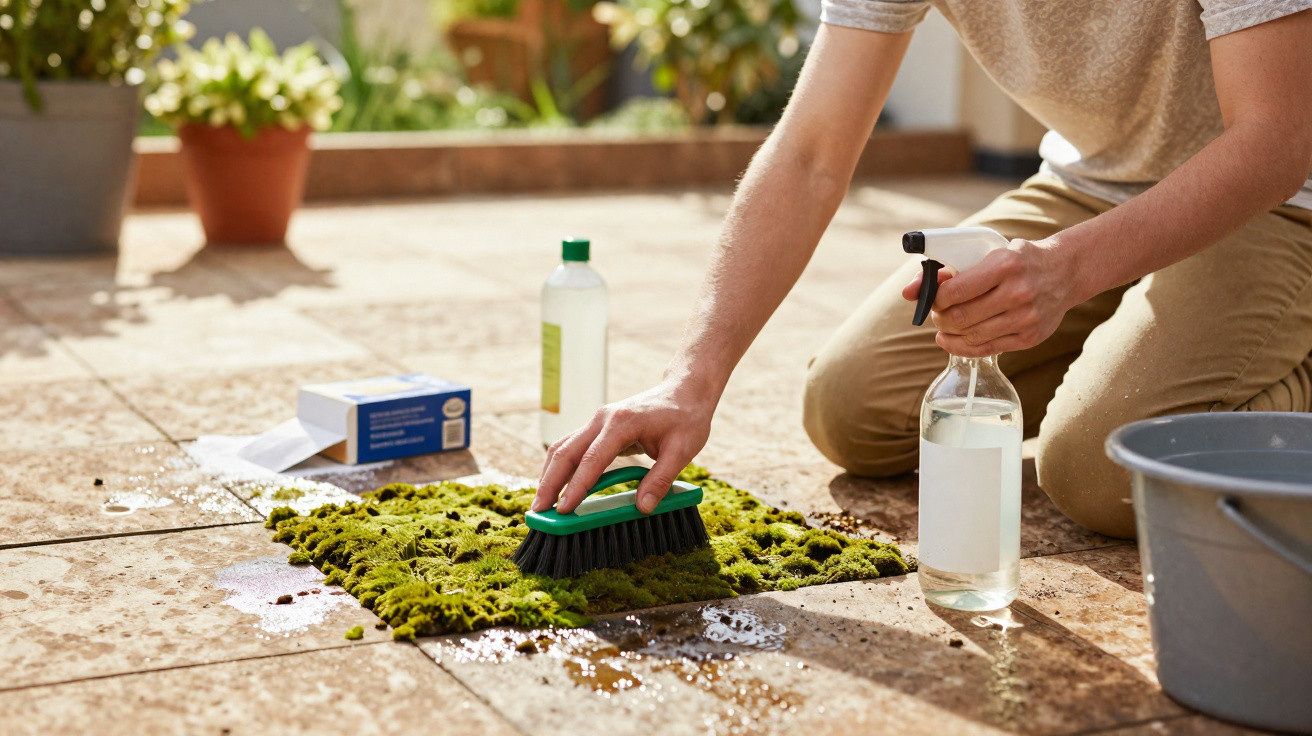
Many homeowners eventually give up on the green film of moss on patios, paths and driveways. You buy pricey specialist cleaners, scrub until your back aches, and a few weeks later it has all come back. Yet the answer is, quite literally, in the kitchen cupboard - and it costs next to nothing.
Why moss spreads so quickly on patios
Moss thrives on damp, shaded surfaces. Those are exactly the conditions found on many patios, paved paths, driveways or garden walls - particularly after a long, wet winter.
- Standing damp after rain or heavy dew
- Little direct sunlight because of houses, walls or trees
- Rough surfaces and joints where water collects
- Leaves and dirt that hold moisture like a sponge
If you only go over it with a stiff brush or broom, you are essentially dealing with what you can see.
"The visible moss disappears, but spores and ‘root remnants’ stay in cracks and pores - the perfect base for the next green carpet."
Then a few days later it rains again, the ground is wet once more, light levels are low, and the moss shoots back almost on its own. It starts to feel like: “This is pointless.”
Heavy-duty chemicals or household remedies - what actually makes sense?
Shops sell plenty of moss removers, and many use harsh active ingredients. They can work, but they often put extra strain on the environment, can attack joints, and may damage nearby borders or lawn.
If you have a tidy lawn or a vegetable bed close to the patio, you face a real dilemma: get rid of the moss without poisoning half the greenery along with it. That is where simple household staples come in - surprisingly effective, and much gentler on both the garden and your wallet.
The powerful pantry pair: vinegar and bicarbonate of soda
Most kitchens already have two ingredients that deal with moss very reliably: household vinegar (white vinegar) and bicarbonate of soda.
The idea behind it is straightforward and effective:
- Vinegar contains acetic acid, which penetrates deep into moss pads and destroys plant cells.
- Bicarbonate of soda is mildly alkaline, draws moisture out of the moss and disrupts the conditions it needs in the joints.
Used together, it is a one-two hit: vinegar tackles the visible green growth, while bicarbonate of soda makes it harder for moss to settle back in.
One small tweak improves the mix even further: a dash of washing-up liquid. It acts like a wetting agent, helping the solution cling to the moss instead of beading off.
"With vinegar, bicarbonate of soda, hot water and a little washing-up liquid, you get an inexpensive patio cleaner that not only loosens moss but also noticeably delays its return."
What you need for the anti-moss mixture
- Household vinegar (white; undiluted or slightly diluted)
- Bicarbonate of soda
- Washing-up liquid (a small dash is enough)
- Hot water
- A bucket or bowl
- A stiff brush or a sturdy outdoor broom
How to remove moss from your patio step by step
For the mixture to work properly, preparation matters almost as much as the scrubbing itself.
1. Clear the patio and sweep it thoroughly
Move furniture, plant pots and decorations out of the way. Then sweep the surface well: leaves, soil, sand and any loose moss must go. Only then can the solution reach the stubborn moss pads and seep into the joints.
2. Mix up the cleaner
Fill a bucket with hot water, then add:
- a generous splash of vinegar
- two to three tablespoons of bicarbonate of soda
- a quick squirt of washing-up liquid
The mixture will foam briefly - that is normal. Once the fizzing calms down, it is ready to spread.
3. Apply the solution and let it work
Pour or spread the liquid evenly over the affected areas. Key point: the surface should be properly wetted, not just damp in spots.
"Leave the mixture to work for at least 15 to 30 minutes - contact time determines success."
Choose a dry, preferably overcast day. Rain will dilute and wash the solution away; strong sunshine makes it dry too quickly, stopping it from soaking in deeply enough.
4. Scrub and rinse
After the waiting time, scrub firmly in circular motions with the brush. At this stage the moss usually lifts in thick flakes or strips and can be pushed together easily.
Then rinse with clean water - using a watering can, a garden hose, or a pressure washer set to a gentle setting. Important: direct the runoff so as little as possible flows onto nearby borders or the lawn. Any vinegar residue can harm sensitive plants.
Keep moss away for good: how to prevent it
If you only remove moss without addressing the causes, you will face the same issue again within months. A few targeted steps can reduce moss growth considerably.
Reduce moisture
- Watch for puddling and improve drainage where needed, for example by re-pointing joints or creating a slight fall.
- Clear leaves regularly, especially in autumn, so nothing becomes waterlogged.
- Avoid placing planters where damp will remain trapped underneath for long periods.
Bring more light to the surface
Moss is happiest in gloomy corners. Cutting back hedges, shrubs or low-hanging branches increases sun exposure and airflow, helping the patio dry faster.
When planning the garden, it pays to consider shade and microclimate: large bushes right by the patio edge do not just block wind - they also keep moisture lingering on the surface.
A regular “light treatment” with the household mix
Instead of one big annual clean, a small refresh every two to three months is often enough. Use a slightly weaker vinegar-and-bicarbonate solution on the still-clean surface, leave it briefly, give it a light scrub and rinse. This removes new growth before it establishes.
Safety, risks and where the method has limits
As convenient as these household ingredients are, they should not be used without a bit of care.
- Protect sensitive plants: cover nearby borders and containers, or leave edge areas untreated.
- Test for compatibility: on natural stone, polished tiles or very delicate surfaces, try it first in an inconspicuous spot.
- Pets and children: keep them off the treated area during the waiting time, until everything has been rinsed and is fully dry.
With very thick, old moss layers, you may need to repeat the treatment. In that case it helps to scrape off the worst with a scraper or filling knife first, then apply the mixture.
When moss becomes a warning sign
Heavy moss growth is not only a cosmetic issue. It can point to other problems: poor drainage, sunken paving, or permanently shaded spots where moisture simply cannot escape.
"If thick moss pads keep appearing on your patio, do not just clean - look for the causes in the ground and the surrounding area."
In some situations it is worth re-laying individual slabs, raking out joints and refilling them with a suitable material, or slightly correcting the fall. Combined with the vinegar-and-bicarbonate method, those practical fixes make the surface easier to maintain and safer over the long term.
That way, a slippery, green-coated patio becomes a place you are happy to walk on barefoot again - without worrying about falls and without reaching for expensive chemical solutions every year.

Comments
No comments yet. Be the first to comment!
Leave a Comment