
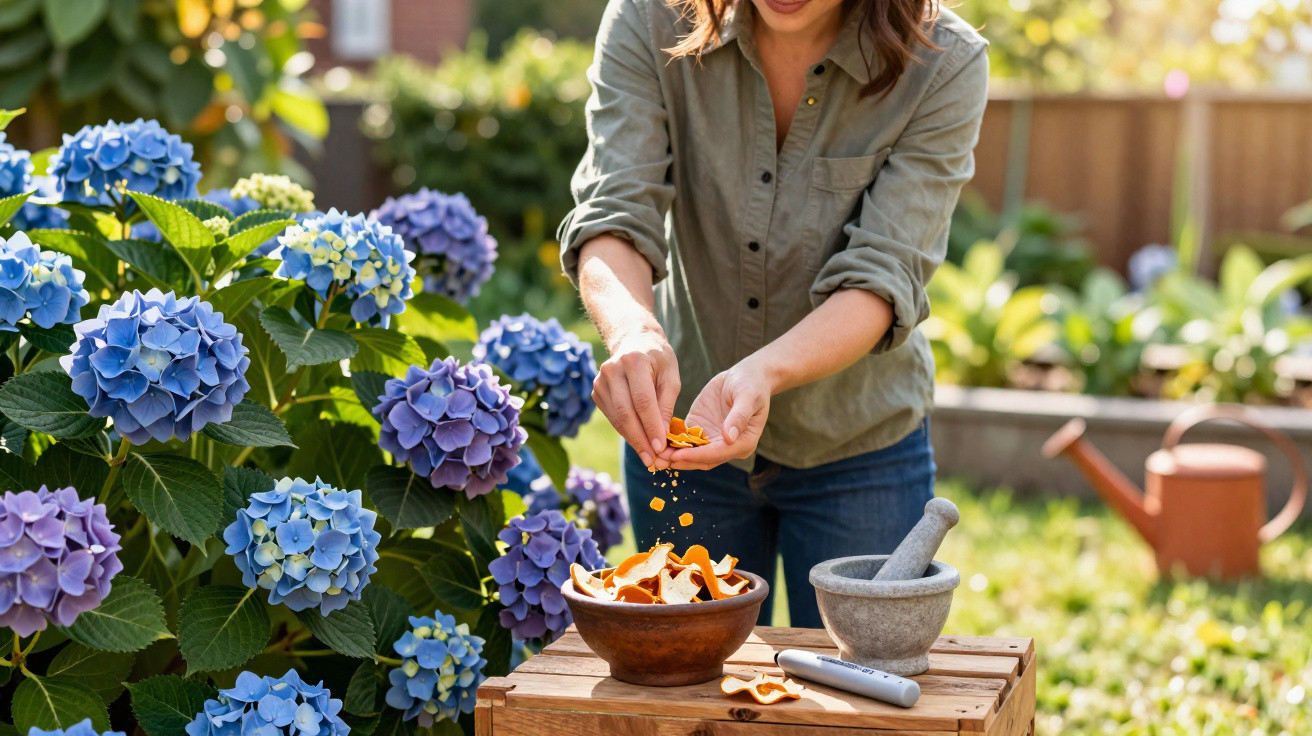
If you water your hydrangeas carefully and feed them regularly, you’ll know the frustration: washed-out leaves, smaller flower heads and disappointing colour. It’s easy to blame the weather or the plant’s age. Yet a humble kitchen leftover can make a real difference, giving the shrubs exactly what they’re missing in the border.
Why hydrangeas lose their strength so quickly
Hydrangeas are classic acid-loving (ericaceous) plants. They prefer slightly acidic soil and have a high demand for minerals. In many gardens, though, they’re planted in soil that’s relatively chalky. That’s where the trouble starts.
- The pH drifts towards alkaline.
- Key nutrients such as iron and potassium remain locked up in the soil.
- The roots can no longer take these substances up properly.
You can usually see the results clearly:
- Leaves yellow, while the veins often stay a little darker.
- New shoots remain thin and soft.
- Flower heads get smaller and lose colour intensity.
"Hydrangeas feel most at home in a pH range of around 5 to 6 – many garden soils sit well above that."
If you only rely on a standard flowering-plant feed, you’re often treating the symptoms. The underlying cause-an unsuitable pH-doesn’t change. That’s exactly where this smart kitchen leftover comes in.
The unexpected helper: dried orange peel
Of all things, something that would normally go into the food-waste bin can give shrubs a noticeable lift: orange peel. Not fresh, not in big chunks, but prepared in the right way.
Dried orange peel offers several benefits at once:
- a mild acidity that gently nudges the soil towards acidic
- potassium, which supports flower formation
- nitrogen, essential for fresh leaves and new shoot growth
- magnesium and calcium, both involved in many plant metabolic processes
This combination acts like a gentle, natural specialist feed for plants that thrive in acidic conditions. Unlike strong mineral fertilisers, this approach works slowly and more kindly.
"Often, one properly prepared portion of orange peel a month is enough to make hydrangeas look visibly more vigorous."
How to prepare orange peel properly for hydrangeas
Simply mixing fresh peel into the soil rarely delivers the result you want. It can mould easily, attract fruit flies, and the sugar content may also tempt rodents. Preparation is the key.
Step 1: Dry the peel completely
Once you’ve peeled the orange, dry the pieces first:
- spread them out on a tray or plate
- place them somewhere warm and airy, or in the sun
- alternatively, dry them in the oven at a very low temperature
They’re ready when they are hard, brittle, and completely free of any soft patches. Moisture is the main enemy because it encourages rot and mould.
Step 2: Crush it for a faster effect
For the nutrients to actually reach the soil, the peel needs to be broken down into much smaller pieces. Suitable options include:
- an old coffee or spice grinder attachment
- a powerful blender
- or a knife and a bit of patience to chop it very finely
As a rule: the smaller the particles, the sooner soil microorganisms can release the nutrients. A fine, almost powdery texture gives the clearest effect.
Using it on the shrub: getting the dosage right
Once your powder is ready, it’s time to apply it to the hydrangea. The process is straightforward, but a few details help you get better results.
- Make a loose circle around the shrub, roughly beneath the outer tips of the leaves.
- Sprinkle the orange-peel powder evenly within this circle.
- Work it lightly into the top few centimetres of soil using your hand or a small hand rake.
- Water thoroughly afterwards, so the substances move down towards the root zone.
| Bed size / shrub | Amount of orange-peel powder | Frequency |
|---|---|---|
| small pot plant | 1–2 teaspoons | every 4 weeks |
| medium shrub in a border | 1–2 tablespoons | every 4 weeks |
| large, mature shrub | up to 3 tablespoons | every 4 weeks |
The best window for this treatment is from March to the end of August, during the main growth period. Once a month is enough. Applying it much more often risks overfeeding and upsetting the soil’s balance.
Orange peel as natural protection against pests
The peel doesn’t just work as a gentle feed. It also contains a substance many gardeners can put to use: d-limonene, which gives citrus fruit its distinctive, intense scent.
A lot of insects strongly dislike that smell. Particularly sensitive culprits include:
- various ant species
- some aphid species
"Orange-peel particles sprinkled around the shrub create a kind of scented boundary that puts some pests off the spot."
It’s not a miracle cure, but as part of a wildlife-friendly garden approach it can certainly help. If a shrub is heavily infested, it’s best to combine this with other measures, such as parasitic wasps or a strong jet of water against aphids.
Which plants benefit alongside hydrangeas
This method suits most plants that prefer acidic soils. It tends to work particularly well for:
- rhododendrons
- azaleas
- camellias
- blueberry bushes in the garden
In mixed perennial borders full of lime-loving plants, it pays to be cautious. Lavender, roses and many herbs can react poorly to too much acidity. In those areas, orange-peel powder should be used only very selectively and sparingly-or not at all.
Common mistakes and how to avoid them
For this trick to work, it helps to avoid the most common pitfalls:
- placing fresh, damp peel straight on the soil
- using whole pieces or roughly chopped peel
- applying too much around delicate young plants
- using it in heavy soils that are often waterlogged, without improving structure first
If you steer clear of these issues, you’ll usually see pleasant results. Many gardeners report richer-coloured blooms and healthier foliage the following summer.
How orange peel fits into the rest of your care routine
This kitchen leftover doesn’t replace basic care-it complements it. Hydrangeas respond best when a few fundamentals are in place:
- evenly moist soil, but not constantly waterlogged
- light partial shade rather than harsh midday sun
- loose, humus-rich soil, ideally with a little bark humus or leaf compost
- for container plants: repot regularly into fresh compost
Combined with sensible watering, the orange-peel approach becomes a coherent overall routine. If you also test your soil pH every few years, you can fine-tune the amount even more accurately.
Why pH matters so much for flower colour
With some hydrangea varieties, soil reaction affects not only plant health but also bloom colour. Especially for types that can shift between pink and blue, the rule of thumb is:
- acidic soil (pH clearly below 6) tends to encourage bluer tones
- neutral to slightly alkaline soil favours pink shades
Orange peel only changes this value gently. If you’re aiming for a strong, clear blue, you’ll usually also need a dedicated hydrangea fertiliser that contains aluminium. For stronger colour and fresher green leaves, however, the mild acidity of citrus peel is often enough.
If you’d like to link your kitchen and garden a little more closely, dried orange peel is an easy place to start. The effort stays manageable, the material is already there-and with a bit of patience, you’ll see the difference right on the flower heads outside your front door.
Comments
No comments yet. Be the first to comment!
Leave a Comment