
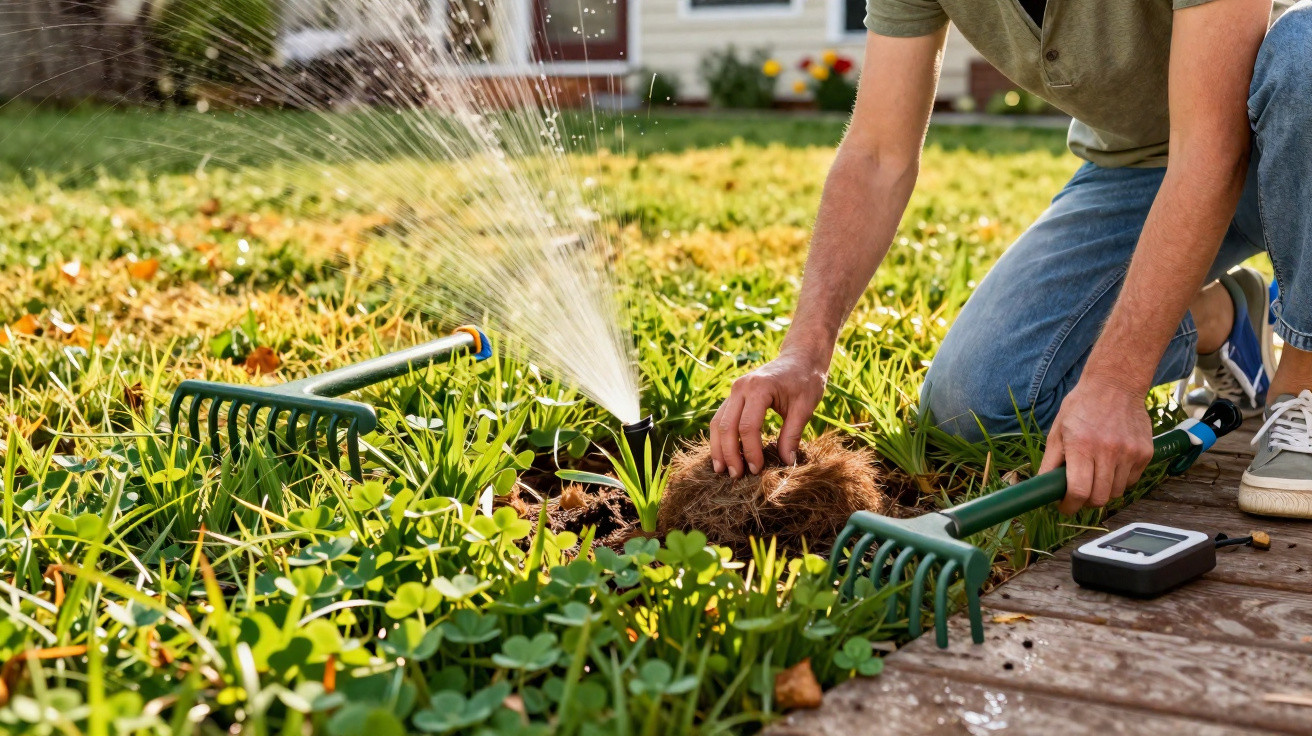
The good news is that a thick, richly green lawn doesn’t require pricey miracle fertilisers or constant watering. If you avoid a few common mistakes and stick to four straightforward steps, you can strengthen your lawn for the long term - without harsh chemicals and with noticeably less effort in summer.
Why lawns turn yellow and “suffocate”
A thatchy surface layer blocks water and nutrients
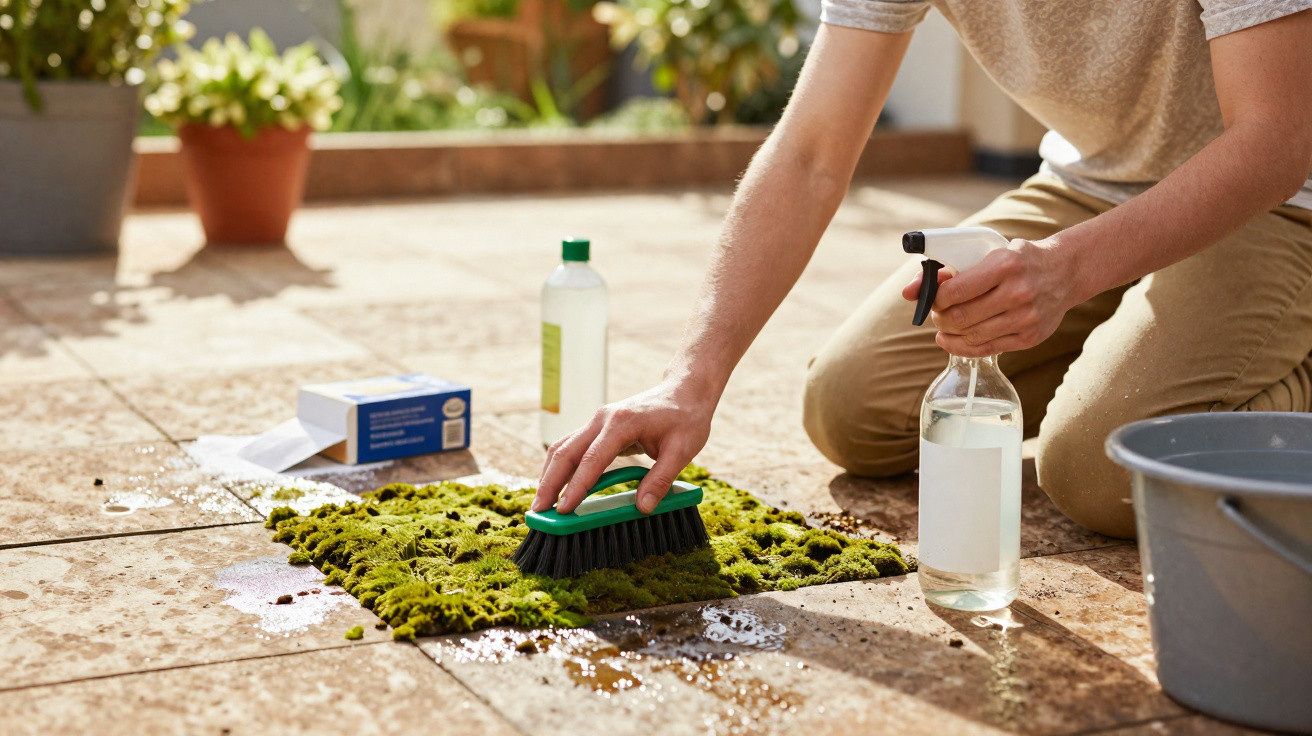
Over the years, grass clippings, dead plant material, leaves and moss build up on the soil surface. This forms a dense layer known as thatch. It may look harmless, but it behaves like a water-resistant blanket.
"If the thatch layer is too dense, water, air and nutrients can barely reach the roots - the lawn literally starves."
You can see the results in countless suburban gardens:
- yellowish, dull patches instead of a deep green
- moss spreads while grasses retreat
- roots stay close to the surface and become prone to drought
This shortage is especially obvious in spring, when the grass should really be getting going.
Gentle scarifying instead of tearing the ground apart
To remove thatch, many hobby gardeners go in hard with aggressive scarifying and end up ripping deep into the soil. That damages roots and leaves the lawn even weaker.
A far better approach is a light, shallow pass. A scarifier - or even a hand rake - is enough as long as it only scratches the very top layer and combs out moss, thatch and dead blades.
What matters most:
- work only a few millimetres deep
- go slowly and steadily, rather than fast and deep
- remove all thatch and moss completely, then dispose of it
This lets the soil “breathe” again. Rainwater can soak in, oxygen reaches the roots, and the lawn responds with fresh growth.
Watering mistakes: why daily sprinkling weakens your lawn
A constantly damp surface makes roots lazy
When a lawn turns yellow, many people react automatically: more water. So the sprinkler goes on almost every day. It can look greener briefly, but over time this routine does real damage.
Frequent watering that only moistens the surface trains the lawn to feed like it’s on “fast food” right at the top. Roots have no reason to grow downwards, so they stay short and delicate. When hot weather hits or you miss a watering, the soil dries out quickly - and the yellow patches return.
Water less often, but properly
A resilient lawn depends on deep, strong roots. Those only develop when moisture actually penetrates well into the ground. That’s why experienced gardeners change the schedule dramatically:
- water only once, or at most twice, per week
- run it long enough that the soil is soaked at least 10–15 cm deep
- water early in the morning or late in the evening to reduce evaporation
"Watering at wider intervals forces roots to grow deeper - where it’s cooler, damper and more stable."
After a few weeks, the payoff becomes clear: the lawn stays green much longer in warm spells and bounces back faster after dry periods.
Cutting too low is harmful: why longer grass blades protect the lawn
A closely cut lawn scorches in strong sun
A classic garden misconception is: “If I cut it really short, I won’t have to mow as often.” Any time saved tends to be lost the moment the sun gets stronger.
With the mower set very low, several things happen:
- blades provide little shade, so the soil heats up dramatically
- moisture evaporates extremely quickly
- weeds and heat-loving plants take advantage of the exposed gaps
The lawn ends up fighting dehydration, roots suffer, and yellow and brown areas spread. In each hotter summer, the effect becomes more pronounced.
“Turn it up”: more shade, less stress
To keep a lawn healthy over the long haul, raise the cutting height. A mowing height of 7–8 cm can feel unusual at first, but it brings clear benefits:
"Longer blades create a natural layer of shade. They keep the soil cooler, save water and slow weed growth."
That thicker “carpet” shields the ground from direct sunlight. Roots stay moist for longer, and the lawn relies less on the hosepipe. At the same time, many weeds simply don’t get enough light to push through.
Secret ally: how dwarf clover fertilises the lawn naturally
Natural fertiliser from the air
Heavy feeding may work in the short term, but it can burden both the soil and groundwater. A smart alternative uses a plant that is appearing in more and more forward-looking gardens: low-growing white clover, often sold as dwarf clover.
As a legume, it forms a partnership with bacteria in the soil. Together they capture nitrogen from the air and release it in a plant-available form into the surrounding area - directly benefiting the lawn.
Benefits of dwarf clover in lawns:
- ongoing nitrogen supply without synthetic fertiliser
- dense, rich green growth even in dry periods
- hard-wearing and pleasantly soft under bare feet
Overseeding dwarf clover to fill gaps
Yellow or bare patches are ideal places to introduce dwarf clover. The method is straightforward and doesn’t require specialist tools:
- clear the area of thatch, moss and loose debris
- lightly roughen the soil, for example with a rake
- scatter around 5 g of seed per square metre
- press in with a board or a small roller
- keep evenly moist for about 10 days
You’ll usually see the first fine shoots after around a week and a half. Over time, a dense mat forms among the grasses, feeding the soil and looking tidy.
Four levers that change your garden for the long term
From problem lawn to a stable ecosystem
If you apply these four measures consistently - gentle aeration, watering less often but more deeply, raising the mowing height and introducing dwarf clover - you rebuild the lawn from the inside out. The soil becomes more active, earthworms and microorganisms thrive, and the root system grows deeper and more branched.
As time goes on, the workload drops noticeably: fewer watering sessions, less fertiliser, and fewer headaches with scorched patches. Instead of constantly “putting out fires”, you’re supporting a stable system that largely regulates itself.
Practical tips for different garden situations
In sunny new-build areas with sandy soils, the combination of a higher cut and deeper roots is especially effective. Here, it’s worth keeping a firm limit on watering frequency so the lawn learns to draw on deeper moisture reserves.
In older gardens with lots of shade and persistent moss, it pays to prioritise removing thatch and overseeding with robust grass varieties and dwarf clover. A thorough scarify once in autumn, followed by only a light pass in spring, creates a much stronger starting point for the year.
One more factor that’s often underestimated is soil pH. Very acidic soil encourages moss and weakens grass. A simple DIY soil test from a garden centre can indicate whether a modest application of lime might be helpful. That way, aeration, watering, mowing technique and soil health work together.
Thinking about your garden in this way stops the lawn being a “carpet” that needs constant grooming and chemical support, and turns it into a living system. Yellow patches then become a warning sign - not a reason to tip even more into the fertiliser spreader.


Comments
No comments yet. Be the first to comment!
Leave a Comment