
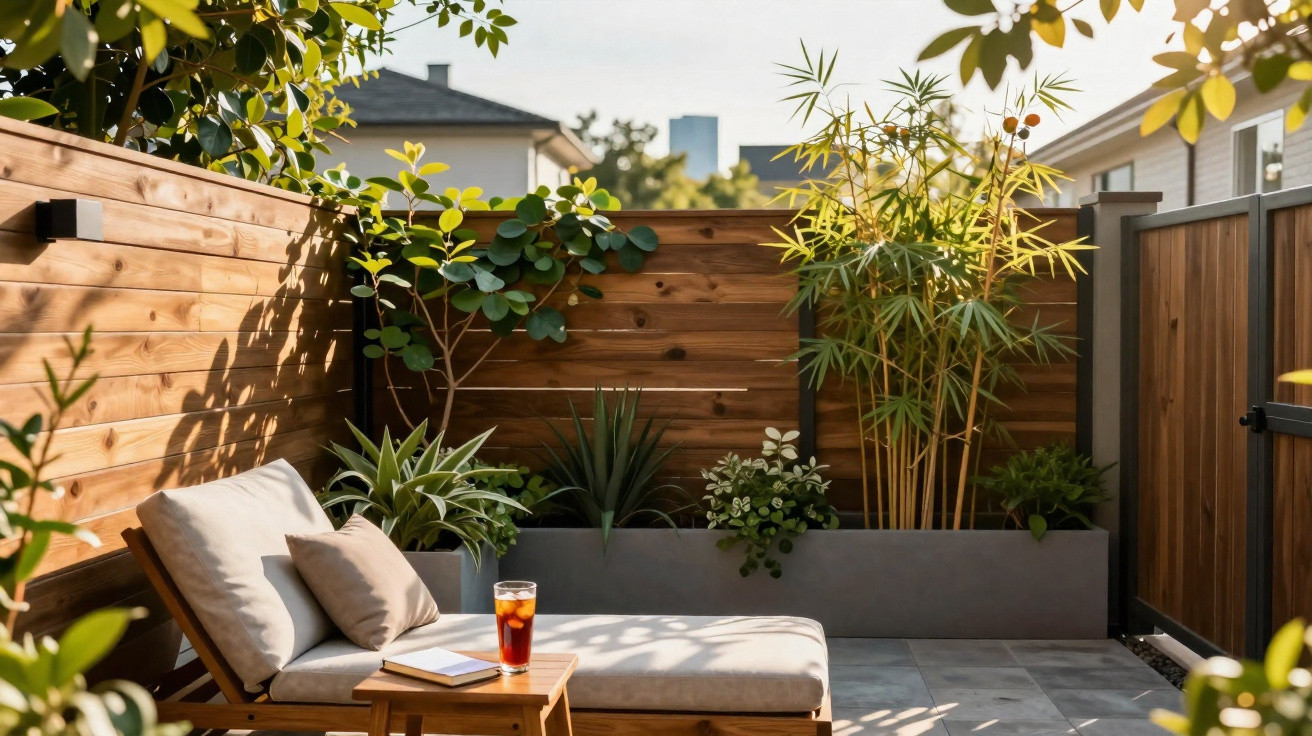
Most gardens are finished off with hastily installed chain-link fencing or a dull, off-the-shelf privacy screen. It’s a missed opportunity, because a thoughtfully planned garden fence can do far more: it protects, creates structure, directs sightlines - and turns a simple boundary into a genuine design feature. With the ideas below, even small or awkward plots can be noticeably improved.
Why the garden fence makes such a difference
Whether it’s nosy neighbours, a busy road, or a vegetable patch you don’t want deer and rabbits to strip bare, the fence is often your first line of defence. At the same time, it frames the garden like a picture and signals the overall style.
"A good fence doesn’t just mark a boundary - it says something about the people who live behind it."
For professional garden designers, the fence is part of the wider architecture - as important as the patio, pathways or planting scheme. If you simply put up “anything” to get the job done, you often end up regretting it later: the garden feels visually restless, proportions look wrong, or privacy is inadequate.
Playing with materials and lines: fences that create structure
Timber and wire: light, contemporary and ideal for the vegetable patch
A classic combination that’s often underestimated is timber posts paired with wire mesh. Done properly, it can look surprisingly modern and keeps beds and kitchen gardens clearly defined without making them feel boxed in.
- Paint the timber posts a dark shade: deep tones such as anthracite or dark brown make the wire panels look more refined.
- Use crisp rectangular sections: neatly tensioned mesh panels add order and calm.
- Perfect for the vegetable garden: keeps animals out without blocking light or views.
Wrought iron: traditional character with a modern edge
Iron fencing instantly brings a hint of a period villa or historic townhouse into the garden. It can be finished in matte or gloss paint, and it suits older properties as well as modern builds when the shapes and colours are chosen to match.
More elaborate scrollwork leans into nostalgia, while simple, clean bars create a minimalist look. The key is to tie the colour back to window frames, the roof or the front door so the overall result feels cohesive.
Horizontal slats: the modern garden favourite
Horizontal timber or metal slats are now a common sight in new-build areas. They feel calm and ordered, and they can be adapted easily - from semi-transparent screening to a fully closed wall.
Garden designers often like mixed formats too: for example, mostly horizontal slats with the occasional vertical section in between. That adds interest without making the fence look busy.
Steel with a rust patina: industrial charm among greenery
Sheet panels made from weathering steel develop a stable rust layer over time that looks warm and works remarkably well alongside green planting. The lively surface makes the fence a focal point, especially in pared-back, contemporary gardens.
"The combination of cool metal and soft plant shapes creates an exciting contrast that instantly makes the garden feel more high-end."
Thinking vertically: when the fence becomes a green backdrop
Trellises and hanging features: turning the fence into a planting wall
If space is tight, it pays to use height as much as possible. With trellis panels, timber slats or wall baskets, an ordinary fence quickly becomes a green wall.
- Climbing roses, clematis or jasmine make excellent use of vertical space.
- Herbs in hanging pots save valuable room in beds.
- Vegetables such as cucumbers or runner beans can climb upwards on supports.
Reclaimed timber posts or slats - such as old vineyard stakes - are also an effective option. They look rustic, add a sense of history to the garden and provide a natural framework for climbers.
Living fences: planning and trimming hedges properly
Hedges are the classic “green boundary”. They filter noise, provide shelter for birds and feel softer than any wall. However, many gardeners repeat the same mistake when trimming: cutting the hedge into a strictly vertical face.
That approach leaves the base in shade, and it gradually becomes bare. Professionals therefore recommend a trapezoid shape: wider at the bottom and narrower at the top. With a hedge of around 1.50 metres in height, the top should be 10 to 20 centimetres narrower than the base. This way, all parts receive enough light, and wind and snow cause less damage.
15 clever garden fence ideas for privacy, protection and style
Depending on the garden’s location and how you use it, mood, security or screening may take priority. The following types work well in combination:
- Timber-and-wire fence for vegetable beds
- Wrought-iron fence with decorative details
- Simple metal bars in a modern colour
- Horizontal timber slats with narrow gaps
- A mix of horizontal and vertical slats
- Weathering-steel fences with a rusted look
- Woven willow or hazel panels around the patio
- Light-permeable slats to bring more daylight into small gardens
- Tall, dark privacy wall for maximum seclusion
- Timber frame with integrated trellis panels for climbers
- Full planting wall with pots and planters fixed to the fence
- Tightly clipped hedge in a trapezoid shape
- Naturalistic hedge with looser trimming and flowering shrubs
- Wildlife-proof fencing in rural areas, for example against deer
- Fence panels with a curved top edge or decorative inserts
Woven willow fencing around a seating area, for instance, creates a sheltered, warm feel without completely shutting things off. More open structures let air and light pass through and make small gardens look larger. Tall, dark walls, by contrast, bring an “outdoor room” feel to the garden - ideal when neighbours’ windows look straight onto the patio.
Details that turn a fence into a design feature
Softer lines and unexpected touches
A fence that runs in one dead-straight line can quickly feel harsh. Even small curves or gently rounded top sections reduce that rigid, band-like effect. Garden professionals often use “softer” shapes to draw attention to seating areas or entrances.
Another technique is carefully placed decorative pieces. An old mirror at eye level, partly hidden behind grapevines or ivy, adds depth and reads like a window into another garden space. Metal ornaments, small shelves for pots or integrated lighting can turn a plain surface into a kind of outdoor gallery.
Coordinating colours with the house and planting
When choosing colours, professionals often take their lead from parts of the house: window frames, gutters, the front door or timber cladding can all provide reliable cues. When those tones are repeated on the fence, everything looks intentionally matched.
"If you link the fence colour with the house and garden furniture, even a small garden can feel calm and high quality."
Dark colours make boundaries recede visually. Plants, flowers and decorative objects come to the fore, and the fence almost disappears into the background. Light colours make surfaces more prominent, but in tightly built-up areas they can quickly feel imposing.
Practical considerations: security, maintenance and neighbours
For all the design talk, day-to-day reality matters. In rural areas where wildlife roams freely, a tall wildlife-proof fence may be the only way to save vegetable beds or perennials. In towns and cities, the emphasis is more often on privacy, noise reduction and appearance.
A few points worth settling before you build:
- Legal height: requirements vary by region and local authority.
- Property boundary: checking your site plan carefully helps prevent disputes later.
- Maintenance: timber needs treating, metal may need repainting, and hedges must be trimmed.
- Root pressure: large hedges can damage paths or walls if planted too close.
If you speak to neighbours early, you can avoid unnecessary friction. Many issues disappear when both sides are open to similar solutions - such as a shared hedge, or a fence design that both households find visually agreeable.
How a “boundary” becomes a garden room of its own
A well-considered fence doesn’t just separate - it creates new spaces. By varying heights and materials, you can zone the garden: a low fence around the vegetable beds, a semi-transparent screen by the patio, a tall wall along the roadside. The result feels varied yet still coherent.
Treat the fence like a stage where planting, lighting and decorative elements can perform, and you experience the garden differently. Instead of a grey dividing line, you get a backdrop that changes with the seasons - and that’s exactly what makes many of these fence ideas so appealing.


Comments
No comments yet. Be the first to comment!
Leave a Comment