
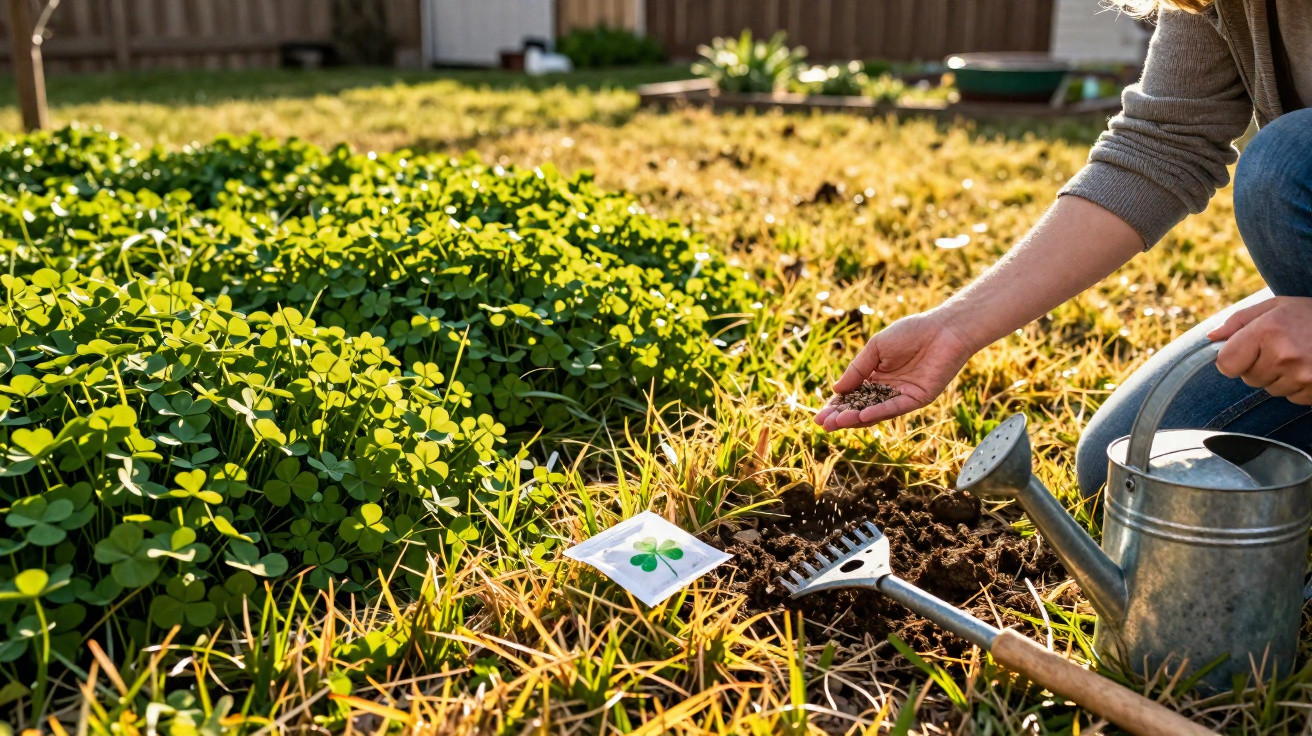
A simple trick is all it takes.
Plenty of garden owners know the routine: as soon as the snow has gone, the lawn shows its true colours. Yellow patches, bare spots, stubborn gaps. Instead of buying expensive grass seed year after year, more and more hobby gardeners are turning to a different plant that blends quietly between the blades of grass - and closes bare areas almost on its own.
Why the lawn is full of gaps after winter
Frost, waterlogging, dog urine, fungal diseases, the children’s wild garden parties - a lawn has to cope with a lot. Especially after winter or after extremely hot summers, you’re often left with:
- yellow, scorched patches
- completely bare circles in the grass
- matted areas where hardly anything grows
If you simply overseed with a standard lawn mix, it often only fixes things in the short term. Young grasses are delicate, need plenty of water and have shallow roots. If the rain doesn’t come in summer, those fresh shoots can quickly disappear again.
"An unobtrusive clover variety can fill bare patches, save water and make the lawn noticeably more resilient."
Micro clover: the secret tip against bare patches in the green
The answer isn’t found in the DIY-store shelf of glossy “perfect lawn” products, but in the legume family: so-called micro clover varieties, often sold as micro clover or micro white clover. Botanically, these are very small-leaved forms of white clover.
Unlike classic clover with larger leaves that can quickly look like a weed, micro clover stays extremely low. It typically grows only between 3 and 8 centimetres tall, visually blends into the lawn, and spreads like a dense carpet across gaps.
What makes micro clover so appealing
- extremely tough: tolerates foot traffic, children and pets
- low-maintenance: manages with little water once established
- improves the soil: fixes nitrogen from the air and makes it available to other plants
- low-growing: fits into the look of a lawn without shooting up
- fast gap-filler: spreads flat and closes bare patches
After a year, many hobby gardeners notice: the areas that used to need overseeding every spring stay permanently closed and green with micro clover.
How to prepare bare patches for sowing
Before you reach for seed, the soil needs a bit of attention. This is exactly where many lawn projects fall down, even though the method itself is straightforward.
- Remove old material: scrape out or rake away dried grass, moss and weeds thoroughly.
- Loosen the soil: lightly roughen the top layer with a rake. This gives seeds contact with soil and moisture.
- Level uneven areas: fill larger holes with a little garden soil and level with a rake.
- Break up compacted zones: carefully loosen heavily trodden areas with a garden fork so water and air can penetrate better.
"If you take a few minutes to prepare properly, you’ll have far fewer problems later on with failures and sparse patches."
Sowing micro clover correctly: step by step
Sowing works best in spring as soon as the ground is no longer frozen and warms up a little during the day. Early autumn also works well, as long as there are still a few mild weeks left.
How to sow
- Mix the seed: micro clover seed is very fine. Mix it with a little sieved soil or dry lawn seed so it spreads more evenly.
- Spread it: scatter the mix loosely over the bare patches. A dense cover is fine, but don’t pile it on.
- Press in: gently firm the area with your feet or a lawn roller. The seed needs soil contact, but shouldn’t be buried deeply.
- Water: keep evenly moist for the first few weeks without creating puddles. Water little and often rather than rarely and heavily.
In favourable conditions, the first delicate leaves can appear after ten to fourteen days. Depending on the weather, the area often closes noticeably within a few weeks.
How micro clover changes the maintenance workload in the garden
If you rely on a purely ornamental lawn, you usually have to fertilise, water and overseed regularly. Micro clover takes some of that work off your hands.
| Aspect | Pure lawn | Lawn with micro clover |
|---|---|---|
| Fertilising | needed several times per season | needed much less, sometimes completely unnecessary |
| Watering | sensitive in dry conditions | better protection against drying out |
| Bare patches | keep reappearing | are quickly closed by micro clover |
| Usability | areas are sensitive to trampling | more stable even with intensive use |
The reason lies in the biology: micro clover lives in symbiosis with root nodule bacteria on its roots. These can fix nitrogen from the air. Some of it ends up in the soil and is available to the grass too. In this way, the clover acts like a natural, built-in fertiliser.
When micro clover isn’t the best choice
Despite its many benefits, micro clover doesn’t suit every garden style. If you want a strictly manicured golf-green lawn or an almost perfectly uniform ornamental surface, you may find the fine, slightly different-coloured clover cushions distracting.
In very shady spots, under dense conifers, or in extremely wet areas, micro clover is also reluctant to grow. In those cases, a suitable shade-lawn mix and improved drainage are usually a better option.
Take care with allergies and pets
Anyone with a strong allergy to clover or legumes should speak to their doctor before sowing over a large area. For most pets, micro clover is unproblematic. Dogs tend to trample it down rather than eat it. If rabbits or guinea pigs roam freely outdoors, it’s wise to be more cautious, as they only tolerate clover in large quantities to a limited extent.
Practical examples: where micro clover is particularly useful
Many gardeners first try micro clover in small test patches. It often proves itself in typical trouble spots:
- desire lines between the patio and the shed
- play areas with a swing or trampoline
- areas beside the driveway where people frequently step out
- slightly sloping sections that dry out quickly
If it works well there, the next time the lawn is renovated people often mix a small amount of micro clover seed into the standard lawn mix from the start. The result is a hard-wearing, practical lawn that still looks like grass, but needs noticeably less care.
More tips for a resilient lawn
Micro clover solves many issues, but it doesn’t replace sensible basic care. If you want to keep your lawn stable over the long term, it helps to adopt a few simple habits:
- don’t water briefly every day; water deeply once or twice a week
- avoid cutting too low; a cutting height of 4 to 5 centimetres is ideal
- remove fallen leaves regularly in autumn so nothing rots under a damp layer
- if the ground is heavily compacted, scarify or top-dress with sand every few years
With micro clover in the lawn, many problem areas change from ongoing “repair jobs” into stable green zones. If you take action in spring, you give the plants enough time to develop deep roots by summer - helping those dreaded brown patches fail to appear in the first place.



Comments
No comments yet. Be the first to comment!
Leave a Comment