
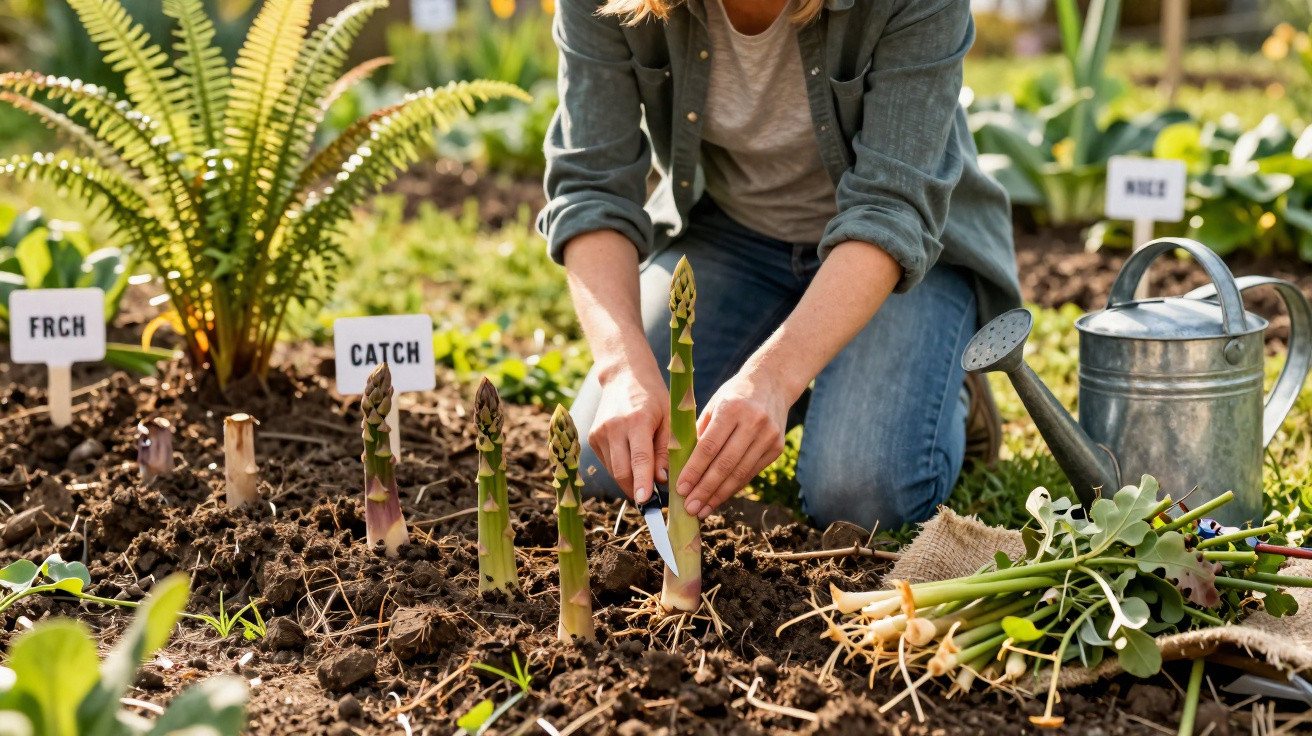
Anyone who plants asparagus in the garden imagines a generous crop every spring - for ten, fifteen, perhaps even twenty years. That outcome really is achievable. Yet one very common mistake, made either at the start or during harvesting, can weaken the plants so severely that the dream of a long-lived asparagus patch is over after only a few seasons.
The one mistake that ruins entire asparagus beds
Asparagus is one of the few truly perennial vegetables. If you establish a bed properly, it can produce fresh spears for many years. The crucial detail is how the plant works: it stores its strength in a thick root crown (often simply called the “crown”). If that reserve is repeatedly drained, the whole system eventually collapses.
The biggest, long-term dangerous mistake: harvesting asparagus too heavily in the first years - or even taking the knife to it in the planting year.
Many gardeners spot the first delicate shoots and find it hard to resist. They cut “just a little”. That “little” can seriously set the plant back. Instead of building reserves, it is forced to keep pushing up new spears. The damage often shows up later: the bed looks tired, the spears get thinner, and yields drop noticeably.
How asparagus really works: more like a tree than a lettuce row
Garden experts often say an asparagus bed has more in common with an orchard than with a row of salad leaves. When you plant an apple tree, you expect the early years to be about establishment. Nobody would think it sensible to strip a newly planted tree of fruit straight away.
With asparagus, the principle is much the same:
- Year 1 and 2: No harvesting; the plant needs time to build root mass and energy reserves.
- Year 3: Cut only around half the shoots, and only for a few weeks.
- From year 4: A full harvest is possible, but it still needs a defined, limited season.
If you allow this establishment phase, a strong network of roots develops below ground. That underground structure is what supports production for the years that follow.
How to set up a long-lasting asparagus bed correctly
The ideal site and soil
Asparagus thrives in sun. A position with six to eight hours of direct sunlight each day is ideal. Soil should be loose, deep, free-draining, and rich in organic matter - for example, a sandy loam improved generously with compost.
- No waterlogging: wet conditions lead to root rot.
- Loose, not compacted: thick roots need room to grow down.
- High in humus: work in compost before planting.
Trench method: the right planting trench
The classic approach starts in early spring as soon as the ground is frost-free. At that point you dig a long, deep trench.
| Step | Recommended measurements / notes |
|---|---|
| Dig the trench | About 20 cm deep, a good 30–40 cm wide; keep the soil loose and crumbly |
| Set the crowns | Place the root crown on a small mound, buds facing upwards |
| Spacing | About 30–40 cm between plants so they can spread |
| Row spacing | At least 1–1.2 m for maintenance and air circulation |
Many experienced growers cover the crowns with only a few centimetres of soil at first. Once the first shoots are roughly five centimetres high, they gradually add more soil. This closes air pockets and supports young plants without smothering them.
Long-term care: water, weeds and the harvesting window
Water needs and nutrients
Asparagus is not a heavy drinker, but it does best with consistent moisture. On average, around 2.5 to 5 centimetres of rainfall or watering per week is sufficient. In hot, dry sites it may need a bit more, provided the soil is allowed to dry slightly between waterings.
Regular applications of well-rotted compost around the plants help strengthen the root system and supply nutrients. A thin mulch layer of chopped straw or grass clippings can also reduce evaporation and keep weeds down.
Weeds: a small opponent with a big impact
Especially in the first years, weeds compete directly with young asparagus plants for water and nutrients. In a weedy bed, growth slows and the shoots stay thin.
Almost invisible, but decisive: keeping the bed largely weed-free in the early years often determines whether asparagus crops for 5 or 20 years.
Rather than hoeing - which can damage shallow asparagus roots - many seasoned gardeners rely on hand weeding and mulch. That keeps the soil open without slicing into the crowns.
The critical point: harvest properly, don’t strip the plant
Spears that are ready to pick are typically about 20 centimetres tall. At that stage they can be snapped or cut just above or just below the soil surface - at the point where the stem naturally gives.
The key rules are:
- Do not cut anything at all in the first two years.
- In the third year, harvest only for a few weeks and take no more than about half the spears.
- From mid-season, let all spears grow on until they turn into fine, bushy fern-like stems.
Those feathery fronds may look a little untidy, but they are essential. They photosynthesise and refill the “energy stores” in the crown. If you keep cutting too late or for too long, the plant loses the time it needs to recharge - and the bed becomes exhausted.
Autumn risk: don’t let pests overwinter
Alongside harvesting mistakes, pests can also weaken a bed over time. One of the most troublesome is a small beetle that specialises in asparagus and lays its eggs on stems and needles.
The most important defence happens in late autumn: once the foliage has fully dried off, cut all asparagus growth down close to ground level and dispose of it with general waste or separately - not on the compost. This removes the beetles’ winter shelter.
Removing the dead foliage consistently in autumn reduces infestation noticeably the following year - a small effort with a big payoff.
How to spot common problems early - and correct course
A bed that is losing vigour usually shows clear warning signs. If you notice them in time, you can often still recover performance:
- Spears getting thinner year by year: a sign of over-harvesting or a nutrient shortage.
- Lots of stunted, crooked shoots: soil is too compacted or persistently too wet.
- Spotted, chewed needles in summer: pests have established; improve autumn clean-up.
- Heavy weed pressure: increase hand weeding, mulch more, and if needed refurbish parts of the bed.
In some situations it also helps to reduce competition from neighbouring beds so asparagus has easier access to nutrients. A targeted compost application in early spring can provide an extra lift.
Why patience with asparagus pays off again and again
What sets asparagus apart from many other crops is its long time horizon. Lettuce can be ready in weeks, but asparagus rewards only a multi-year approach. Anyone who holds firm for the first two years and does not cut a single spear is often repaid later with very generous harvests.
For self-sufficiency, a well-planned bed is particularly worthwhile: with just a few metres of row, you can pick many kilos of asparagus per season once it reaches full production. Combined with early potatoes, strawberries in neighbouring beds, or herbs such as chives, spring can become a real “harvest line” that refreshes the garden every year.
The main pitfall - harvesting too greedily during the establishment years - is easy to avoid. Treat asparagus like a young fruit tree, give it time to grow, and you can enjoy thick, flavourful spears from your own plot for many springs to come.

Comments
No comments yet. Be the first to comment!
Leave a Comment