
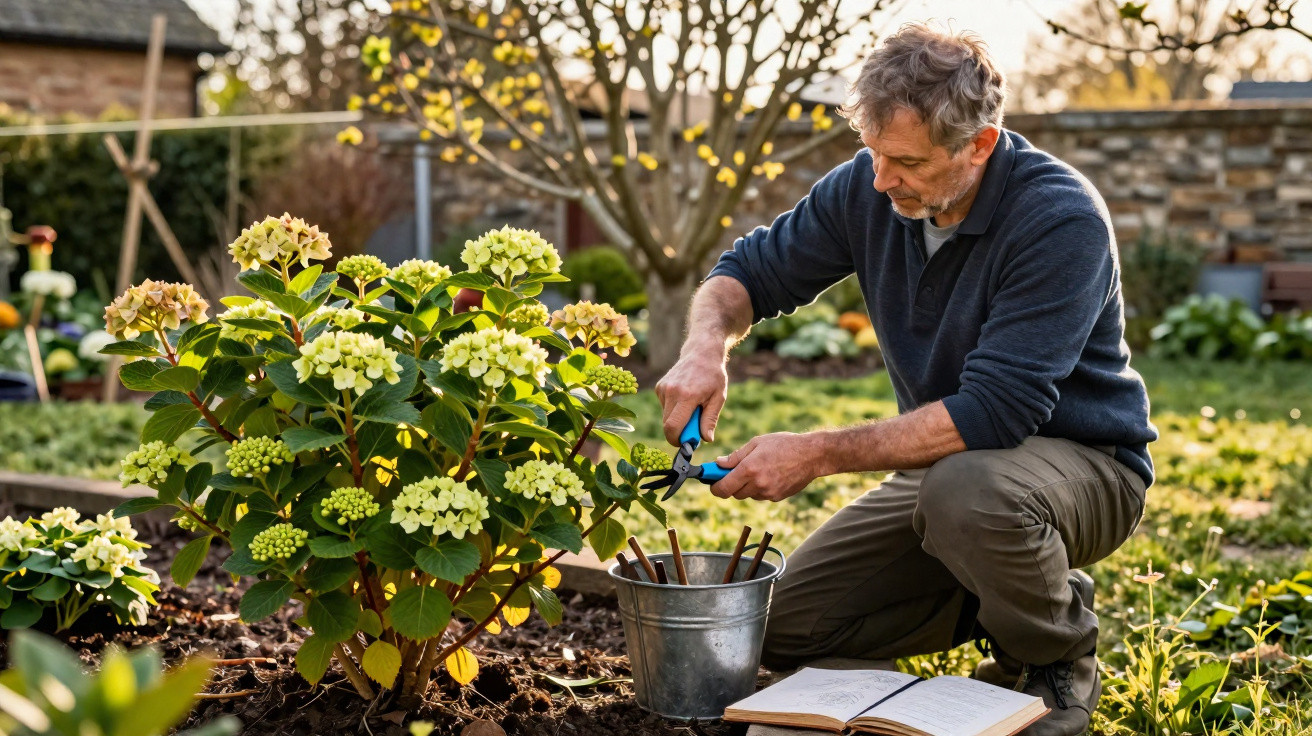
Many hydrangeas remain a disappointment despite costly compost.
One unobtrusive task in March determines whether the shrub bursts into flower in summer – or lets you down.
On television, it always appears effortless: a few cuts, some mulch, and modest bushes quickly become dense spheres of blooms. In real gardens, however, the picture is often very different. Hydrangeas in particular can be difficult for many amateur gardeners. British gardening expert Monty Don explains that the problem is usually not fertiliser or a “green thumb”, but an almost always overlooked March ritual.
Why March determines hydrangea hopes
Hydrangeas may seem tough, yet they react unforgivingly to poor timing. The especially popular bigleaf hydrangeas (Hydrangea macrophylla), including mophead and lacecap varieties, form their flower buds on what is known as “old wood”. In other words, the stems intended to bloom in summer had already produced their buds in the previous year.
Hydrangeas and the risk of cutting old wood too early
Anyone who shortens these stems too early unknowingly removes the entire set of flower buds. The plant will then put on fresh, green growth, but produce scarcely any flowers – a familiar sight in many front gardens.
“The crucial point is not how much is cut, but where and when”
Comments
No comments yet. Be the first to comment!
Leave a Comment