
With the first mild days of spring, the craving grows for fresh, young leaves picked straight from the bed. Many home growers automatically reach for butterhead lettuce or cut-and-come-again salad. Yet there’s an almost forgotten alternative whose leaves seem to melt in your mouth. The catch: it won’t forgive sloppy sowing. If you only guess at depth and spacing, you’ll give up a large share of the harvest you could have had.
What’s behind this ultra-tender salad speciality
Claytonie: the little-known plant with a big impact
The plant in question is Claytonie, often referred to as “Claytonia” or “winter purslane”. It originally comes from North America, but in many garden centres it still sits on the sidelines. That’s a shame, because it suits contemporary gardens, raised beds and balcony planters perfectly.
At first glance the foliage looks fairly ordinary: small, rounded, juicy green leaves. That changes the moment you take a bite. The texture is almost succulent, yet astonishingly delicate. There’s no crunch and nothing tough - the leaves practically dissolve on the tongue.
“Anyone who has tried freshly picked Claytonie quickly finds ordinary leaf lettuce rather dull.”
In flavour terms, it lands somewhere between a mild lamb’s lettuce note and fresh spring herbs. There’s no peppery punch like rocket and no sharp bitterness like chicory - just gentle, green, lightly nutty. Even in brighter sunshine the taste stays pleasantly mild, and it doesn’t turn bitter as quickly as many other salad leaves.
Why this salad is perfectly suited to the season
Claytonie doesn’t only shine on the plate - it performs in the bed too:
- It grows quickly, with the first pickings ready after just a few weeks.
- It needs very little feeding and copes well with ordinary garden soil.
- It covers the ground so densely that weeds get very little chance.
- It’s considered hardy, and common lettuce diseases appear far less often.
That’s particularly appealing for small urban gardens or wildlife- and eco-minded plots: with the right variety, you can often do without many chemical treatments. Claytonie does part of the job itself by simply outgrowing unwanted weeds.
The millimetre that decides success or failure
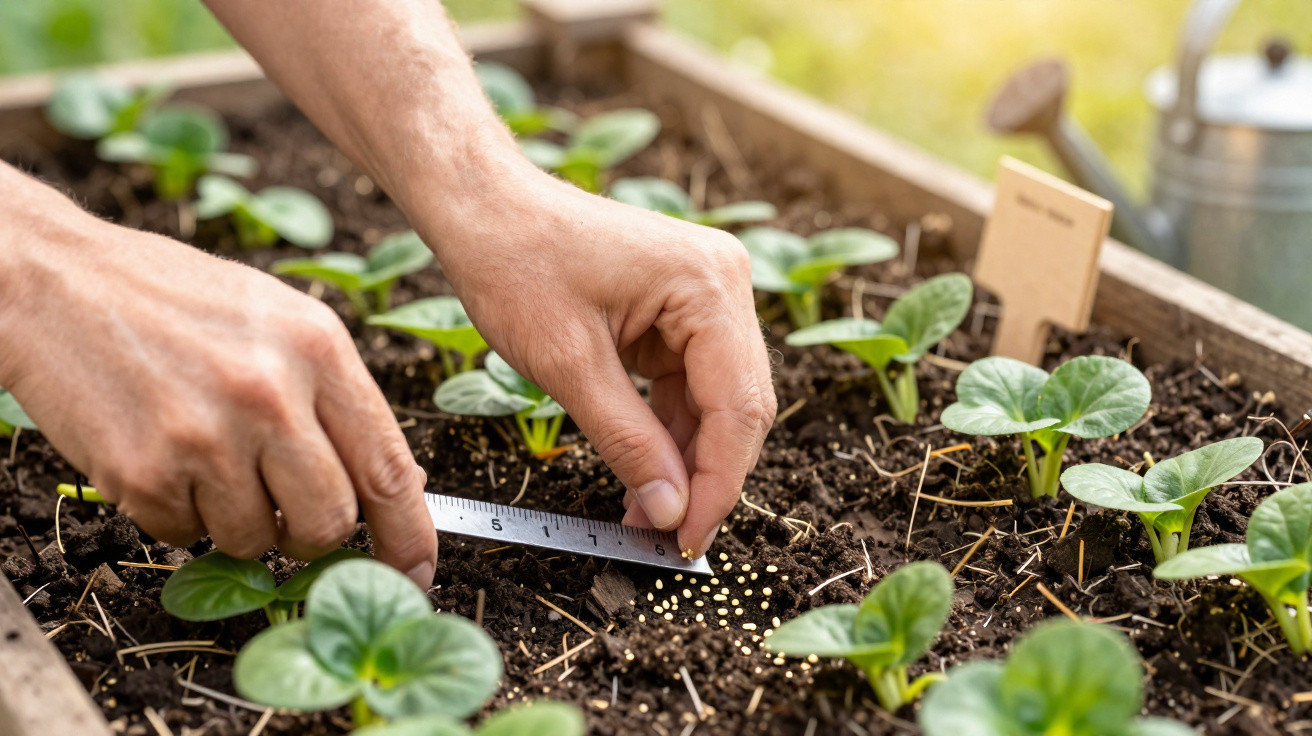
The perfect sowing depth: half a centimetre - no more, no less
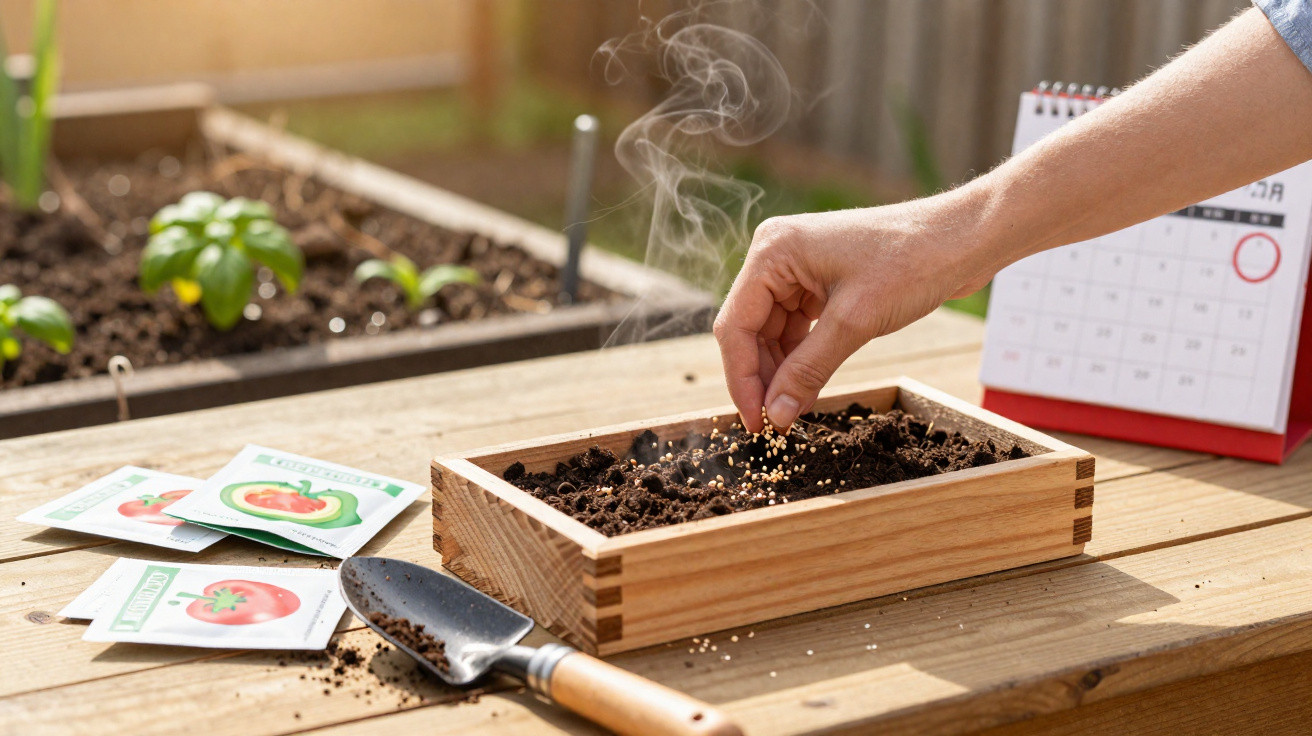
With this salad plant, everything hinges on how deep the seed ends up in the soil. The grains are tiny and have only limited energy to push upwards. Bury them too far and they can’t reach the surface; leave them on top and they dry out quickly.
“The optimal depth for the seed is exactly 0.5 centimetres.”
In practice, that means:
- Make a very shallow groove - more of a line than a proper trench.
- Scatter the seed in, without pressing it down.
- Sprinkle over only a whisper-thin layer of fine, sieved soil or seed compost.
- Gently firm it all in, for example with the flat of your hand or a board.
With Claytonie, even a 1 cm covering can be too much. The seedling then burns through its reserves before it breaks the surface. On the other hand, if the seed is exposed, the first warm breeze can dry the sprout out. That half centimetre sounds trivial, but it determines whether the sowing germinates at all.
How far apart the rows really need to be
When you prepare the bed, it’s worth using a tape measure. Aim for roughly 15 cm between rows. That figure isn’t just textbook theory - it makes everyday growing far easier.
With 15 cm between the lines, you achieve the following:
- Enough light reaches every plant, even once the foliage closes in.
- Air can move through, so leaves dry faster after rain.
- A narrow hand cultivator or hoe fits neatly between the rows.
If you sow in tidy rows, you can later loosen the soil or remove weeds between the lines with just a few passes. That helps the ground hold moisture better, saving water and noticeably cutting down on how often you need to water.
Giving each plant the space it needs
10 centimetres spacing: why thinning is non-negotiable
Once the seedlings appear, you’ll usually have far more plants than you can keep. Many gardeners hesitate to remove young growth because they don’t want to “waste” anything. That’s exactly where the most common mistake starts.
Claytonie needs room to form its characteristically lush leaf rosettes. If too many seedlings remain, they compete for water and nutrients. The result is spindly, weak plants with small leaves.
“Along the row, only one strong clump of young plants should remain about every 10 centimetres.”
Proceed like this:
- Wait until the seedlings have at least two to three small leaves.
- Pull out the weakest ones decisively, or snip them off just above soil level with scissors.
- Always keep the strongest, most vigorous shoot.
The tiny plants you remove can still be used in the kitchen - for example as microgreens on a slice of buttered bread or mixed into a small spring salad.
Watering without stressing those delicate leaves
To keep the leaves truly tender, the plant needs consistent moisture. If the soil dries out hard in between, Claytonie responds by pausing growth and can become tougher.
A few simple rules help:
- Keep the soil evenly moist, but avoid waterlogging.
- Water the soil directly rather than pouring over the leaves.
- Use a fine rose or a watering can with a narrow spout so you don’t wash the soil away.
- Add a thin layer of dried grass clippings or hemp shives between the rows - this reduces evaporation.
This natural mulch acts like a sunshade for the soil and can save a lot of watering effort, especially in drier springs.
From sowing to plate in record time
When the first cut is ready
If you stick to the millimetre and centimetre rules, you won’t be waiting long for the first bowlful. Around six to eight weeks after emergence, the plants are ready to harvest. By then they’ve formed dense rosettes that give you a small handful per plant.
“From the first germination to a bowl of salad often takes only a good month and a half.”
Don’t harvest by pulling out the whole plant. It’s better to pinch the stems off just above the base with your fingers or use a sharp knife. That way the heart of the plant stays intact and will sprout again. In favourable conditions, two to three cuts per plant are possible.
The key measurements at a glance
| Task | Measurement |
|---|---|
| Sowing depth | 0.5 cm |
| Row spacing | 15 cm |
| Plant spacing after thinning | 10 cm |
| First harvest | 6–8 weeks after emergence |
How Claytonie shines in the kitchen
More than just a side salad
The leaf texture all but demands to be eaten raw. Traditionally, Claytonie is served in simple, fresh salads with olive oil, a little lemon juice or mild vinegar, salt and pepper. Even this basic dressing is enough to let the plant’s own flavour stand out.
It also works brilliantly, for example:
- as a bed under pan-fried fish or tray-baked vegetables
- mixed with lamb’s lettuce, purslane or young spinach leaves
- as a fresh topping on sandwiches and burgers in place of iceberg lettuce
- roughly chopped into omelettes, added right before the end of cooking
Because the leaves are so soft, they shouldn’t sit against hot food for long. Brief contact is enough - otherwise they lose their signature melt-in-the-mouth quality.
Why the millimetre-level effort is worth it
Claytonie is ideal for anyone with limited space who still wants to grow something a bit special. A narrow strip in a bed, a box on the balcony or a section of a raised bed is enough to harvest several bowls of salad. The precise sowing measurements may sound strict at first, but after one run-through they quickly become second nature.
If you enjoy experimenting, you can combine Claytonie with other early crops such as radishes, Asian salad leaves or garlic chives. The different heights and root depths complement each other well. At the same time, the bed stays productive and attractive for longer because there’s always something ready to pick.
The biggest learning curve is, in truth, being willing to thin ruthlessly and stick to the spacings. If you do, you’ll be rewarded with a salad whose flavour goes far beyond typical supermarket leaves - and that shows just how much can come from a few precisely measured centimetres of soil.
Comments
No comments yet. Be the first to comment!
Leave a Comment