
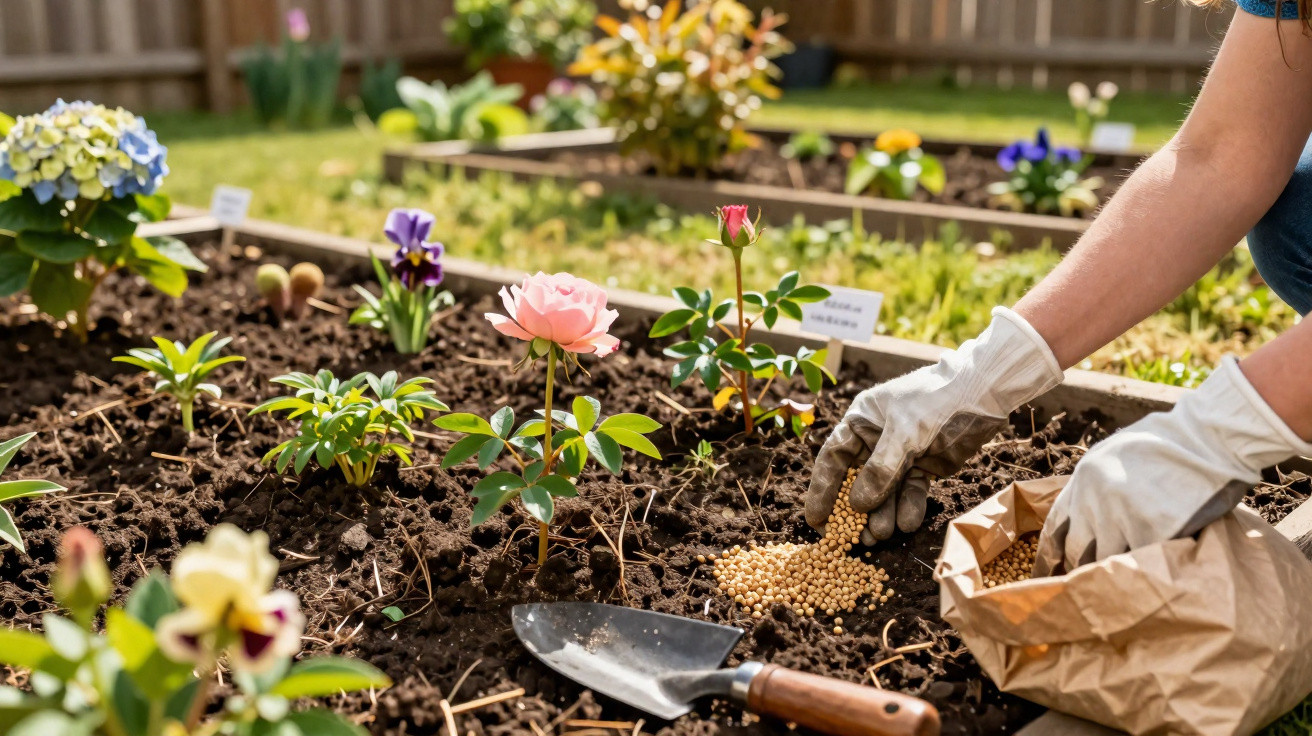
Many perennials are slow to get going in spring even when the buds are clearly poised to burst. Very often, the problem is simply a lack of “fuel” in the soil. That’s where you can make a real difference: if you feed certain long-flowering perennials in March with the right nutrient mix, you set them up for stronger new growth, richer foliage and-most importantly-noticeably more flowers.
Why March gives perennials an advantage
Once the frost has passed, the soil starts to warm up, loosens and becomes more free-draining. Roots switch back into active growth and begin hunting for nutrients. At this point, perennials take up fertiliser far more efficiently than they do in summer heat, when the ground is often dry and compacted.
"If you fertilise in March, you refill the plants’ empty reserves exactly when their roots are at their hungriest."
Organic feeds and controlled-release fertilisers work particularly well at this time. They release nutrients gradually over three to six months, reducing the risk of “overfeeding”. Timing still matters: the soil should no longer be frozen and should be slightly moist-neither waterlogged nor bone-dry. In most areas, late February to early April is the sweet spot.
These 11 perennials will thank you for fertilising in March
Of course, most perennials respond well to added nutrients. But some show a particularly obvious improvement after a March feed-more flowers and sturdier growth you can actually see. Here are the 11 key candidates and what suits them.
1. Roses – a classic with a big appetite
Roses wake up early and need immediate energy for fresh shoots. A balanced rose feed or general fertiliser with a ratio like 10-10-10 or 12-12-12 supplies nitrogen, phosphorus and potassium in equal measure.
- Sprinkle the fertiliser in a ring around the plant rather than right up against the stem.
- Work it in lightly, then water.
- For heavily flowering bedding roses, plan a modest top-up feed in June.
2. Peonies – full splendour needs stored energy
Peonies may flower for only a short spell, but they pour a huge amount of energy into it. A spring boost is often repaid with larger, well-filled blooms.
A balanced all-purpose fertiliser in a moderate dose is enough here. Too much nitrogen encourages lots of leafy growth and weaker stems-then the flowers are more likely to flop.
3. Dahlias – flowering powerhouses that must feed the tubers
Dahlias grow quickly once the soil is warm enough. They tend to do best with less nitrogen, for example a 5-10-10 fertiliser.
"Less leaf, more flower: a phosphorus- and potassium-led fertiliser pushes energy into tubers and blooms rather than just greenery."
Feed either once the dahlias have started into growth, or straight at planting time when you set the tubers in during spring.
4. Delphiniums (larkspur) – tall and sturdy, not thin and weak
Delphiniums thrive in nutrient-rich soil and show it with impressive flower spires. A general fertiliser with an even nutrient balance in March supports a strong start.
Especially for tall varieties, that early feed helps build thicker, more stable stems-so the plants are less likely to be flattened later by wind or heavy rain.
5. Phlox – a dense carpet of flower with spring feeding
Phlox can become sparse and underwhelming if nutrients are lacking, producing thinner growth and fewer flower heads. A balanced feed in March encourages compact, healthy plants and fuller clusters.
Free-draining soil matters: loosen the ground first, feed, then water in. Waterlogging tends to hold phlox back rather than help it along.
6. Coreopsis (tickseed) – a long-flowerer with a constant need
Coreopsis keeps blooming for a long time and will repeat-flower readily when spent blooms are removed. That level of performance draws heavily on reserves.
A restrained but timely nutrient boost in March supports early growth. On very poor soils, a second, smaller feed in summer can be worthwhile.
7. Bearded iris – encourage flowers, not just foliage
Bearded irises prefer leaner conditions and plenty of sun. Excess nitrogen leads to lots of leaf and fewer flowers. A fertiliser that favours phosphorus and potassium (similar to 5-10-10) is a much better fit.
- Don’t scatter fertiliser directly onto the rhizomes.
- Lightly working it into the surrounding soil is sufficient.
- Sandy soils can take a touch more; heavy soils a little less.
8. Hostas – shade favourites that love compost
Hostas do best in humus-rich, consistently moist spots. In March, a mix of a small amount of slow-release fertiliser plus well-rotted compost is often all they need.
"A thin layer of compost is like a breakfast buffet for hostas-slow, steady and improving the soil at the same time."
This approach typically produces larger leaves, deeper green colour, and better tolerance of short dry spells.
9. Daylilies (Hemerocallis) – a new flower almost every day
Daylilies are prolific: through summer, fresh blooms can open almost daily. That pace benefits from a solid foundation of phosphorus and potassium.
A fertiliser with slightly increased levels of these two nutrients at the start of the season, followed by a second, gentler boost in summer, helps keep the plants performing.
10. Hydrangeas – blue forms are particularly sensitive
Blue hydrangeas hold their colour only in acidic soil and with a suitable nutrient balance. A fertiliser low in phosphorus (for example 12-4-8) helps support reliable blue colouring-provided the soil pH is suitable.
For pink or white varieties, a standard hydrangea fertiliser is usually fine. In every case: don’t apply right against the stem; spread it across the root zone and water it in.
11. Astilbes – hungry shade beauties
Astilbes are among the “big eaters” of the perennial border. In nutrient-rich soil they reward you with large, feathery flower plumes.
A balanced feed in spring, topped up with a second application in autumn, supports both flowering and the development of strong rootstocks. In damp, part-shaded areas in particular, they tend to look visibly happier with this routine.
How to use fertiliser properly in March
Results don’t depend on the product alone-application is just as important. A few basics often make the difference between a stunning border and scorched growth.
- Loosen the soil lightly before feeding.
- Never apply fertiliser onto frozen or dust-dry ground.
- Don’t pile fertiliser directly against stems, tubers or rhizomes.
- Water thoroughly after application, but don’t flood.
"Fertiliser placed right at the root crown can literally burn roots and shoots, and it can also promote weak, soft foliage."
Choosing organic feeds helps avoid sudden nutrient spikes. That’s kinder to sensitive perennials and also helps protect soil life and groundwater.
Tidy the beds: weeds out, nutrients in
In March, many weeds are still loosely anchored in the soil. You can pull them by hand or clear them quickly with a narrow hoe, before they start competing with your perennials.
Rather than binning the green material, you can put it to work. Young weeds can be turned into a simple plant feed (liquid manure):
- Fill a bucket or tub with water.
- Add freshly weeded greenery (without seed heads).
- Leave it for several weeks, stirring occasionally.
- Dilute the strongly smelling liquid at roughly 1:10 with water.
- Apply it to the root area of perennials every fortnight.
Many gardeners report that beds treated this way look noticeably more vigorous within a few weeks: stronger colour, more buds and sturdier growth.
Understanding the right nutrient mix
The numbers on a fertiliser pack show the ratio of the key nutrients: nitrogen (N), phosphorus (P) and potassium (K). For example:
| Nutrient | What it does in the plant |
|---|---|
| Nitrogen (N) | encourages leaf and shoot growth, deep green colour |
| Phosphorus (P) | important for roots, buds and flower development |
| Potassium (K) | strengthens cell walls, improves resistance to drought and disease |
Where flowers are the priority, flowering perennials often do better with slightly less nitrogen and a stronger emphasis on phosphorus and potassium. Foliage-focused perennials such as hostas can cope with more nitrogen-so long as the soil isn’t exhausted and the plants don’t become soft and leggy.
Practical extras for low-effort and hands-on gardeners
If you’re short on time, a quality organic slow-release fertiliser in March can be worked in once and then left to do its job for much of the season. Pair it with a thin layer of compost and you create a nutrient buffer that suits most perennials.
If you prefer a more precise approach, watch individual plants. Pale leaves, thin stems and small blooms usually point to underfeeding. Excessively soft, rampant leaf growth with few buds more often indicates too much nitrogen. In that case, switch to a fertiliser that leans more towards phosphorus and potassium-or pause feeding.
Mixed borders are where it gets especially interesting: if you plant heavy feeders such as astilbes or dahlias alongside more modest species, targeted feeding is worth it. Instead of treating the whole bed the same, give the hungrier plants a slightly higher dose and let tougher plants make do with less.
With just a few jobs in March, you can set up a system that carries well into summer: the soil supplies nutrients steadily, perennials grow sturdily, and the flowering looks effortless-even though it’s the result of a very smart start to the season.




Comments
No comments yet. Be the first to comment!
Leave a Comment