
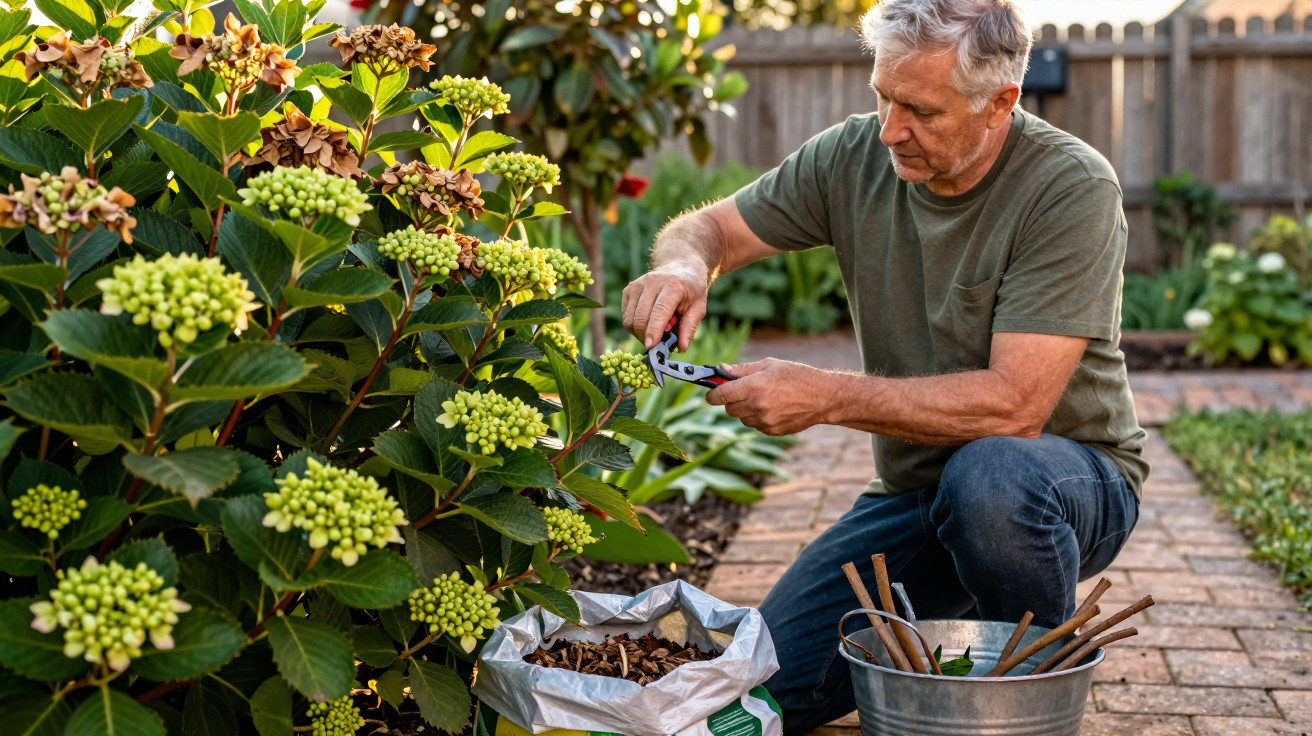
A small, almost unremarkable March habit is what makes the difference right here.
While the beds may still look bare, an experienced TV gardener sets hydrangeas up in March for those dense, rounded blooms in summer. It is not about hard pruning, but a few precise cuts and a low-key yet effective bit of soil care - both done at exactly the right moment.
Why hydrangeas often produce too few flowers despite good care
Many home gardeners know the pattern: the hydrangea grows strongly and puts on lots of leaves, yet the flowering is disappointing. In most cases, the same classic mistake is to blame - and it happens months earlier.
In particular, the much-loved bigleaf hydrangeas (Hydrangea macrophylla) flower on what gardeners call “old wood”. In other words, the flower buds for next summer are formed the year before and sit on the stems all winter.
If you “tidy up” in winter and routinely cut off the old flower heads, you often remove those already-formed buds at the same time. The result shows up in July: plenty of green, very few flowers.
“The crucial point isn’t what you cut, but when you cut and how finely you work along each stem.”
That is why Monty Don - and Alan Titchmarsh as well - advise a change of approach: do hydrangea cuts not in December or January, but in March, and do them with a very controlled hand.
Why March matters so much for hydrangeas
Hydrangeas cope with cold reasonably well, but their delicate flower buds often sit exposed at the tips of shoots. A cut made at the wrong time, or stems left without their natural protection, can make those buds far more vulnerable to frost damage.
In March, once the hardest frosts are usually past and the buds begin to swell slightly, the plant makes it obvious which parts are alive and worth keeping. This is exactly when Monty Don steps in: he removes the dried flower heads, but leaves the buds underneath completely untouched.
That way the stems get light and air, while the plant’s natural winter protection stays in place for as long as possible. By contrast, many gardeners “clean” their hydrangeas in winter - and weaken the very flowering they are hoping to encourage.
How Monty Don cuts back hydrangeas in March
Monty Don draws a clear line between tidying and true pruning. In March, the aim is only gentle removal of spent heads - not reshaping the shrub.
“He cuts each old flower head off just above the highest healthy pair of buds. The stem stays, the buds stay; only the dried ‘ball’ disappears.”
It sounds straightforward, but it does require careful observation. A typical routine following his method:
- Wait for a frost-free, ideally mild weekend in March.
- Check the buds: slightly swollen, greenish, and easy to see on the stems.
- Using sharp secateurs, cut off each old flower head so that the first strong pair of buds sits directly beneath the cut.
- Remove only weak, dead, or damaged stems completely, right down at the base.
- Leave strong, green stems in place - they carry this season’s blooms.
Especially with bigleaf/mophead hydrangeas that bloom on old wood, the rule is: save any hard shaping for after flowering. If you shorten too much in spring, you often remove most of the flowers for that year.
Difference between deadheading and pruning
Many people confuse taking off the spent heads with a full prune. The consequences only become obvious in summer. A quick comparison:
| Task | Aim | Risk to flowers |
|---|---|---|
| Deadheading | Remove dried blooms while protecting buds | Very low, if you cut just above the pair of buds |
| Pruning | Control shape, size, and rejuvenate the plant | High on old-wood types if you cut too low |
If you keep that distinction in mind, you can maintain a neat hydrangea while still getting those full, rounded blooms year after year.
Mulching: the quiet trick for stronger buds
The second part of Monty Don’s routine is understated but key: a generous mulch layer in winter or very early spring.
When the plants look like bare sticks in the border, he spreads a thick layer of organic matter around the base - for example well-rotted compost, spent mushroom compost, or bark mulch.
“A 5–10 centimetre layer protects the roots, holds moisture, and helps the plant start spring with a burst of nutrients.”
What matters for hydrangeas:
- Use only well-rotted material, not fresh manure.
- Apply it 5–10 cm deep over the root zone.
- Keep the very base of the stems (the crown) clear so nothing rots.
- Work on cool ground that is not frozen (January to early March).
Monty Don often does this as early as January if the soil is not frozen. If you are later to it, you can add the mulch straight after the March tidy-up cut.
Common mistakes that cost hydrangeas their flowers
Most disappointments with hydrangea flowering trace back to the same pitfalls. Avoid them and you get much closer to the dense, rounded blooms Monty Don is known for.
- Hard pruning in winter on varieties that flower on old wood.
- Cutting off old flower heads in autumn, before they can provide frost protection.
- Piling mulch right up against the stems - encourages rot and fungal problems.
- Using too little mulch, or too thin a layer, so the soil dries out quickly.
- Never removing very old, exhausted stems - the plant stops renewing itself.
If you are not sure whether your hydrangea flowers on old or new wood, check the variety or watch it over a season. If it sets buds on older stems, be especially cautious with spring pruning.
Practical examples from everyday gardening
In a small terraced-house garden, you can test Monty Don’s approach easily: treat one hydrangea as you always have, and manage the other with the March rule plus mulching. After a year or two, the difference is often clear - more flower heads, more evenly spread, and less drought stress during hot spells.
The same idea works in a container, as long as the plant has enough compost and a semi-shaded position. In pots, a thinner mulch layer refreshed more often can be worthwhile, because the growing medium dries out faster.
What gardeners should also know about soil, watering and frost
Hydrangeas prefer evenly moist, humus-rich soil. Mulch does its job quietly in the background: it reduces evaporation, supports soil life, and means fertiliser is less likely to be washed out quickly. Combined with the careful March cut, it becomes a kind of “flowering insurance policy”.
Late frosts can still be a concern. If you garden in an exposed or colder area, leave the old flower heads in place for as long as possible and delay cutting until severe frosts are no longer forecast. If in doubt, a light horticultural fleece can protect fresh buds overnight.
If you take on board this mix of timing, gentle cutting and smart mulching, there is no need to chase complicated specialist tips. A small March routine is enough to turn sparse shrubs into lush, colourful showpieces in summer - year after year.

Comments
No comments yet. Be the first to comment!
Leave a Comment