
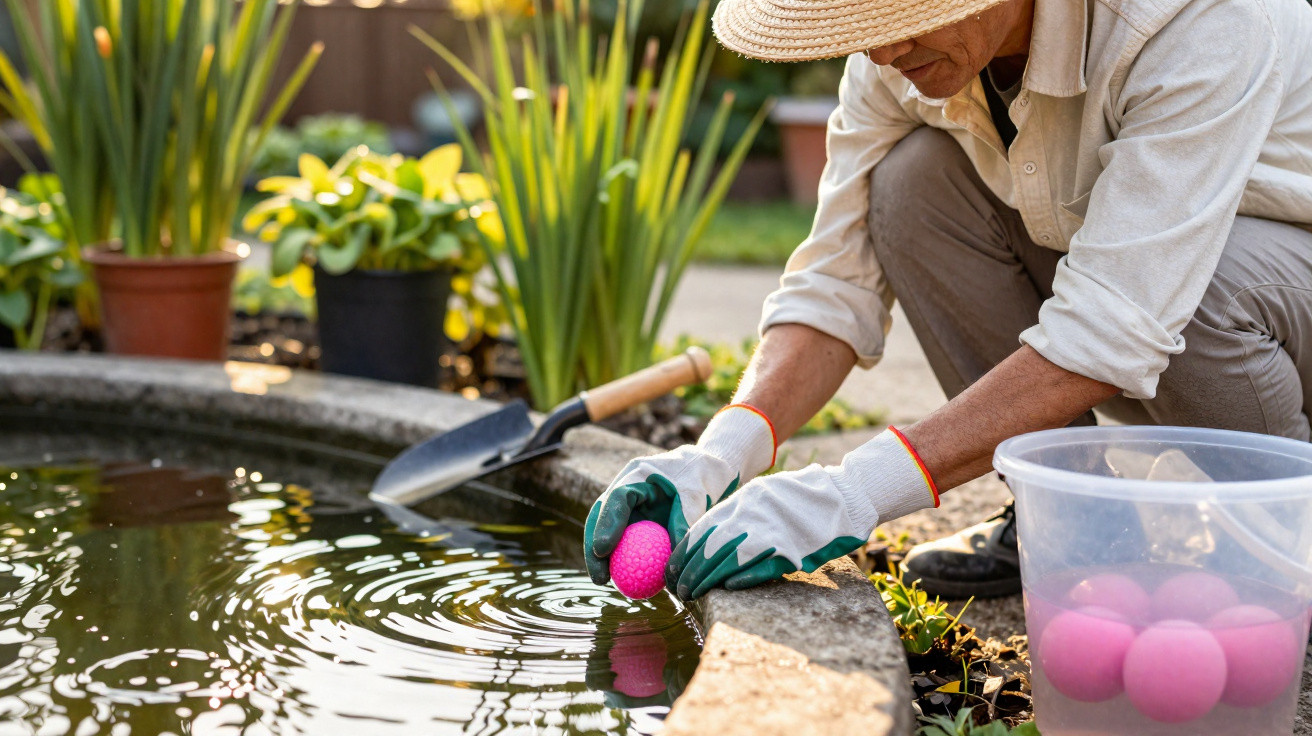
More and more amateur gardeners are reporting conspicuous, bright pink clusters of eggs on walls, posts, or directly above the surface of the water. What can look harmless - almost decorative - is, in reality, a serious red flag: an invasive snail species may be behind it, capable of tipping whole ponds out of balance, destroying useful plants, and even posing a risk to people.
What’s behind the pink eggs
Those vivid eggs belong to the golden apple snail (Pomacea canaliculata). Originally from South America, this species has spread worldwide largely through the aquarium trade. In North America it is now expanding rapidly; in the European Union it has long been classified as a prohibited invasive species.
What makes this snail particularly problematic is how adaptable it is: it can cope both in water and on land. Many aquatic snails remain in the pond, but the golden apple snail can easily climb up bank supports, feed on young shoots in flower beds, and deposit its striking egg clusters on hard surfaces just above the water level.
"Bright pink egg lumps above the waterline are a clear warning signal - don’t touch them, act instead."
A single female can produce thousands of eggs over her lifetime. Where there are no natural predators, numbers can surge dramatically. If you respond early, there is still a realistic chance of limiting the spread. If an infestation is ignored, bringing the population under control later usually requires a great deal of effort.
How to recognise the dangerous egg clusters
The eggs stand out primarily because of their colour: intense pink through to almost neon. They stick like a firm, grape-like mass to vertical surfaces, for example:
- on fence posts or poles near a pond
- on walls or bank reinforcements
- on the stems of aquatic plants, bridge supports, or jetties
- on decorative features in and around garden ponds
In most cases, the clusters are roughly the size of a small grape bunch or about half a finger. The surface looks granular, with the individual eggs packed closely together. The key clue is the position: always slightly above the waterline, never fully underwater.
If you find something like this, do not handle it with bare hands. Instead, take a photo, note the location, and mark the spot so you can find it again quickly.
Damage to ponds, gardens and the environment
The ecological consequences of a heavy infestation can be severe. Golden apple snails preferentially eat soft plants, fresh shoots, and delicate aquatic vegetation. In ponds and ditches, they can wipe out almost the entire plant stock in a short time.
Without aquatic plants, the ecological balance collapses. Algae multiply rapidly, the water turns green and cloudy, and oxygen levels drop. Fish, amphibians, and other aquatic life become stressed or die. At the same time, toxins can build up in the water, making it risky for people and pets to be around.
"When aquatic plants disappear, the pond tips - often irreversibly."
The animals also do not stay confined to the water. They move out into the rest of the garden and feed on crops, ornamental perennials, and young plants. Particularly affected are damp beds, vegetable plots near the pond, and newly planted seedlings.
Health risk for people
Golden apple snails are not just a nuisance - they can also transmit pathogens. In some regions, they act as intermediate hosts for parasites, such as liver flukes, or pathogens that can trigger a specific form of meningitis (eosinophilic meningitis). These organisms can enter the human body via snails or contaminated water.
Anyone working in contaminated water without gloves, touching snails, or eating with unwashed hands is taking an unnecessary risk. Children, in particular, often touch things in the garden impulsively and then put their fingers in their mouths - another strong reason to take sightings seriously.
Danger to agriculture
In rice-growing regions, golden apple snails are already regarded as a major problem. They feed on young rice plants in flooded fields and can destroy entire harvests. Other crops grown in wet soils are also at risk.
For farms, an infestation can mean financial losses, extra costs for control measures, and potentially restrictions on irrigation. The more firmly the snails establish themselves in an area, the more demanding countermeasures become - up to and including long-term monitoring programmes.
What to do immediately if you see pink eggs
As soon as you spot a bright pink egg mass in the garden, time matters. The following steps are sensible:
- Photograph the find - both a close-up of the eggs and the wider location.
- Inform your local environmental, nature conservation, or agricultural authority.
- Put on protective gloves and avoid direct skin contact with eggs, snails, and water.
- Block off the area or clearly mark it so nobody reaches in by mistake.
- Search nearby thoroughly: check bank walls, stones, plant containers, and damp hiding places.
Specialists can confirm in a laboratory whether it really is the golden apple snail or a harmless native species with similarly coloured eggs. Based on that assessment, authorities can plan the next steps and intervene in a targeted way.
"Going off on your own with garden experiments often causes more harm - professional advice saves time, money and nerves."
Long-term strategies to protect your garden
A single discovery is a warning sign for how your garden is set up as a whole. If you want lasting peace of mind, a few basic adjustments help - especially around water features.
Manage ponds and water features properly
Regular checks are the most important element. At least once a month - and more often during warm periods - you should inspect:
- banks, stones, walls and posts just above the waterline
- the undersides of jetties or floating baskets
- planting baskets and the stems of aquatic plants
- damp, shaded spots immediately around the pond
Open water features where water stands for a long time can make a garden especially attractive to invasive snails. Improving water circulation, removing unnecessary basins, or covering water butts reduces suitable habitat.
Plant choice and garden design
In areas with high humidity and splashing water, sturdy plants are better suited because they can cope with feeding damage more effectively. Dense vegetation directly at the water’s edge can be thinned out deliberately so inspections are easier and snails are less able to hide unnoticed.
Paths should be laid out so you can reach all sides of a pond or water channel easily. If you constantly have to step through beds, you are likely to check less often - and you may only notice egg clusters when it is already too late.
Take care with aquariums and terrariums
Many invasive species reach gardens, streams, or lakes via private aquariums. Fish, snails, aquatic plants, and aquarium water are sometimes tipped into the nearest pond out of ignorance. That is exactly how the golden apple snail has become established in several regions.
A simple rule therefore applies: never pour aquarium water into ponds, streams, or rainwater drains. Plant waste and animals belong in household rubbish, not in the wild. If you are giving up an aquarium, pass stock on responsibly or dispose of it properly rather than “setting it free”.
What gardeners should also know
Many amateur gardeners are already dealing with stubborn issues such as deep-rooted weeds, slugs on lettuce, or rodents raiding bird food. Invasive aquatic snails can quickly fall into the same category: annoying, but easy to underestimate at first. The crucial difference is that they can affect several areas at once - water, garden plants, health, and, in extreme cases, agricultural land.
It pays to look early, because a small population is far easier to contain. If you start checking bank stones and walls now, you may save yourself a completely rebuilt pond and an expensive restoration job in a few years.
For anyone unsure whether what they have found is harmless snail eggs or an invasive species, many authorities now provide information materials and, in some cases, apps for reporting suspicious sightings. A quick enquiry with a photo can bring clarity - and can also help larger outbreaks be recognised in time.
Comments
No comments yet. Be the first to comment!
Leave a Comment