
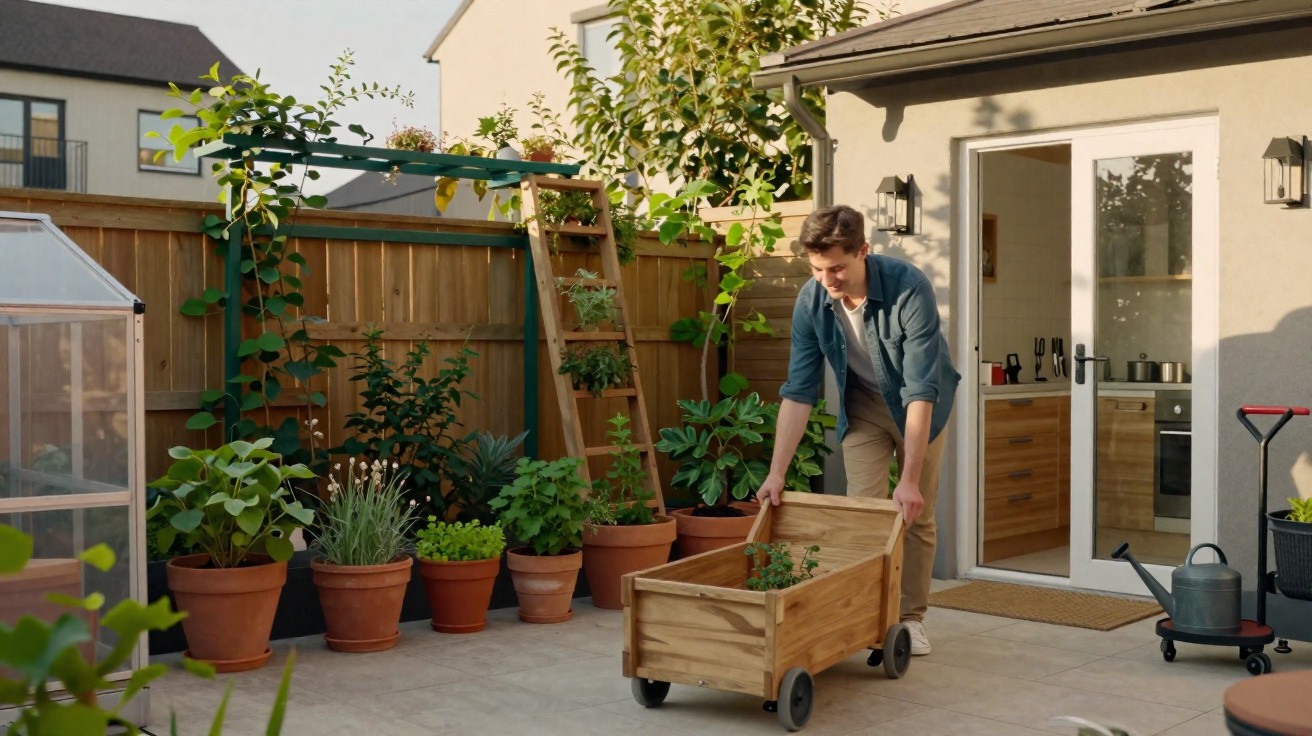
Anyone who rents will know the feeling all too well: you’ve spent years potting, sowing and watering, yet when the next move comes around you still end up leaving half your collection behind. The good news is you can plan your entire outdoor space from day one so it fits into moving boxes - or, more realistically, into the van.
Mobile rental garden: gardening without fixing anything in place
A mobile rental garden is built around one straightforward idea: everything stays movable. Instead of digging beds into the ground, you rely on pots, planters, raised beds and freestanding climbing supports. Nothing is screwed into walls or fences; everything sits on, beside or in front of existing surfaces.
That offers two major benefits. First, the property stays protected, which makes check-out far less stressful. Second, you can reposition the layout whenever you need to, depending on sun, wind and the season. In midsummer, the tomato haven might be shifted into partial shade; in spring, the herb corner can move closer to the kitchen.
"A garden that isn’t firmly rooted, but moves house with you - that’s exactly what a consistently mobile approach makes possible."
Before you begin: check your tenancy agreement and load limits
Before the first large pot goes outside, a quick sense check pays off:
- Read your tenancy agreement: are there restrictions for the balcony, façade or shared garden?
- Confirm load capacity: how much weight can the balcony safely take?
- Record the current condition: take photos of the terrace, balcony flooring and lawn before placing anything on them.
When it comes to materials, lighter but hard-wearing options are usually best: plastic or timber containers instead of heavy stone troughs, saucers with castors, self-supporting trellises and plant ladders. Plenty can be repurposed too - old wine crates, builders’ tubs or unwanted shelving can become garden features with minimal effort.
Five mobile planting ideas that can move with you
The secret to a portable rental garden is a well-thought-out planting plan. The five options below work on a balcony, terrace or along the edge of a rented lawn - and can be fully loaded up when required.
1. A moveable pot border along a fence
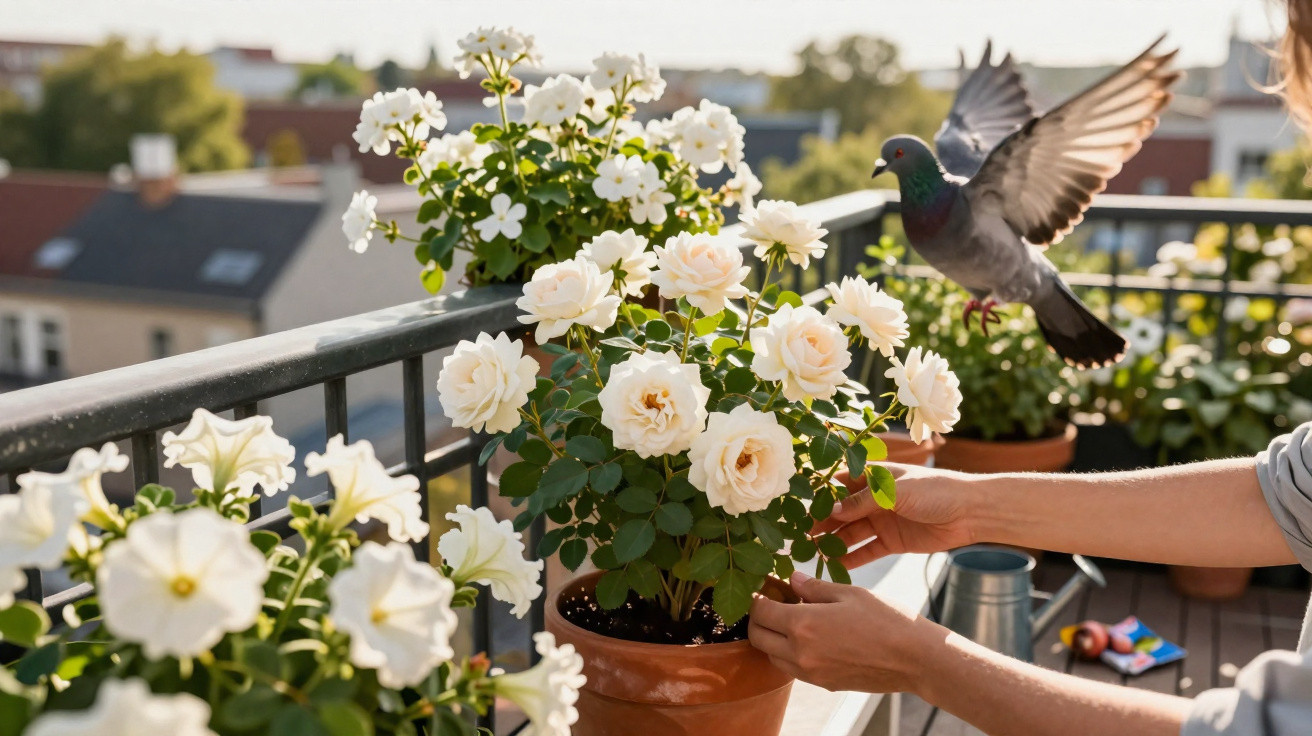
Rather than creating a fixed bed edge, you can build a “border on wheels”: place pots tightly together along a wall, a fence or a strip of gravel. Taller plants sit at the back, trailing plants at the front. Visually it reads like a proper border, but it can be shifted like furniture.
Suitable choices include, for example:
- Back: ornamental grasses, lavender, a small olive tree or columnar fruit trees
- Middle: perennials such as sage, hardy geraniums, compact roses
- Front: trailing varieties such as verbena, ivy, Dichondra
Put the largest containers on wheeled plant caddies; smaller pots should be light enough to lift easily. When you move, you simply re-place pot by pot - the entire “bed” comes with you.
2. Green privacy screening with a freestanding trellis
If you’re not allowed to drill holes, a self-supporting trellis is the answer. It can stand in front of the façade, held steady by heavy planters at the base. Annual climbers planted into those boxes can create a dense green wall in a single season.
Popular options include nasturtiums, sweet peas and morning glories. They grow quickly, cope well in pots, and won’t take up long-term space in the planters. You can also tuck strawberries or low-growing herbs into the boxes beneath.
"On moving day, the trellis is unfastened, the boxes stay planted - and a few hours later the screen is standing again in the new home."
3. A mobile herb ladder beside the kitchen door
A simple wooden ladder can become a vertical mini-bed with a few boards or hanging boxes. Small pots sit closely together on the rungs - ideal if you have very little floor space on a balcony.
A practical top-to-bottom layout:
- Top: sun-lovers such as basil, thyme, rosemary
- Middle: chives, parsley, coriander
- Bottom: enthusiastic spreaders like mint, plus cut-and-come-again salad leaves
The ladder simply leans against the wall; a felt or rubber mat underneath protects the flooring. For transport, the whole setup moves like a piece of furniture, with most pots able to stay in place.
4. A small PVC greenhouse cover for delicate plants
A lightweight, hinged mini greenhouse made from plastic is perfect for seedlings, tomatoes, peppers or frost-sensitive flowers. Inside, tiered shelves help create a mild microclimate - something many city gardeners wouldn’t want to do without.
These units stand freely on a balcony or lawn, secured with a few pegs or stabilised with stones. When it’s time to move, the cover comes off, the frame is dismantled, and the pots go into crates - or remain on the shelves if there’s enough room in the van.
5. A raised bed on castors instead of a fixed bed in the lawn
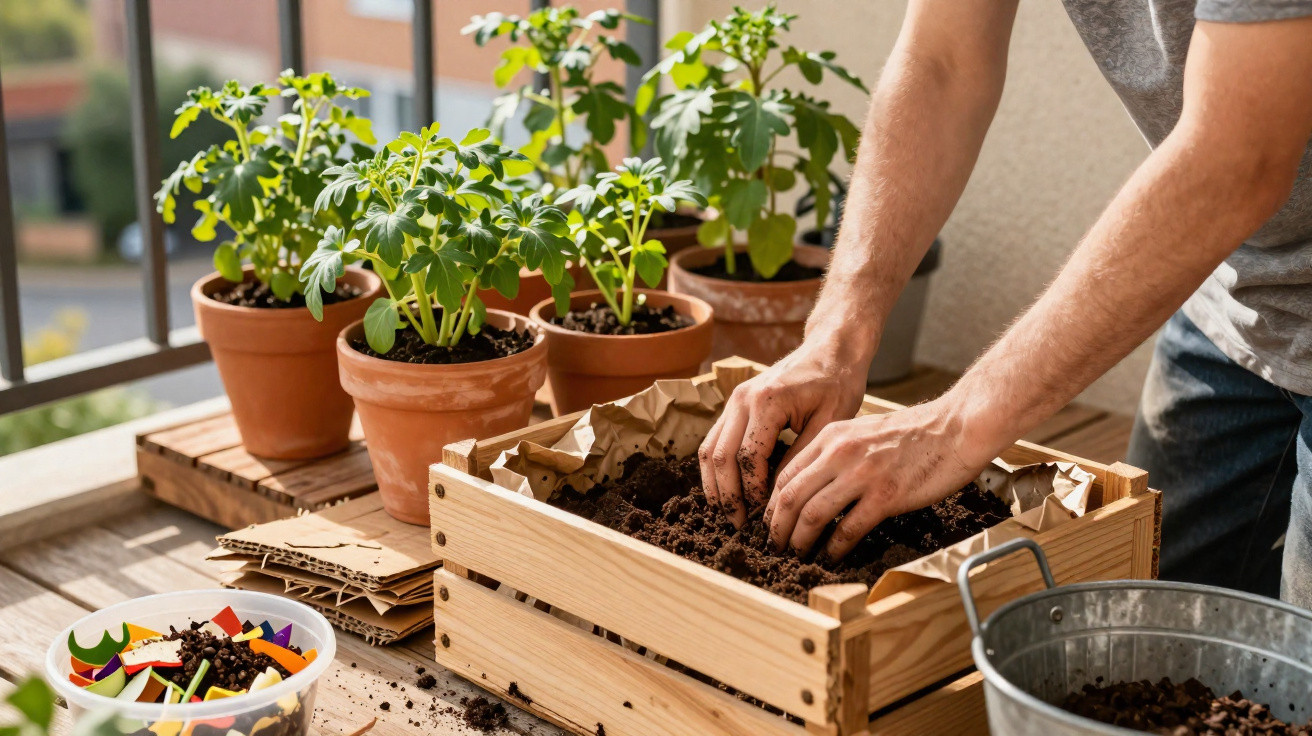
If you want a larger growing area, plan a mobile raised bed from the outset. Lightweight timber or plastic frames can be mounted on pallets or purpose-built bases with wheels. Alternatively, the bed can sit directly on the grass and be shifted with a trolley when you move.
A simple layout uses four zones:
- A corner for herbs such as oregano, sage, chives
- An area for leafy salads and radishes
- Space for compact tomatoes with a little basil
- A flowering section with bee-friendly plants such as pot marigold or borage
When packing up ahead of a move, you can remove some of the compost to reduce weight. Once strapped down with ratchet straps, the bed can arrive at the next garden intact - including the established mix of plants.
Design tricks so a mobile garden doesn’t look temporary
Just because everything stays movable doesn’t mean your outdoor area has to resemble a jumble of random pots. If you commit to a clear style from the start, the whole space will feel cohesive.
| Design element | Practical tip |
|---|---|
| Choice of materials | Stick to no more than two main materials, such as terracotta and light timber. |
| Colours | Keep to a palette of 2–3 muted tones (e.g. grey, cream, olive green). |
| Repetition | Reuse certain plant groups in several places for a calmer look. |
| Mobility | Fit heavy containers with castors, handles or lightweight wheeled bases as standard. |
Details like these are what separate a “collection of pots” from a garden with real character - even in a rental.
Day-to-day care: keep an eye on weight, watering and root space
A mobile garden needs the same attention as a traditional bed, just with slightly different priorities. Pots dry out faster, while the overall weight still needs to remain manageable.
Instead of using plain garden soil, a blend of compost, multipurpose potting compost and lightweight additives such as expanded clay or perlite works well. It keeps containers easier to handle, while giving roots sufficient air and moisture. Regular watering is essential - ideally using a watering can or a hose with a rose to avoid washing the compost out.
"For transport, the right moisture level is crucial: slightly damp so the root ball holds together, but not dripping wet."
A stress-free move: a timetable for gardeners
If you suspect a house move is coming, you can make your garden “move-ready” weeks in advance:
- Finish major repotting several weeks before the date.
- Group plants by pot size to make stacking in the vehicle easier.
- Tie in delicate stems with soft string so nothing snaps while carrying.
- Arrange moving aids such as a sack truck or plant trolley.
Freestanding trellises, mini greenhouses, plant ladders and raised beds can usually be dismantled or lifted in a few quick steps. With a well-planned setup, you can take the entire garden down, load it and set it up again at the new place within a single day.
When a mobile garden is especially worthwhile
A portable garden isn’t only useful for people who move frequently. It also makes sense with fixed-term tenancies, in house shares, in employer-provided accommodation, or when the building’s future is uncertain (renovation, sale). This approach helps avoid disappointment.
There’s also a personal side to it: rare varieties, perennials nurtured over years, or fruit bushes you’ve raised yourself often carry real sentimental value. If they’re planted into the ground in a rented garden, you either have to leave them behind or dig them out with difficulty. In containers, they remain “yours” from the start - and they travel with you.
Climate change is another factor. Plants in pots can be pushed into shade during heatwaves, or temporarily sheltered when late frosts threaten. That reduces losses and increases flexibility, especially in densely built-up urban neighbourhoods.
Real-world examples and small pitfalls
A common scenario looks like this: a couple moves from a ground-floor flat with a garden to a top-floor flat with a large balcony. If they’ve already relied on mobile structures, they can simply take their raised bed and pots upstairs. The “garden on grass” becomes a roof-terrace oasis - without starting over.
The reverse can happen too: a balcony garden later relocates to a terraced house with a small patch of lawn. Pots and planters still form the base, but perhaps an additional mobile raised bed is added. The garden grows with you, without sacrificing old favourites.
There are a few snags, though. Very large tubs with shrubs and small trees quickly become too heavy. It helps to consider root space during planning, choose slimmer, taller varieties where appropriate, and check regularly whether roots are starting to crack the pot. Strong growers like raspberries are only partly suited to container life and need particularly careful care.
Even so, many renters’ experience is clear: if you commit to mobile solutions from the outset, you avoid that painful final glance at a garden you’re forced to leave behind. Instead of saying goodbye, you get a reunion - at your next home, with all the familiar leaves, flowers and scents.
Comments
No comments yet. Be the first to comment!
Leave a Comment