
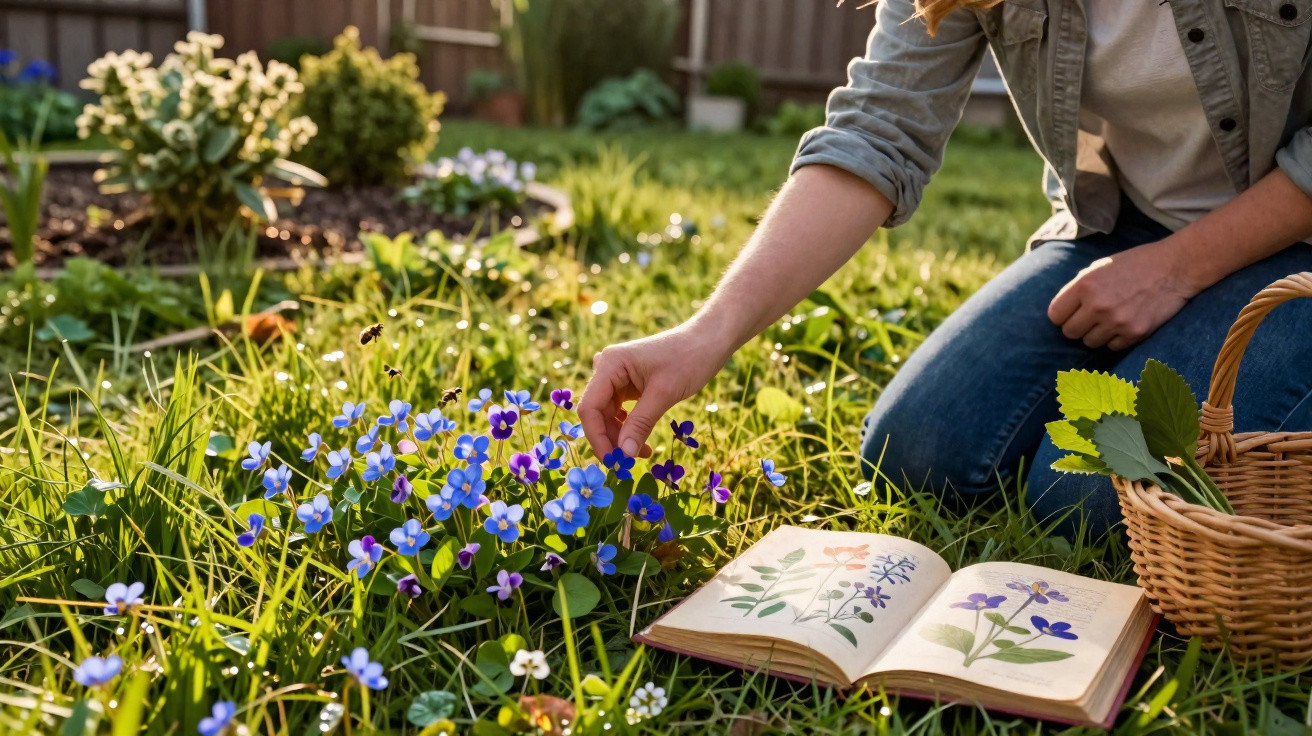
Between the first mild rays of sunshine and soil that is still weary from winter, they seem to appear overnight: tiny blue or purple flowers spreading through paving gaps, borders and the lawn. What many people instinctively label as “Get rid of it!” is, in fact, a free spring buffet - for insects, for your soil and, with a little know-how, for your kitchen too.
Why the first early spring flowers in the lawn matter so much
March is a turning point in the garden. Many trees are still bare, and perennials are only just beginning to stir. Exactly at this moment, small ground-hugging plants step in, providing pollen and nectar when almost nothing else is in bloom.
“Anyone who mows everything down right now takes away one of the first food sources of the year from wild bees, bumblebees and butterflies.”
Many of these plants are familiar companions of meadows, verges and gardens. They thrive where the soil is alive - where microorganisms are active and where the ground hasn’t been “killed” by over-fertilising or sealed under hard surfaces. Rather than removing them on autopilot, it’s worth taking a closer look, because some have a long history as traditional remedies and useful kitchen herbs.
Sweet violet: spring fragrance for you, energy for insects
Sweet violet is one of the quiet stand-outs among the earliest bloomers. You’ll often find it tucked away along hedge lines, beneath shrubs or in partial shade.
How to identify sweet violet with confidence
- Heart-shaped, slightly rounded leaves growing in a rosette
- Deep violet to blue-violet flowers, usually solitary on thin stems
- A strong, sweet scent that’s noticeable even at close range
Inside this small plant is a traditional “home apothecary”: essential oils, mucilages and flavonoids made sweet violet a valued ingredient in teas and syrups in the past. Old herbals mention it for colds and as a gentle option in folk medicine.
These days, many herbalists recommend leaving sweet violet largely untouched. It doesn’t usually form vast carpets; instead, it tends to appear in small patches. That makes it especially useful as a food source for insects just as bees and other pollinators are getting going again.
“Sweet violets are less a pantry for people in the garden - and more a lifeboat for insects after winter.”
If you want to enjoy the fragrance, it’s better to do so with your nose rather than your scissors. Taking a few individual blooms for decoration is fine; harvesting large areas is not.
Ground-ivy: from “nuisance” to a quiet kitchen favourite
Ground-ivy (also known as alehoof) behaves quite differently. This creeping plant is familiar to most people, even if they don’t always know its name. It threads its way through lawns, trails over walls and pops up between paving stones.
What ground-ivy looks like
- Small, rounded leaves with slight toothed edges, often kidney-shaped
- Long creeping runners that can form dense mats
- Small blue-violet, two-lipped flowers in the leaf axils
- When rubbed, a distinctive, aromatic herbal scent
Ground-ivy contains bitter compounds, tannins, essential oils and saponins. Together, they create an intense, slightly sharp, savoury flavour. This isn’t a delicate parsley note - it’s better suited to people who enjoy robust tastes.
Used sparingly, ground-ivy works particularly well in:
- homemade herb butter
- fresh spring quark
- mixed wild-herb salads
- soups, as a punchy topping
“With ground-ivy, the rule is: season lightly - its flavour is powerful, and a few leaves are enough.”
The big advantage is how plentiful it can be. If you harvest carefully, you won’t harm the population - if anything, many gardens try to eradicate it anyway. Instead of resorting to poisons or burning, you can simply move some of it into the kitchen, cutting packaging waste and supermarket spend along the way.
Persian speedwell: tiny flowers, big impact
Persian speedwell is one of those plants that is easily overlooked in the lawn or dismissed as a “patch”. Up close, though, its miniature blooms are genuinely pretty.
Key features of Persian speedwell
- Minute, sky-blue flowers with a white centre
- Usually four petals with delicate markings
- Low, branching stems that mingle through the grass
- Often flowers very early in the year
Traditionally, speedwell was valued as a versatile wild herb. It contains bitter compounds, tannins and various secondary plant substances. Its taste is surprisingly mild - lightly fresh and far gentler than ground-ivy.
In the kitchen, Persian speedwell is best used for:
- delicate wild-herb salads
- edible decoration on soups and a light snack
- herb mixes where it adds a subtle freshness
“Because speedwell often grows in large quantities in the lawn, it can be harvested easily and without a guilty conscience.”
How to tell your garden is truly “alive”
A mix of sweet violet, ground-ivy and Persian speedwell says a lot about your soil. Where these plants grow, there’s usually no relentless use of chemicals. Earthworms, microorganisms and small creatures tend to do better, and overall soil life is more active.
Once you start learning the differences between them, it quickly becomes clear that the word “weed” no longer fits. Many species provide real benefits:
- They help stop the soil drying out.
- They provide food and habitat for insects.
- They indicate how damp, nutrient-rich or compacted the ground is.
- With the right knowledge, they offer free food.
It gets especially interesting when you choose deliberately: rarer plants such as sweet violet can be given a protected spot. Very common plants such as ground-ivy or speedwell can be used moderately in the kitchen - which also helps keep their growth in check.
What to do in your own garden in March
If you don’t want to reach for the mower straight away, you can take it one step at a time. A practical way to begin:
- Look more closely: before the first cut, walk the area slowly and inspect any obvious blue and purple patches.
- Identify plants: use an ID book or an app, but stay critical. If in doubt, ask an expert.
- Leave “islands”: mow areas with lots of early flowers later on, or set the mower higher.
- Harvest selectively: only pick common species, and only take a portion.
- Try cautiously: test new wild herbs in small amounts first and watch for allergies.
“The better you know your ‘weeds’, the more calmly you can decide in the garden what stays and what goes.”
Wild herbs, self-sufficiency and a plan B to the supermarket
Those little blue and purple plants in spring are more than pretty splashes of colour. They reveal how much food can grow right on your doorstep. With rising prices and increasingly opaque supply chains, many people are looking for ways to be more independent.
Self-sufficiency doesn’t begin with a huge veg plot, a hen house and a greenhouse. It starts on a small scale:
- with a few wild herbs in a salad
- with herb pots on the windowsill
- with microgreens that are ready to harvest in just a few days
If you don’t have a garden, you can still grow mini vegetables indoors: rocket, radish or special microgreen mixes will grow on a tray with a fleece mat and water into small vitamin-packed greens within a week. Combined with a few foraged wild herbs from a walk, it quickly becomes a fresh, crunchy meal - with no queue at the supermarket.
What always applies when foraging wild herbs
As tempting as it is to help yourself, a few basic rules protect you and nature.
- Never eat unknown plants: mix-ups can be dangerous.
- Choose clean locations only: keep away from roadsides, dog-walking areas and sprayed fields.
- Take only a portion: always leave enough plants for wildlife and for regrowth.
- Take body reactions seriously: if you’re unsure or you react badly, it’s better to stop.
With this mindset, “annoying weeds” quickly become an intriguing part of the garden year. Those modest blue and purple blooms in March stop being a frustration and become the starting signal for a season in which your lawn, the insects and your kitchen can all benefit.

Comments
No comments yet. Be the first to comment!
Leave a Comment