
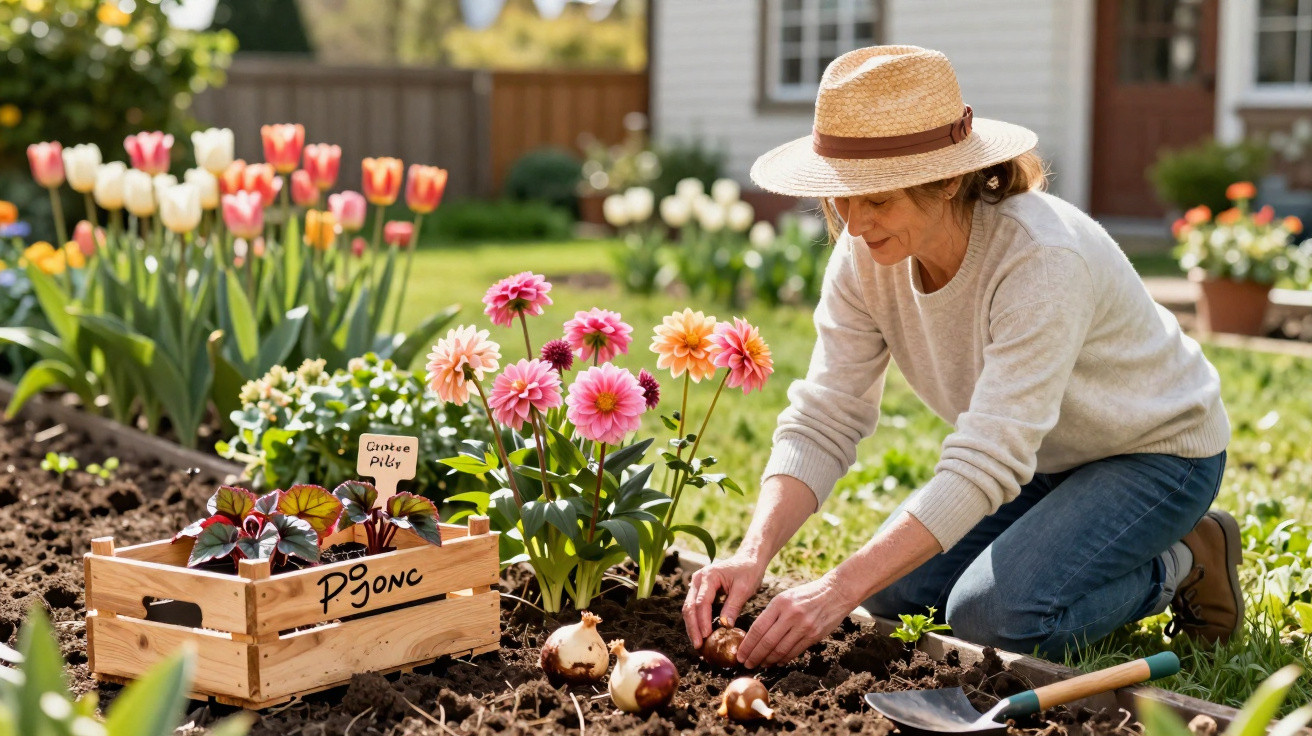
If you associate spring solely with bright tulips, daffodils and hyacinths, May can bring an unpleasant surprise: the spring bulbs have finished, the roses are still holding back, and borders can look bare for weeks. With a smart choice of four specific bulbs and tubers planted in March, you can noticeably shorten that dip in colour.
Why March decides whether early summer brings flowers or a lull
March still feels wintry in many areas: nights remain chilly, the soil is cold to the touch, and it can feel far too soon to think about summer planting. Yet this is exactly the window that suits many summer-flowering plants grown from tubers or bulbs.
"Plant now and you bring flowering forward - wait, and you unintentionally push it back into mid-summer."
A simple rule of thumb helps: once hard frosts are no longer expected and the ground has dried a little, summer bulbs and tubers can go into the soil. If you also start them off in pots, they begin the season with a head start. Leave it until late April or May, and many gardens look surprisingly washed-out in June.
These four tubers and bulbs save the display after the tulips
To avoid a dull gap between spring bulbs and roses, experienced gardeners rely on four tried-and-tested choices in March that work well together:
- Dahlias for months of colour
- Begonias for shade and balconies
- Lilies for structure, height and scent
- Peonies for dependable blooms in the years ahead
Dahlias: the longest-running colour show in the border
Dahlias have become almost essential in many gardens. If you get them going early, they can flower from around June right through to October. In March, their tubers are best started in pots and kept frost-free at first - for example in a bright cellar, a cold frame, or an unheated conservatory.
How to get dahlias off to a strong start in March:
- Fill a large pot with loose, nutrient-rich compost.
- Lay the tuber flat, with the old stem base positioned just under the surface.
- Water sparingly; avoid waterlogging at all costs.
- Keep somewhere bright and frost-free, then move outside permanently only once the risk of late frosts has passed (typically mid-May).
By forcing them on like this, the plants can quietly build roots and leaves first. Once they move into the border, they get going quickly and produce generous blooms earlier. Whether you prefer bold colours, huge pompon-like flowers or striking cactus forms, dahlias offer an almost overwhelming range.
Begonias: quiet stars for shady balconies and north-facing spots
Begonias are often underestimated because many people only know them from uninspiring container displays. Used properly, they become tireless summer bloomers - especially where other plants struggle: in partial shade and full shade.
In March, place the tubers shallowly in trays or pots filled with a loose, lightly moist growing medium. The hollowed side of the tuber should face upwards. A bright but frost-free position - such as a windowsill in a cool room - is enough to encourage shoots.
"Begonias fill gaps in shady corners where geraniums or petunias bring hardly any colour."
Once temperatures stay reliably above 10 °C, young plants can move to the balcony or patio. Regular watering and a small dose of liquid feed every two weeks keeps them flowering well into autumn. Before the first frost, lift the tubers, bring them indoors and overwinter them dry.
Lilies: elegant, scented spires instead of empty spaces
Lilies add height and strong, clean lines to a planting scheme. Depending on the variety, their flowers can be lightly to richly scented and often last for several weeks. In March, plant the bulbs at a depth about two to three times their height. Free-draining, humus-rich soil helps prevent rotting.
A major advantage is that different lilies flower at different times. Early varieties can open in late spring, while others follow in mid-summer. By planting a mix of groups, you can bridge the pale spell when many perennials are still building strength.
A few useful tips for lilies in the garden:
- Choose a position from full sun to partial shade.
- Never plant bulbs in waterlogged ground.
- With tall varieties, provide support early so stems do not topple.
- Don’t cut stems right down after flowering; leave some foliage to feed the bulb.
Peonies: planted in March, a dream in a few years
Peonies can look in photos like instant showplants that burst into life straight after planting. In reality, they reward patience. If you plant a bare-root or young plant in March, you are mainly investing in the years ahead rather than the current summer.
Herbaceous peonies prefer deeply loosened, nutrient-rich soil. Their buds should sit only just below the surface; if planted too deeply, flowering is delayed even further. After planting, the plant needs time to establish.
"Many peonies only show what they’re truly capable of after two to three years."
Even with that wait, peonies are worth it: they can remain in the same spot for decades, are fully hardy, and in late spring they deliver large, single or double blooms, often with a delicate perfume.
How to create a flowering calendar from spring to autumn
If you plan in March, it helps to think beyond individual plants and look at the whole season. A rough flowering calendar makes gaps easy to spot. Here is an example for a medium-sized border:
| Month | Main flowers |
|---|---|
| March / April | Crocuses, daffodils, tulips |
| May | Early lilies, first perennials, occasional peonies |
| June | Dahlias (started early), begonias, peonies at peak |
| July / August | Dahlias, lilies, begonias, summer perennials |
| September / October | Dahlias finishing strong, begonias, late perennials |
With this kind of staggering, the border is almost never empty. The tubers and bulbs planted in March act as the link between spring and high summer.
Common mistakes with March planting - and how to avoid them
If you are planting summer tubers for the first time, the same problems tend to crop up. Typical pitfalls include:
- Soil that’s too wet: tubers rot easily. Better: loosen the ground and mix in sand or horticultural grit.
- Planting out too early: don’t put forced dahlias and begonias outside before the last frosts.
- Planting without a plan: without spacing, you get a tangled jungle rather than a balanced border.
- The wrong location: shade-lovers such as many begonias can scorch in strong midday sun.
If you’re unsure, use March to start plants in pots and only plant them out in late April or May. That way you can still move them if a cold night is forecast.
Practical extra tips for balconies and small gardens
Even without a large garden, it’s still worth choosing dahlias, begonias, lilies and peonies. Many varieties do surprisingly well in containers, as long as the pot is big enough and excess water can drain away.
A good balcony combination is:
- compact dahlias in large pots
- trailing or semi-trailing begonias for window boxes
- one or two lilies in a tall container as a focal point
Peonies generally prefer to live permanently in the ground, but they can also cope for a few years in a very large pot before being moved into the garden.
Why the extra effort in March pays off over the long term
Jobs in March can feel thankless: it’s cold, your hands chill quickly, and you don’t see much happening at first. The payoff arrives weeks later, when others are still waiting for flowers and your own garden is already in colour.
Summer tubers and bulbs planted now don’t just reduce the flowerless stretch after spring bulbs fade. They also make borders more resilient overall: if a perennial fails due to heat, slugs or disease, dahlias, lilies or begonias remain reliable sources of colour. And peonies planted in March become a yearly reminder that patience in the garden genuinely pays.


Comments
No comments yet. Be the first to comment!
Leave a Comment