
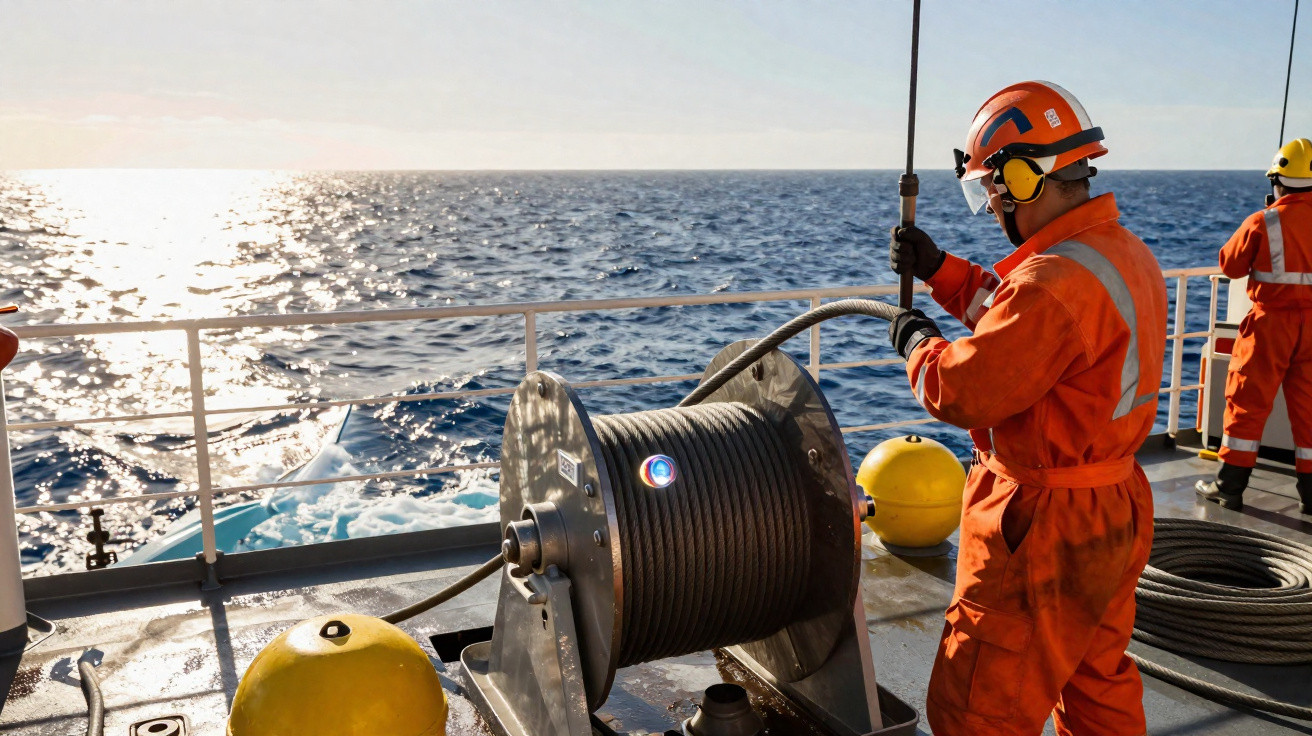
Far out in the Atlantic, a specialist vessel is lifting a pioneer of the digital age from several thousand metres below the surface. TAT‑8, the fibre-optic cable laid in the late 1980s as the first transatlantic data highway of its kind, is finally being removed from the ocean after decades in darkness. Its departure clears the way for a new generation of submarine cables.
How TAT‑8, a fibre-optic pioneer, crossed the Atlantic
On 14 December 1988, AT&T, British Telecom and France Telecom installed the TAT‑8 cable between the United States and Europe. For the first time, pulses of light travelled through fibre optics across the Atlantic rather than signals through copper. At the time, the technology seemed like science fiction.
Its effect on communications was immense. Telephone links across the ocean became less expensive, more reliable and capable of carrying far more traffic. Suddenly, many more calls and much larger volumes of data could be transmitted simultaneously between North America and Europe than the older copper cables allowed.
“TAT‑8 marked the beginning of the transatlantic fibre-optic era – the invisible foundation of the modern internet.”
Within less than a year and a half, the cable was operating permanently at the limit of its capacity. Its rapid utilisation demonstrated just how substantial the demand for high-performance connections truly was. This very cable paved the way for the thousands of submarine cables that now enable everyday services such as video calls, streaming and cloud platforms.
Why the TAT‑8 cable is now being recovered from the ocean
TAT‑8 remained in active service for more than a decade. By the early 2000s, the technology had advanced considerably, while repairs had become so costly that they were scarcely worthwhile. The line was permanently taken out of operation in 2002. Since then, this fibre-optic dinosaur has lain inactive on the seabed.
Subsea Environmental Services is now bringing the cable back to the surface using the vessel MV Maasvliet. The project is not simply driven by nostalgia; it combines demand for raw materials, safety concerns and modern network planning.
- Raw materials: The cable contains high-quality copper, steel and polyethylene, all of which can be recycled.
- Safety: Old cables can potentially obstruct new routes or cause difficulties during construction work.
- Network planning: Removing outdated routes makes room for modern high-speed cables.
The International Energy Agency has long warned that copper could become scarce. Every kilometre of submarine cable contains significant quantities of the metal. It also includes steel reinforcement and plastic sheathing, which can likewise be reused. During the dismantling of TAT‑8, the steel is intended to return to the materials cycle, while the polyethylene casing will be processed into recycled plastic.
Working at depth: recovering a cable from 4,000 metres
From the outside, the operation appears almost unremarkable: a ship, a crane and a thick black tube being hauled on board. Yet behind the scenes, it involves highly precise work in rough seas.
Searching the seabed
The crew’s first task is to pinpoint the cable exactly. Historic nautical charts exist, but currents, landslides along the continental shelf and fishing activity may have displaced or damaged individual sections over the decades.
The route is retraced with sonar, GPS and underwater vehicles. Recovery teams can only begin their work once the cable’s position has been established to within a few metres.
Hooking, hauling and coiling under time pressure
To retrieve a cable from several kilometres beneath the sea, technicians use specialised grappling tools suspended from long steel wires. These hooks plough through the seabed in an attempt to catch the cable. As soon as they detect a connection, the vessel begins to raise the line slowly.
“Every metre of cable is laid by hand into huge coils on deck – rough handling could break the fibre optics.”
The crew must not allow the material to kink. Although TAT‑8 is no longer in use, its individual components should remain as undamaged as possible. The cable is therefore recovered in stages. The team repeatedly cuts off sections, stores them on board and starts the grappling process again at the next location.
Wind, waves and currents make every movement more difficult. During the current recovery mission, the MV Maasvliet has already had to alter its course several times because of an early hurricane season. If the sea becomes too rough, work stops, as the risks of injury and material damage would otherwise be too great.
Why submarine cables remain indispensable to today’s internet
When people think of global data links, satellites often come to mind. In reality, almost all intercontinental data traffic travels through fibre-optic cables on the seabed.
| Technology | Strength | Weakness |
|---|---|---|
| Submarine cables | Extremely high capacity, low latency, reliable | Expensive to build, demanding to maintain |
| Satellites | Quick to deploy, able to reach large areas | Lower bandwidth, higher latency, vulnerable to weather |
Streaming, online gaming, video conferencing and cloud backups all benefit from the immense bandwidth and low latency offered by fibre-optic links. Even small differences in latency are noticeable in real-time applications. For this type of data traffic, submarine cables will remain unrivalled for the foreseeable future.
The removal of TAT‑8 is only symbolic of a wider issue. An estimated two million kilometres of old lines lie inactive on the seabed around the world. Many can technically be recovered, even though every operation remains costly and risky. However, each raw material saved and every route cleared increases the incentive to process at least the most valuable stretches.
Underwater recycling: opportunity and challenge
The environmental footprint of submarine cables is receiving greater attention. Modern lines are expected to deliver high performance while using fewer problematic materials. Old cables such as TAT‑8 offer a kind of raw-material store from the early days of the internet era.
At the heart of the recycling process, three groups of materials can be separated:
- Copper: high-quality conductors in demand for electric mobility, energy technology and electronics.
- Steel: used as a supporting layer and protective armour, and readily recyclable by the steel industry.
- Plastic sheathing: primarily polyethylene, suitable for new products made from recycled plastic.
From an environmental perspective, the key question is whether old cables should be left at sea or brought ashore. Every recovery operation consumes fuel, requires personnel and entails environmental risks, for example from disturbed sediment. On the other hand, it saves raw materials and creates cleaner infrastructure on the seabed.
What the TAT‑8 case reveals about our future network
The story of TAT‑8 reflects the rapid evolution of digital communications. A cable regarded as revolutionary in the late 1980s is now hopelessly inadequate. 4K video streaming, online gaming and AI applications generate volumes of data that planners at the time could not even have imagined.
New fibre-optic routes now achieve data rates in the terabit range, supported by ever more powerful signal amplifiers and laser-based transmission technology. While many areas on land are still struggling to secure comprehensive broadband connections, the next high-speed network is already expanding across the seabed.
For internet users in Europe or the United States, this development is usually invisible. Faults in submarine cables are noticeable only in rare cases, such as temporarily slower connections to major services. The real work happens far from the coast, aboard vessels such as the MV Maasvliet, which are quietly preparing the digital infrastructure of the future.
Anyone who has previously associated fibre optics only with their own home broadband connection can see a different scale of the technology in this example: every video travelling from a server in the United States to a smartphone in Germany is highly likely to pass through several of these cables beneath the Atlantic – perhaps one day along a route that runs past the historic TAT‑8 corridor.






Comments
No comments yet. Be the first to comment!
Leave a Comment