
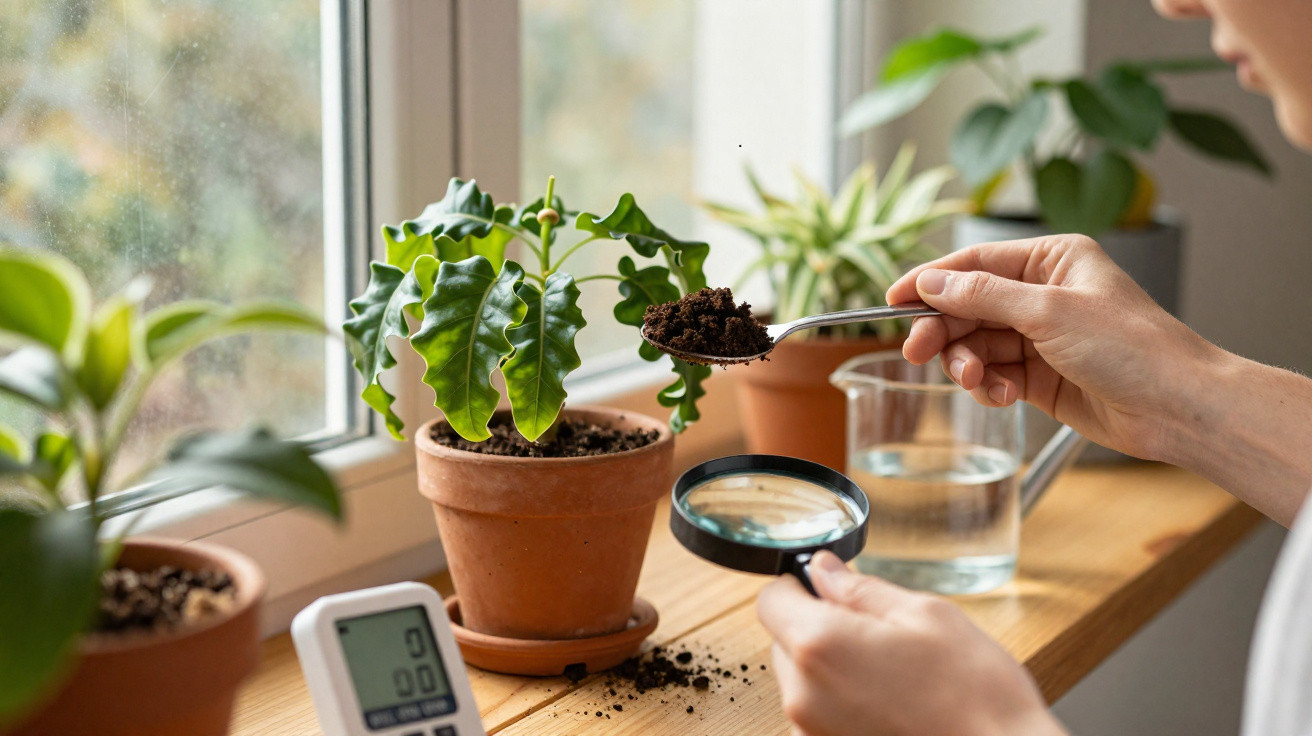
The first time you spot it, you assume you’re seeing things.
A leaf that once sat flat and confident is now pinched at the edges, as though a hand is slowly curling into a fist. When you bend closer for a proper look, you notice two more leaves tightening up too - puckered, twisted, almost as if they’re flinching.
You turn the pot around. You press a fingertip into the compost. You try to work out whether you’ve watered too often, not enough, or at the wrong point in the day. Before long your search history is full of frantic queries like “leaf curl plant dying???” and the advice you find contradicts itself so much that you end up more baffled than you started.
Then someone who actually gardens hands you a teaspoon and says, “Right. Let’s ask the soil what’s going on.”
When leaves curl, your plant is whispering ‘help’
Leaves that curl almost never appear truly “overnight”. It tends to creep in, the way you only notice a gradual change in someone’s face when an old photo pops up. One day your monstera, ficus or chilli looks full and healthy. A week later the leaves are cupped, folded or clawed, and the whole plant seems… on edge.
It helps to remember that leaf curl isn’t a diagnosis in itself. It’s a sign. Your plant is reacting to stress and trying to protect itself - from excess water, lack of water, scorching sun, nutrient imbalance, pests, or roots stuck in exhausted compost. Curling reduces the leaf’s exposed area, much like pulling shutters closed during a storm. The useful part is working out what sort of storm you’ve actually got.
I saw this play out in a small London flat with three plants sharing the same windowsill. A pothos with edges rolling down like a sad grin. Basil leaves scooped upwards into tiny spoons. A rubber plant whose fresh growth was wrinkled and distorted. Same light, same window, same person caring for them - completely different causes.
The pothos had been planted inside a decorative outer pot with no drainage, so its roots were effectively drowning; the leaves curled down to cut water loss. The basil was extremely dry and curling upwards to conserve moisture while it roasted above a warm radiator. The rubber plant turned out to have aphids tucked away on soft new leaves, draining sap and twisting the growth. Three styles of curl, three separate problems - and a “simple” symptom that was anything but.
Garden centres see this misunderstanding constantly. Many put over half of the “plant diseases” people carry in down to stress that’s been misread: watering by habit rather than by need, compost that’s become sludge or dust, or attractive pots that operate like bathtubs. Leaf curl is the houseplant equivalent of a cough - everyone has an opinion, few people check what’s happening underneath.
That’s why the teaspoon-of-soil test can quietly change everything. Instead of guessing from what you can see above the surface, you take a reading from below. Once you understand what’s going on 2–3 cm down, curled leaves stop being a mystery and start becoming information.
The teaspoon-of-soil test that reveals the real cause
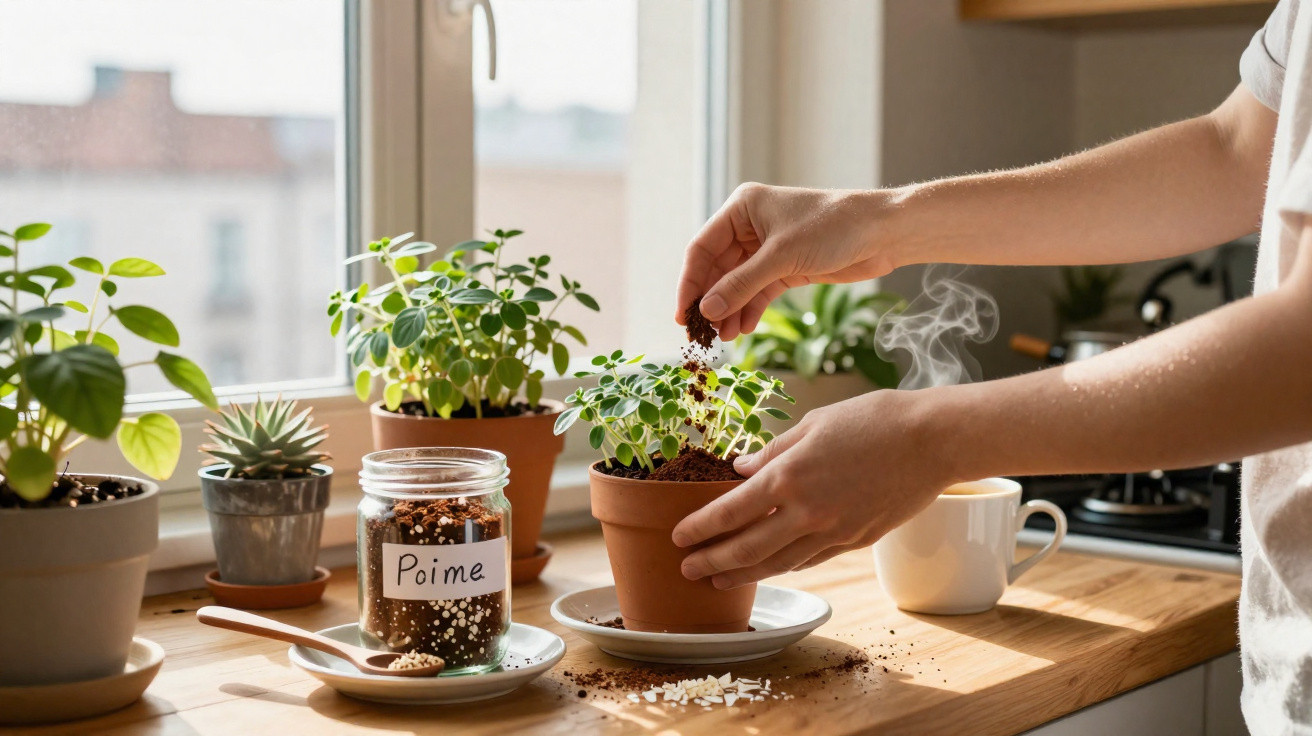
The method is straightforward. Use a clean teaspoon and take a small scoop of compost from just beneath the surface - about the depth of your first knuckle. Tip it into your palm. Then actually examine it. Feel it. Smell it. Treat it like the crime scene it is.
If the compost clumps together into a wet, glossy mass and coats your fingers, overwatering or poor drainage is the likely culprit. If it collapses into dust and won’t hold together at all, you’re looking at persistent underwatering or compost that’s turned hydrophobic. If it feels hard-packed and you can see roots laced through the sample, the plant may be rootbound and short on both space and oxygen.
On a damp morning in Manchester, I watched a neighbour try the test on a peace lily that looked miserable. Its leaves were curling down and inward, with brown tips on some of them. “I water her every two days,” she said, slightly on the defensive. The teaspoon came up cold and heavy - almost like mud - with a faint sour smell. When we eased the plant out, the roots were circling inside a pot that didn’t even have a drainage hole, sitting in a constant puddle. The curl wasn’t thirst at all. It was suffocation.
A friend with a calathea whose leaves had crisped and curled was convinced it had caught a disease. Her teaspoonful was light, dusty and nearly grey. When she squeezed it, it refused to hold any shape. The flat was warm, the heating was always on, and the plant was positioned directly above a vent. After a thorough watering, a tray of water to raise humidity, and moving it a metre away, the next leaves came through flat and confident again. Same symptom - completely different remedy.
Plant advisers often say houseplants exist in three environments at once: light, air and soil. We fixate on the first two because we can see them. The teaspoon test forces you to pay attention to the third. Texture suggests drainage. Smell can hint at rot or bacterial activity. Colour and feel can indicate when nutrients might be locked up. It’s not a laboratory report - it’s a quick, practical diagnosis - but it can still get you about 80% of the way to the real answer.
And it makes sense when you think about it: leaf curl is a stress response, and many stresses begin at the roots, where water, oxygen and nutrients meet. If that meeting point is flooded, compacted or bone-dry, the plant signals distress above ground. Using what’s on the spoon as your evidence stops you treating the curled leaf as the problem, and starts you treating it as what it is - a symptom.
What to do once the teaspoon has spoken
Once your teaspoon-of-soil test points you in a direction, you can match the type of curl to a sensible next step. If the compost is wet and claggy and the leaves are curling down with yellowing, reduce watering, confirm there are drainage holes, raise the pot on feet, and wait until the mix dries to barely damp before you water again. If the compost is pale and dusty and the leaves are thin and curling upwards, water slowly and deeply until excess drains out, then keep to a steady rhythm rather than quick surface splashes.
If the compost feels compacted and roots show up in your teaspoon sample, it’s often time to repot into fresh mix - only one pot size larger. If new leaves are emerging twisted or misshapen while the compost seems fine, turn a leaf over and look carefully for pests: aphids, thrips, or spider mites that may leave fine webbing. Wipe the foliage, give the plant a shower, or use a mild soap solution. Aim to adjust the conditions rather than “treat the curl”. Small, precise changes usually beat dramatic rescue attempts.
In practice, most of us water on intuition: a quick glance, a tap on the surface, a routine like “Tuesdays are watering day”. Let’s be honest: hardly anyone does this daily with the discipline of a professional horticulturist. Curling leaves are your prompt to slow down and take another look. It doesn’t mean you’re a terrible plant parent - it just means you’ve missed part of what the plant is telling you.
A few of the most common slip-ups show up right here:
“People think a wilting, curling leaf always means ‘more water’,” says one houseplant seller in Brighton. “Half the time, the roots are already sitting in a swamp. The plant isn’t thirsty, it’s drowning.”
- Watering to a schedule instead of checking the compost.
- Picking pots without drainage because they look better on a shelf.
- Shoving plants up against hot glass or above radiators, then blaming “mystery diseases”.
- Forgetting to check the undersides of leaves, where most pests actually live and feed.
- Keeping plants in the same tired compost for years, then panicking when leaves start to deform.
The quiet power of paying attention to a teaspoon of soil
There’s something strangely steadying about crouching next to a plant with a teaspoon in your hand. It forces a 30-second pause. You look, you feel, you smell, you pay attention. That tiny scoop becomes a snapshot of your plant’s world at root level, and over time you start to recognise what “just right” feels like for each pot in your home.
On a grey Sunday you might work your way along the houseplants, comparing samples. One pot gives you a dark, crumbly mix that holds together briefly, then breaks apart softly. Another produces a sour, compacted plug that feels wrong the moment it hits your palm. Patterns become obvious: this fern drinks like a marathon runner, that succulent prefers long dry spells, and the chilli on the balcony sulks if its compost stays cold and wet.
At a deeper level, the teaspoon test encourages a calmer sort of care. You stop expecting perfection from yourself or your plants. Leaves will curl sometimes. Some will yellow, drop off, or grow oddly. Rather than reading that as failure, you start seeing it as a prompt - a question - an invitation to investigate a little further (literally).
Most people have had the experience of walking past a favourite houseplant that looks beyond rescue and feeling a little guilty each time. A teaspoon of compost won’t magically solve everything, but it gives you a starting point that isn’t just guesswork and shame. It’s a small ritual: take a sample, read the signs, make one change, then see what the next round of leaves decides to do.
Plants don’t send emails or notifications. They curl, droop, crisp up and twist. That’s their language. A bent leaf is rarely as dramatic as it looks at first; more often it’s the botanical equivalent of a raised eyebrow. The real story is in the pot - and sometimes the only tool you need to read it is the most ordinary thing in your kitchen drawer.
| Key point | Detail | Benefit to the reader |
|---|---|---|
| Leaf curl as a symptom | Curling indicates stress from water, light, nutrients or pests, not just “thirst”. | Avoid misdiagnosis and stop making the problem worse through guesswork. |
| Teaspoon-of-soil test | Checking compost texture, moisture and smell shows what the roots are dealing with. | A quick, low-tech way to uncover the real cause behind leaf curl. |
| Targeted responses | Link what you find in the compost to a simple action: adjust watering, drainage, repotting or pest control. | Helps you act confidently and see plants recover rather than decline. |
FAQ:
- Why are my plant’s leaves curling down at the edges? Downward curl with soft, yellowing leaves usually points to overwatering or poor drainage, especially if the compost on your teaspoon feels wet and heavy.
- What if the leaves are curling upwards instead? Upward curl with dry, crispy edges often signals underwatering, too much heat or very low humidity; your teaspoon of compost will likely be light and crumbly.
- Can pests really make new leaves curl and twist? Yes. Sap-sucking insects like aphids or thrips distort new growth, so check the undersides of curled young leaves if your soil sample seems normal.
- How often should I do the teaspoon-of-soil test? Use it when something looks off: curling, drooping or mysterious spots. Some people also like to do a quick check at the start of every new season.
- What if my soil smells bad when I test it? A sour or rotten smell often means root rot or anaerobic conditions; switch to a pot with drainage, trim dead roots and repot into fresh, airy mix.


Comments
No comments yet. Be the first to comment!
Leave a Comment