
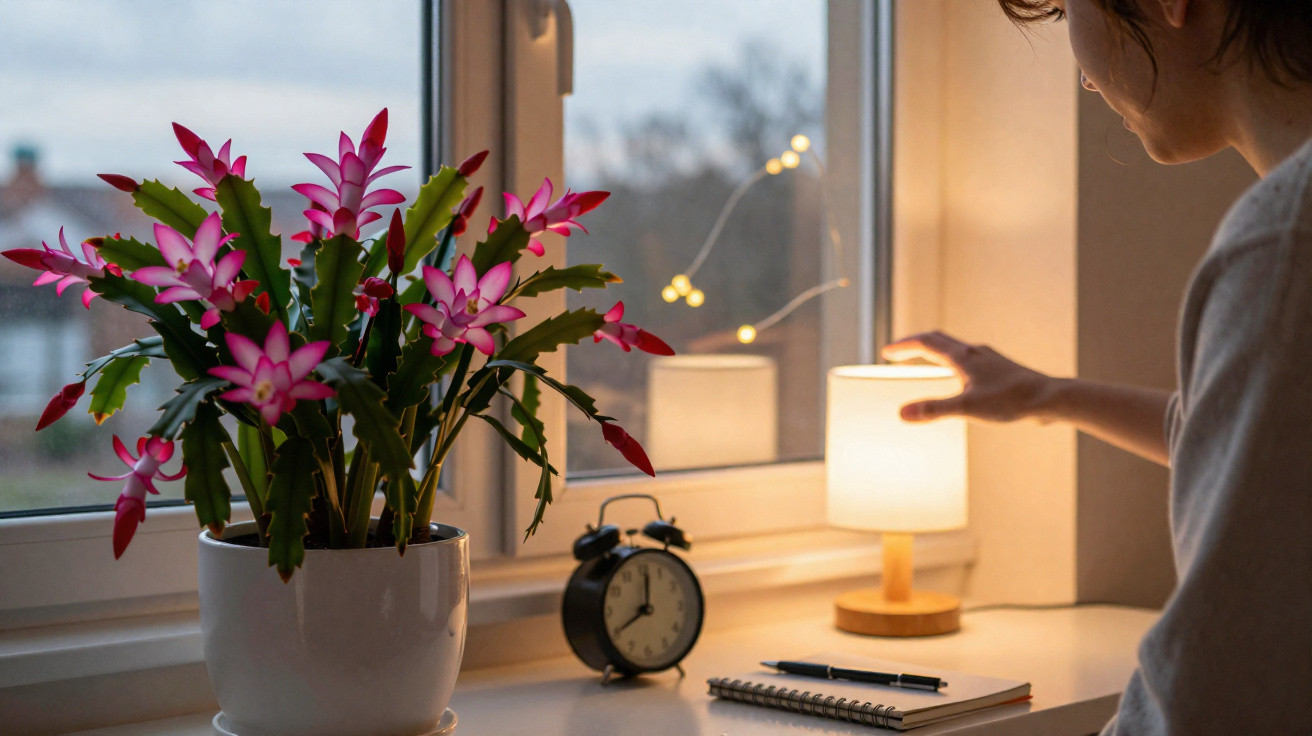
The Christmas cactus is sat there, shiny and green, with not a bud to be seen. Meanwhile the days slide towards December and your plant behaves as if it’s still late summer. That standstill has a cause - and there’s a refreshingly straightforward way to shift it.
It began on a dull Tuesday, in that murky in-between light where late afternoon can look like evening. I’d only just put the kettle on when I spotted my neighbour outside, coat undone, holding a Christmas cactus the way you’d cradle a cat. She insisted her grandmother’s plant flowered without fail. The “secret”, she told me, wasn’t special feed or a different pot. It was bedtime. Every evening at the same time, the plant went into complete darkness in a cooler room, like a child under a strict lights-out rule. A fortnight later, the first tiny bumps appeared on hers. I copied it - half doubtful, half intrigued. The plant responded.
Why your Christmas cactus won’t bloom yet
Think of Schlumbergera as a traveller that works out the season by measuring the night. Flowering isn’t chance; it’s a set of cues. Long, uninterrupted darkness plus a gentle drop in temperature tell this tropical cactus that winter is approaching. But a light flicked on at 10 pm, warm air from a vent, or a bit too much watering in October - small, ordinary habits - muddle the message. While you’re putting up fairy lights, the plant is being told it’s still summer. It’s no surprise it hangs on.
One situation I hear again and again is: “It had buds, then they dropped overnight.” That’s the classic sign of mixed signals. Moving it to a different room, a sudden blast from the heating, or even the glow of late-night telly can nudge the plant’s internal clock back to the start. My neighbour shifted hers from the kitchen to the sitting room - fewer cooking draughts, fewer disturbances - and left a window slightly ajar overnight. In under three weeks, tiny magenta specks dotted each joint. She didn’t change compost or size up the pot. She changed the pattern.
Here’s what’s going on. A Christmas cactus is a short-day, cool-night bloomer. To set buds, it needs 12–14 hours of darkness and nights of roughly 10–16°C for around 4–6 weeks. During that phase, watering should be reduced, daylight should be bright but indirect, and nights must be genuinely dark - no light spill from a lamp and no quick torch/phone-screen check. Save rotating and repotting for after flowering. The plant “counts” those long nights; break the run and the countdown begins again. With this species, steadiness matters more than effort.
The simple trick: lights-out and cool nights, same time, every day
The method is simple: put your Christmas cactus on a six-week “dark-and-cool” schedule. Give it 14 hours of darkness, 10 hours of light, and aim for 10–16°C overnight. Pop a breathable cardboard box over it or place it in a dark cupboard at 7 pm, then return it to bright, indirect light at 9 am. Keep the compost on the dry side - not dust-dry - and hold off on feeding. Once you can see small buds, stop shifting it about. That one minor adjustment can be enough to trigger flowering.
Of course, when the festive season gets busy, routines can slip. Most people don’t manage perfection every single day. Make it part of something you already do. When you finish the washing-up after dinner, the plant goes to its “night room”. When you make your morning coffee, it comes back out. If your home doesn’t cool much overnight, place it near a slightly open window or in an unheated hallway. If your house stays warm, a bright, frost-free garage can work too. Small habit, big payoff.
Don’t undermine good progress with easy-to-miss mistakes. Water only when the top 2–3 cm feels dry, and always tip away any water left in the saucer. Keep it away from hot air blasts, and don’t position it where a door regularly slams cold air over it. Leave repotting until spring; a new pot in November is a well-known trigger for bud drop. And don’t break the dark period with “just a quick look” and a phone torch.
“Darkness is a signal, not a punishment. Give it long nights and a gentle chill, and a stubborn plant turns generous.”
- Proper dark, not half-light: 14 hours of true darkness for 4–6 weeks.
- Cool nights: 10–16°C. Daytime can sit around 16–21°C.
- Bright, indirect daytime light. Keep harsh midday sun off the segments.
- Water sparingly. Let the top 2–3 cm dry, then water well.
- Once buds appear, don’t move or rotate the plant.
What happens next
When the first buds show, keep things consistent. You can return the plant to somewhere you’ll enjoy seeing it, but avoid sudden changes. Continue with moderate watering and bright, indirect light. If a few buds drop, don’t panic - others usually stay put. The plant is aligning itself with the season you’re in, not the other way round. One week goes by, then another, and suddenly each joint seems to wear a tiny flame.
That’s when the colour finally turns up in earnest: magenta, peach, snow white - pendulous blooms like fireworks caught mid-burst. It feels like a small miracle because, in a way, it is. You followed cues the plant can interpret. You kept it uncomplicated. The atmosphere in a room changes when a Christmas cactus decides it’s time to flower.
The quieter reward lasts beyond the holidays. Those long nights teach the plant how your home “does” seasons. Repeat the routine next year and it becomes simpler. When autumn comes round, you’ll already know where the darkest spot is, and where the coolest air settles. A touch of choreography, nothing elaborate - and the plant performs anyway.
| Key takeaway | Detail | Why it matters |
|---|---|---|
| Long, unbroken nights | 14 hours of darkness for 4–6 weeks | Triggers bud formation reliably |
| Cooler night temps | 10–16°C | Strengthens the “time to bloom” signal |
| Low-stress care | Light watering, no repotting, minimal movement | Reduces bud drop and prevents resets |
FAQ:
- How long until I see buds? Give it 2–6 weeks on the dark-and-cool routine. Some plants set buds in 14 days, others need the full six.
- Can I use a box over the plant at night? Yes, a cardboard box works well if it blocks light and allows airflow. Lift it off each morning without shifting the plant.
- What if my home never drops below 18°C? Use the darkest routine you can and pick the coolest spot you have - near a slightly open window or in a bright, frost-free garage.
- Why did my buds fall off? Common culprits: sudden temperature swings, overwatering, late-night light exposure, or moving/rotating the plant after buds formed.
- Should I fertilise in autumn? Skip feeding during bud set. Resume a half-strength, balanced fertiliser after flowering and through spring.
Comments
No comments yet. Be the first to comment!
Leave a Comment