
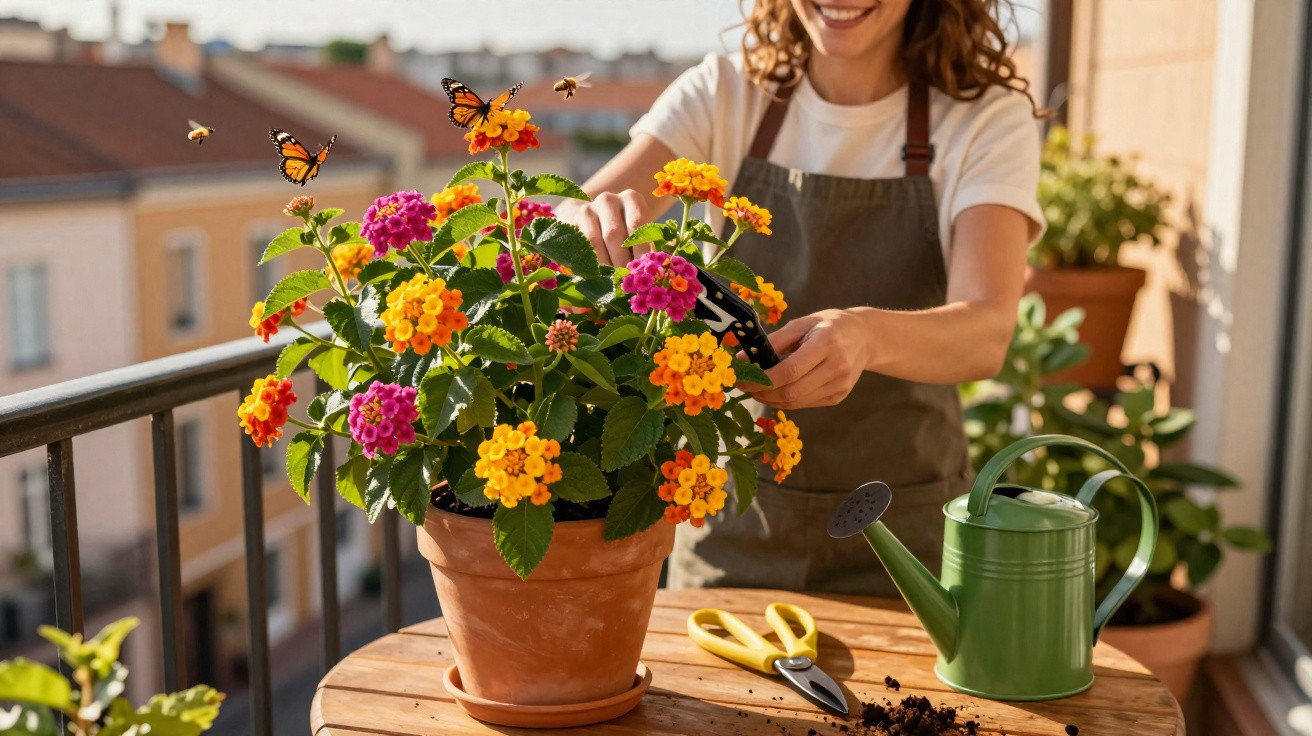
While roses can be temperamental and hydrangeas often wilt in hot spells, a more exotic newcomer gets on with it quietly and keeps flowering through much of the year: Lantana. Long since a familiar sight in southern Europe, this sturdy shrub is now drawing attention in Germany, Austria and Switzerland too - and for good reason.
A tropical visitor that copes surprisingly well with Central Europe
Lantana originally comes from tropical parts of the Americas and Africa. In its native range it turns up untended along roadsides, on slopes and at woodland edges - a strong clue that it can take a knock or two. That resilience is exactly what makes it so appealing for gardens further north.
What sets Lantana apart are its rich green, slightly rough leaves and the tight, ball-like clusters of flowers. Blooms appear in shades from yellow and orange through to pink and violet. Many varieties shift colour as they age, so one plant can look like a small rainbow over the course of the season.
"Lantana is one of the few ornamental shrubs that, with the right care, can show flowers almost all year round."
In milder areas, the shrub may overwinter outdoors; in colder places, a frost-free spot in winter is enough. Stick to a few straightforward basics and you can expect an almost continuous run of flowers.
Why Lantana is seen as ‘almost indestructible’
Lantana has a reputation for being low-maintenance and remarkably unfussy. It copes with intense sunshine, short dry spells and exposed, breezy positions far better than many traditional bedding plants.
- Heat tolerant: Full midday sun isn’t an issue - it often spurs even more flowering.
- Not precious about watering: Brief drought doesn’t bother it much, but waterlogging should be avoided.
- Rarely troubled by disease: With plenty of light and good air flow, fungal problems and pests are uncommon.
- Long flowering window: In a favourable spot it can flower from spring well into winter, sometimes with hardly any pause.
That’s why gardeners who can’t (or don’t want to) spend time on daily maintenance often favour Lantana. It will forgive the odd mistake, provided the site and soil are broadly suitable.
A magnet for butterflies, bees and birds
Lantana earns attention for its looks, but it also offers real ecological value. Its many blooms provide a steady source of nectar for insects - and over a much longer period than most border perennials.
Regular visitors include:
- various butterfly species attracted by the nectar,
- honeybees and wild bees using the abundance of flowers as a reliable food source,
- some bird species that later feed on the small berries.
"Planting Lantana creates a mini-biotope in your own garden, with an ongoing buffet for insects and birds."
It may also help reduce mosquitoes. In many places, the strong scent of the foliage is considered off-putting to biting mosquitoes. It’s not a scientifically proven cure-all, but as part of a wildlife-friendly, nature-focused garden it fits in very well.
Where Lantana looks best in the garden
This shrub is surprisingly versatile. It works in traditional borders, in containers, in balcony planters, and can even be used as a small hedge.
In a border or front garden
Lantana performs best in the ground where the soil drains freely. Heavy soil that stays wet is a poor choice; a loose, sandy, humus-rich mix is ideal. In these conditions it can be used as:
- a dense, flowering shrub within a mixed border,
- a colourful gap-filler where other plants struggle,
- a low flowering hedge along paths or terraces.
In areas with harsher winters, many gardeners treat Lantana like a semi-shrubby summer bedding plant and buy young plants each year. If you want to keep it long-term, growing it in a pot is the safer route.
In a pot or on a balcony
On a balcony, Lantana is especially useful because it stays fairly compact yet flowers heavily. Choose generously sized pots with drainage holes, and add a layer of expanded clay or gravel at the bottom.
On south-facing balconies it really shows what it can do, while many other container plants quickly look washed out in the heat. A sunny position, regular watering and the occasional dose of liquid feed are usually enough to keep the flowers coming for an impressively long time.
The most important care task: pruning and keeping it in check
Lantana grows quickly. Without pruning it soon becomes sprawling and may crowd out nearby plants. If you want to keep it tidy, it pays to be confident with the secateurs.
| Care step | When? | Benefit |
|---|---|---|
| Hard prune | Late winter or very early spring | Keeps the shrub compact and encourages fresh growth |
| Shaping trim | Several times during the season | Maintains a good form and slows overly vigorous growth |
| Remove spent blooms | Continuously through summer | Stimulates new flowers and keeps the plant looking neat |
"If you prune Lantana consistently, you’ll be rewarded with even more flowers and a noticeably longer flowering period."
When it comes to watering, a thorough soak now and then is better than frequent small splashes. The root ball can dry slightly between waterings, but it shouldn’t be left bone-dry for days. Light feeding every two weeks in summer supports flower production.
Site, soil and winter: how to keep the shrub healthy for years
To help Lantana thrive over several seasons, it’s worth choosing the site carefully. A sheltered, fully sunny position is best - for instance in front of a house wall or on a terrace. It tolerates wind well, as long as temperatures aren’t staying below freezing.
In warmer areas, plants in the ground can make it through mild winters, provided the soil doesn’t remain deeply frozen. In cooler regions, container growing is recommended. Before the first hard frost, move the pot to a bright, cool winter location - such as a stairwell or a frost-free conservatory.
During winter dormancy, Lantana needs only minimal water and no fertiliser. In spring, once night frosts are no longer a risk, it can go back outside. With the first stronger sunshine, it typically starts into new growth quickly.
What else you should know about Lantana
Many hobby gardeners have only encountered Lantana on holidays in the south, where it’s planted in public spaces. That it can also do well in German-speaking countries often comes as a surprise. The key is to handle the plant responsibly.
Although the berries can be a food source for birds, they are considered undesirable for people and pets. Children shouldn’t put the fruits in their mouths, and with pets it’s sensible to position pots slightly out of reach. When pruning, sensitive individuals may prefer to wear gloves, as the plant’s sap can irritate skin.
Lantana becomes particularly attractive when paired with other sun-lovers. In pots it combines well with lavender, blue fan flower, or silver-leaved plants such as cotton lavender. In borders it sits nicely alongside drought-tolerant perennials and low ornamental grasses. The result is an easy-care planting scheme that stays appealing for months.
If the sunniest spot in your garden has so far only produced dried-out geraniums or sulking hydrangeas, Lantana offers a plant that actively enjoys what pushes others to their limits: relentless sun, heat and a long season. Anyone wanting strong colour, more insect activity and as little effort as possible has a serious contender in this tropical, long-flowering shrub.

Comments
No comments yet. Be the first to comment!
Leave a Comment