
The basil looked flawless when you bought it: vivid green, full of that summer smell, standing tall on the worktop in its little plastic pot.
Three days on, the leaves slump like damp tissue, the compost has a slightly sour whiff, and you’re already searching “why do my herbs always die?” while prodding the surface with a spoon.
So you shuffle it nearer the window. You add “just a little” more water. You start wondering whether it’s the sun, your flat, your rotten luck, or some mysterious gardening gene you clearly missed out on.
And yet the real culprit is sitting right there.
It’s the pot.
Why your supermarket herbs crash so fast
Take a moment in any supermarket herb aisle. Basil, mint, coriander and chives are all squeezed into skinny, flimsy plastic pots that look built for a week’s display, not a season on your windowsill. They’re basically plant “takeaway cups”.
We bring them home and try to keep them like proper houseplants, even though they were raised as fast-turnaround, disposable produce. That undersized pot is the first problem. Roots coil and circle, all fighting for the same cramped patch of space. The top dries out in no time, while the bottom stays waterlogged. For the plant, it’s like living in a studio flat with twelve housemates and one bathroom.
Picture the last basil you grabbed in a rush for pasta. It went into the basket, rolled around on the car seat on the way home, then ended up by the window still in its original pot. Maybe you watered it, maybe you missed a day, and then suddenly the leaves drooped, the stems started darkening at the base, and the compost turned swampy.
That cycle repeats in kitchens everywhere. Some surveys suggest supermarket basil typically survives for less than two weeks at home. It’s not because the herb is “weak”, but because it’s stuck in a pot designed for transport and shelf appeal, not day-to-day living. The container is too small for the root system and too tall and narrow to hold moisture evenly.
The reason for the tiny pot is commercial, not botanical. Growers cram several seedlings into one container so it looks dense and generous in-store. It only has to last long enough to be sold and snipped. Once it’s on your windowsill, the container’s physics works against you: a small amount of compost warms quickly in sun, dries out rapidly, then flips to the other extreme and stays overly wet at the bottom if you water a bit too enthusiastically.
Herbs hate that kind of rollercoaster. Roots need room to spread, pockets of air, and a steady, lightly moist environment. A tight pot removes that stability before the plant has a chance.
The pot size rule nobody tells you
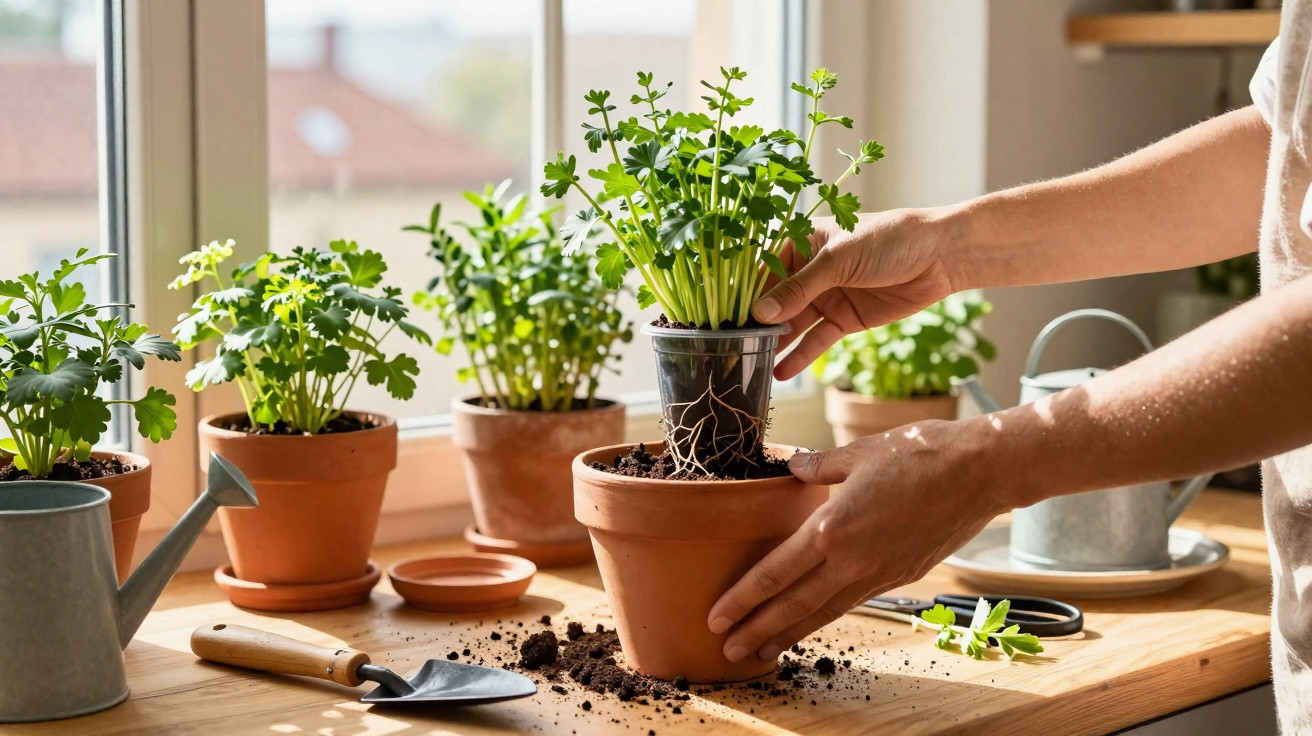
The easiest fix for most “doomed” herbs is surprisingly simple: repot them, and do it quickly-ideally the day you bring them home. Not next week. Not “when you get round to it”.
Lift out that supermarket basil, carefully loosen the root ball, and move it into a wider, slightly deeper pot filled with fresh, light potting compost.
The word to focus on is wider. Swapping a 12 cm plastic tube for a pot about 20 cm wide can be a small revolution for the plant. The roots can breathe, new compost surrounds them, and water distributes more evenly instead of pooling at the base. It’s like giving your herb a proper room after it’s been living out of a travel bag.
A lot of people assume they’re being kind by keeping herbs in their cute original pots, or by sliding them into a decorative outer pot without changing anything. It looks great on Instagram, but the plant is still suffocating in the same tight space. Then comes the familiar spiral: leaves turning yellow, panic watering, a fungal smell, and fungus gnats drifting around the kitchen. You feel bad, bin the plant, and decide you “just can’t keep herbs alive”.
Let’s be realistic: hardly anyone repots supermarket herbs every single time they buy them. We get home tired, we cook, and we forget. But do it once-just one basil or one mint-and you’ll notice the change within days: sturdier stems, a richer green, and compost that doesn’t dry out quite so fast. With each new leaf, your confidence quietly increases.
A useful way to frame it is this: the pot your herb lives in should match the size you want it to grow to, not the size it happened to be on the shelf.
“Most indoor herbs die of pot problems, not personality problems,” laughs Camille, an urban gardener who coaches new plant owners. “They’re not ‘difficult’ plants. They’re just stuck in tiny containers that no one ever questions.”
- For basil, mint and parsley
Pick a pot 2–3 times wider than the original, with drainage holes and a saucer. - For woody herbs like rosemary and thyme
Choose a deeper, slightly heavier pot so it won’t topple and the roots have room to travel down. - Always add fresh, airy potting compost
Don’t simply “top up” the old, compacted supermarket compost. - Water well after repotting
Then wait until the top layer has dried before watering again. - Separate overcrowded clumps
Basil pots often contain 20–30 seedlings. Carefully split them into 2–3 pots for sturdier plants.
Giving your herbs a real chance to live
When you start paying attention to pot size, you’ll also start spotting how differently herbs behave. Basil keeps its leaves upright even at midday. Mint stops flopping the moment you miss a watering. Coriander-which so often bolts and gives up in a week-can actually provide a few satisfying harvests. There’s a quiet pleasure in passing the kitchen windowsill and seeing genuinely thriving green, instead of the usual half-dead tangle.
You may still lose a plant now and then, and that’s fine. Growing anything is a bit chaotic, and your kitchen isn’t a commercial greenhouse. The difference is you’ll no longer assume it’s simply “you”.
You’ll also find yourself judging each new herb purchase differently: turning the pot in your hands, noticing how tightly the stems are packed, and mentally matching it to a suitable pot at home. That small shift changes everything. The herb stops being a short-lived prop and starts to feel more like a long-term guest.
There’s a quieter emotional benefit too. Each time you repot, you send yourself a small message: I can look after something, not just use it. That mindset tends to carry over into how you cook, how you shop, and how you relate to your home.
We’ve all had that moment at the herb stand: you hesitate and think, “What’s the point, they always die on me.” Next time, remember the understated villain of the story-the narrow, temporary pot. You don’t need a balcony, a greenhouse, or hours of spare time to change the outcome. You just need a slightly larger container, a bag of decent compost, and the decision to repot before you forget.
Your herbs will react quickly: fresh leaves, a stronger scent, a slower slide into decline. And who knows-once your basil makes it through a whole month, you might fancy trying tomatoes, strawberries, or even a small lemon tree by the window. It’s surprising how far one plastic pot can take you.
| Key point | Detail | Value for the reader |
|---|---|---|
| Repot supermarket herbs quickly | Move them from narrow plastic tubes into wider pots with drainage within a day or two | Drastically extends plant life and reduces the “my herbs always die” frustration |
| Choose width over height | Use pots 2–3 times wider than the original, with airy potting compost | Gives roots room to spread, stabilises moisture, keeps leaves greener and firmer |
| Separate overcrowded clumps | Split dense basil or parsley pots into several smaller groups | Each plant grows stronger, offering more harvests and less waste |
FAQ:
- Should I always repot herbs right after buying them? Ideally yes, especially supermarket herbs in thin plastic pots. They’re grown for quick sale, not long-term living, so giving them a wider pot and fresh soil straight away boosts their chances of survival.
- How big should the new pot be for basil or mint? A good rule is 2–3 times wider than the original pot, with drainage holes. For a standard supermarket basil, a 18–22 cm wide pot is usually enough for a healthy kitchen plant.
- Can a pot be too big for a small herb? Yes, an oversized pot can hold too much water in the soil, leading to root rot. Go up gradually: one size, sometimes two, not from tiny plastic cup to giant balcony container in one go.
- Do I have to change the soil, or can I reuse what’s in the original pot? Change it. The original soil is often compacted and depleted. Gently loosen the roots and surround them with fresh, light potting compost so water and air circulate properly.
- What if I don’t have space for several big pots of herbs? Choose one or two “hero” herbs you use the most, like basil and parsley, and repot those. You can still buy others occasionally as short-lived bunches, but at least a couple of plants will truly thrive on your sill.
Comments
No comments yet. Be the first to comment!
Leave a Comment