
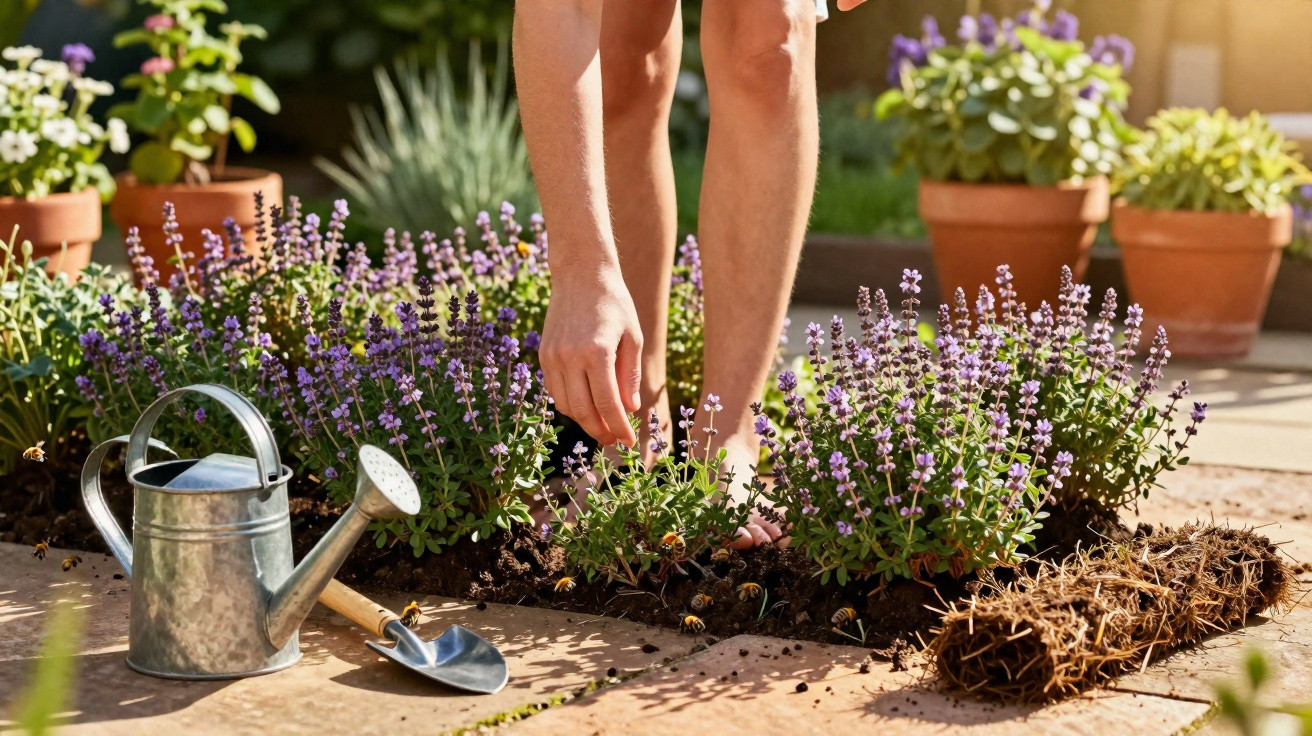
Recent summers have left many gardens looking more straw-brown than lush green - and that is far from unusual. Long dry spells, watering restrictions and a lack of time are making the traditional English-style lawn an increasingly difficult choice. In more and more gardens, it is being replaced step by step by a fragrant, ground-covering herb that copes far better with heat and may even unsettle mosquitoes.
Why the classic lawn is becoming less appealing
For a long time, a lawn felt like the default in a garden: neat, familiar to look at, and useful for all sorts of things. The downside is its demanding upkeep. Anyone wanting a consistently green surface needs to mow regularly, water often, and keep on top of weeds and bare patches. In hot summers, that equation flips completely: the workload increases while the results decline.
- High water use during dry periods
- Weekly cuts in summer - sometimes even more often
- Feeding and scarifying to maintain a dense sward
- Sensitive to heat and extended drought
As a result, many amateur gardeners are moving away from the idea that a garden only feels “complete” with grass. Ground cover plants are becoming far more popular - low, spreading plants that knit the soil together, suppress weeds and demand less ongoing attention.
Thyme carpet instead of grass: a fragrant herb takes over
One option in particularly high demand right now is a thyme variety used as a low-growing, hard-wearing carpet. It forms a dense cover only a few centimetres tall and is increasingly used in place of lawn around seating areas, between stepping stones, or in sunny front gardens.
"The thyme carpet grows low, smells intensely, tolerates heat - and needs far less care than a classic lawn."
Over the months, the herb steadily spreads and fills gaps across the soil. The result is a green, lightly cushion-like carpet. It does not look exactly like grass, but it can still feel very harmonious - especially in naturalistic gardens and fragrance-focused planting schemes.
Benefits of a thyme carpet compared with a lawn
- Little to no mowing required
- Very low water demand, especially once established
- Strong tolerance of heat and drought
- Fragrant foliage and attractive flowers
- Draws in bees and other pollinators
- Noticeably fewer weeds once the area has knitted together
Because it stays so low, the surface looks tidy without the lawnmower coming out every weekend. This can be a real advantage for busy households and anyone with limited time for gardening.
How the scent can bother mosquitoes
There is another plus: the herbal carpet does not only smell pleasant to people - it can also irritate mosquitoes. Thyme contains essential oils that are released when the plants are touched or lightly crushed by walking across them. Many insects do not particularly like that strong aroma.
"A thyme carpet is no replacement for mosquito spray, but it can noticeably reduce the nuisance around a seating area."
If you have a terrace or a sitting corner in the garden, the herb is often planted along the edges of those spaces. Some gardeners even deliberately take a few steps across the carpet before dinner, gently bruising the leaves to release more scent molecules. The fragrance then spreads around the spot where you like to sit.
It is important to keep expectations realistic: the plant will not drive mosquitoes away completely. What it can do is make the area less comfortable for them. Combined with other aromatic herbs - such as lavender, lemon balm or mint - you can create a kind of scented buffer zone around the terrace.
Position, soil and planting time: how to make this herbal lawn alternative work
To form a dense ground-cover carpet, the herb needs one thing above all: sun. The brighter the position, the thicker and more aromatic the plant cover becomes. It can cope with partial shade to a degree, but it truly thrives in full sun.
The key site and soil requirements
- Light: sunny to full sun
- Soil: relatively poor, free-draining, and on the dry side rather than damp
- Waterlogging: avoid at all costs, especially in winter
- Feeding: generally unnecessary, as herbs prefer lean soils
Heavy clay or water-retentive ground needs improving first. Many gardeners work in plenty of sand or fine gravel to open the soil structure. In many cases, a humus-rich garden soil is perfectly adequate - as long as water can drain away well and the ground is not persistently wet.
The best time to plant is from late winter into spring. That gives the roots enough time to anchor firmly before the hottest months arrive. A mild autumn can also work, provided the soil is still warm enough.
Step by step to a dense fragrant carpet
If you want to swap out a section of lawn for an herbal carpet, it pays to be methodical. Loose, well-prepared soil is a huge part of success.
- Clear the area of the old turf, root remnants and any coarse weeds.
- Loosen the soil and, if needed, incorporate sand or gravel.
- Rake the surface level and remove larger stones.
- Plant small young plants (in pots or as root balls) at even spacing.
- Water in well so the soil settles around the roots.
For a fully closed carpet, many gardeners plant around 9 to 12 plants per square metre. Spacing is often between 30 and 40 centimetres. At first the gaps can look substantial, but after a few months the cushions start to meet. After one to two years, the area is usually largely knitted together.
"The more densely you plant at the start, the faster the area closes - but the higher the initial costs will be."
Care: the minimum rather than constant effort
Once established, the herb shows its biggest advantage: it needs very little attention. During prolonged dry spells, an occasional watering helps, but frequent watering is not required. If you prefer a very clean look, you can lightly trim it once after flowering to keep the carpet compact.
Over time, weeds may still appear along the edges or in sections that have not fully filled in. Here, occasional hand weeding is usually enough. If the ground was well prepared and planted fairly densely at the start, the workload later on is much lower.
Where a thyme carpet reaches its limits
This lawn alternative is not completely without drawbacks. It is only conditionally suitable for heavily used play areas where children regularly play football or dogs are constantly charging around. It can handle occasional use, but not daily, intensive wear.
- Ideal alongside stepping stones and on lightly used paths
- Well suited around terraces, seating areas and in front gardens
- Limited as a play surface for children or dogs
If you often walk barefoot, it is worth remembering that while the plant stays low and soft, it is still a herb. The feel underfoot is different from grass. Many people find it pleasant, though some need a short period to get used to it.
How to combine the herbal carpet with other plants
A thyme carpet looks particularly cohesive when paired with other drought-tolerant perennials. Mediterranean plants such as lavender, sage or rosemary suit it visually and practically, because they prefer similar conditions. This creates an easy-care, aromatic garden area that copes far better with climatic extremes than a thirsty lawn.
If you want to support bees, bumblebees and butterflies, you can add occasional flowering perennials as small “islands” within the herbal carpet. The blooming area provides food for pollinators while staying largely weed-free thanks to the ground cover.
Practical tips for beginners
- Try a small test patch before removing the entire lawn
- Start by converting the most sun-exposed problem spots
- Link the herbal carpet to seating areas, barbecue spots or paths
- Strengthen the fragrance and mosquito effect by mixing different herbs
If you keep these points in mind, you can create a green, lively surface that still looks good in dry summers - and feels far more relaxed to maintain than a traditional lawn outside the house.

Comments
No comments yet. Be the first to comment!
Leave a Comment