
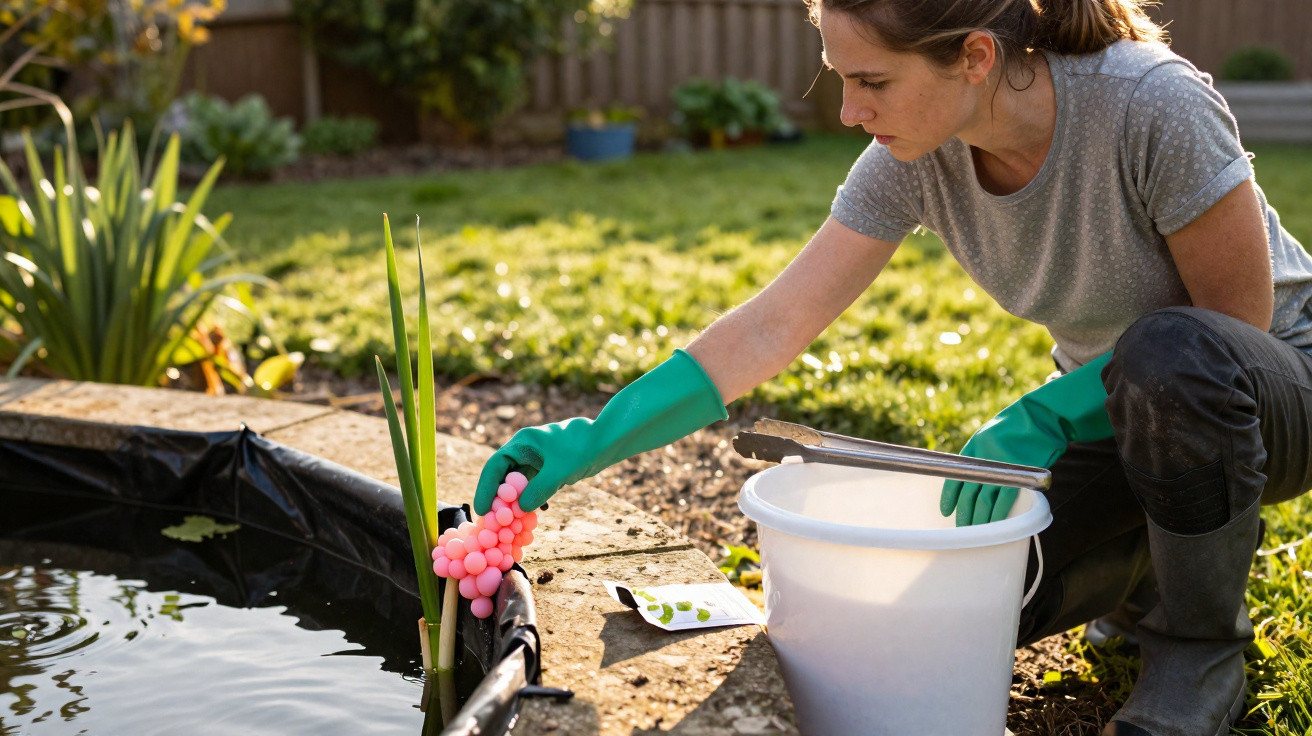
What looks almost pretty at first glance can turn into a serious issue for your garden, the wider environment and even human health. Those bright pink egg clusters can belong to an invasive snail that spreads quickly, throws ponds out of balance and may even carry parasites. If you spot these nests, you need to act promptly - and carefully.
What’s really behind the pink eggs
The conspicuous pink egg masses are laid by the golden apple snail (Pomacea canaliculata). It originates in South America, but in recent years it has been spreading aggressively via aquariums, garden ponds and irrigation systems.
This snail is particularly difficult to deal with because it thrives in two habitats at once: it lives in water, yet it can easily climb walls, wooden posts and plant stems. That is exactly where it deposits its eggs - in dense, vivid pink packages that are highly visible, but often underestimated.
"These pink clumps of eggs are not a decorative trick of nature, but a warning light: an invasion is underway here."
Typical features of these egg packages include:
- deep pink to neon-pink colouring
- firmly “glued” to hard surfaces just above the waterline
- about the size of a small bunch of grapes or a thumb
- many tiny individual eggs packed tightly together
If you notice something like this on a pond edge, bridge pillar, garden wall or damp timber structures, treat it as a red flag - and do not simply wipe it off with your bare hand.
Why these snails are so dangerous for gardens
Golden apple snails will eat almost anything green. In water, they rapidly strip aquatic plants; on land, they chew young shoots, vegetable plants and ornamental perennials. Areas that tend to suffer most include:
- garden ponds with water lilies, submerged plants and marginal vegetation
- small streams and wetland-style habitats
- vegetable beds close to ponds
- rice and other water-based crops in agricultural areas
Once plants disappear, the whole balance in the water can collapse. Algae take over, oxygen levels drop, and fish and other wildlife die. A tranquil garden pond can, within a single season, become a cloudy, foul-smelling pool.
"The snail doesn’t just destroy plants - it can pull entire ecosystems down with it."
Health risk for people
The threat is not limited to plants and ponds. These snails can host parasites that affect the human liver and nervous system. In some regions, they are considered potential carriers of pathogens that can, among other things, trigger a particular form of meningitis.
Risk increases, for example, when someone handles snails or egg clusters without gloves, or stands barefoot in contaminated water with small cuts or abrasions. Children who play with the brightly coloured eggs out of curiosity may also expose themselves unnecessarily.
How to tell when it’s serious
A single egg package may seem insignificant, but the numbers are stark: one female snail can produce thousands of eggs over her lifetime. Where natural predators are absent, populations can surge. What starts as a few nests can quickly become widespread infestation.
| Indicator | What it suggests |
|---|---|
| Several egg packages in different places | Sign of an already established population |
| Heavy grazing on aquatic and bank plants | Likely activity of adult snails |
| Cloudy water, more algae | Ecological balance is slipping |
| Snail shells in mud or on plants | Confirms that it’s not only eggs - the animals are present |
If you catch an infestation early, you have a realistic chance of limiting the damage. If you wait until plants have vanished, you are already dealing with an established population.
What to do immediately if you find pink eggs
If you discover a pink egg cluster, the rule is: stay calm, but don’t delay. Prioritise the following steps:
- Record the find: take a photo and note the size and exact location.
- Inform the authorities: contact your local environmental department, nature conservation body, or agricultural advisory service.
- Use protective gear: always wear gloves and avoid contact with bare skin and eyes.
- Restrict access: keep children and pets away; do not paddle or play in the affected water.
- Check nearby areas: systematically inspect banks, walls, posts and damp corners for additional nests.
"Removing them yourself, without reporting it, is tempting - but risky. Professionals need to know where the snail is spreading."
Environmental services can confirm in a laboratory whether it is truly the invasive species or a harmless native snail. For non-specialists, reliable identification is difficult, especially as not every pink egg mass automatically belongs to this species.
Long-term protection: design your garden so snails have fewer opportunities
A quick response is rarely enough on its own. If you live in a damp area with ponds, ditches or slow-flowing water, it is wise to make your garden more resilient over the long term.
Manage water features properly
- Check ponds regularly, especially in spring and late summer.
- Reduce excessive silt at the bottom, as it provides hiding places.
- Shape pond margins so there are fewer rigid, smooth surfaces directly above the water.
- Avoid overstocking fish, as this weakens water plants and encourages algae - a stress factor that invasive species can exploit.
If you have water butts or decorative bowls in the garden, inspect them too. Even small amounts of standing water can act as stepping stones for spread.
Don’t “dispose of” aquariums in the garden
A common mistake is tipping algae-covered plants or unwanted aquarium animals into a garden pond or nearby stream. That is exactly how many invasive species worldwide have managed to establish themselves outside their native range.
Better practice is:
- put aquarium plants in household waste rather than into outdoor water.
- never release fish or snails into ponds or rivers.
- do not pour aquarium water into gutters or ditches; dispose of it via the drain.
"That brief moment of ‘Oh, it won’t matter’ has introduced an entire species in many places."
How this fits into the bigger picture
Anyone who gardens knows the basic rule: acting early saves months of trouble later. The same applies to problem weeds as it does to mice, raccoons or invasive plants. With the golden apple snail, there is the added concern of potential health risks.
It is also striking how powerful small actions can be: mentioning a find to neighbours, posting a note in a local gardening group, or sharing a photo with a community club can create a shared early-warning network. When several households on the same street become more alert at the same time, the chances of the snail establishing unnoticed are reduced.
If you regularly spend time near water - fishing, walking or taking a dog along a stream - you can provide useful observations without much effort. A quick glance at bridge pillars, sheet-pile walls and jetties is often enough to spot the distinctive pink clusters. A brief call to the relevant authority can then achieve more than any single measure in your own garden.
Ultimately, it comes down to one simple rule of thumb: bright pink egg packages on walls or posts near water are not a harmless quirk of nature, but a serious warning sign. Reporting them early and responding appropriately helps protect not only your own garden, but also ponds, rivers, fields - and the health of people nearby.

Comments
No comments yet. Be the first to comment!
Leave a Comment