
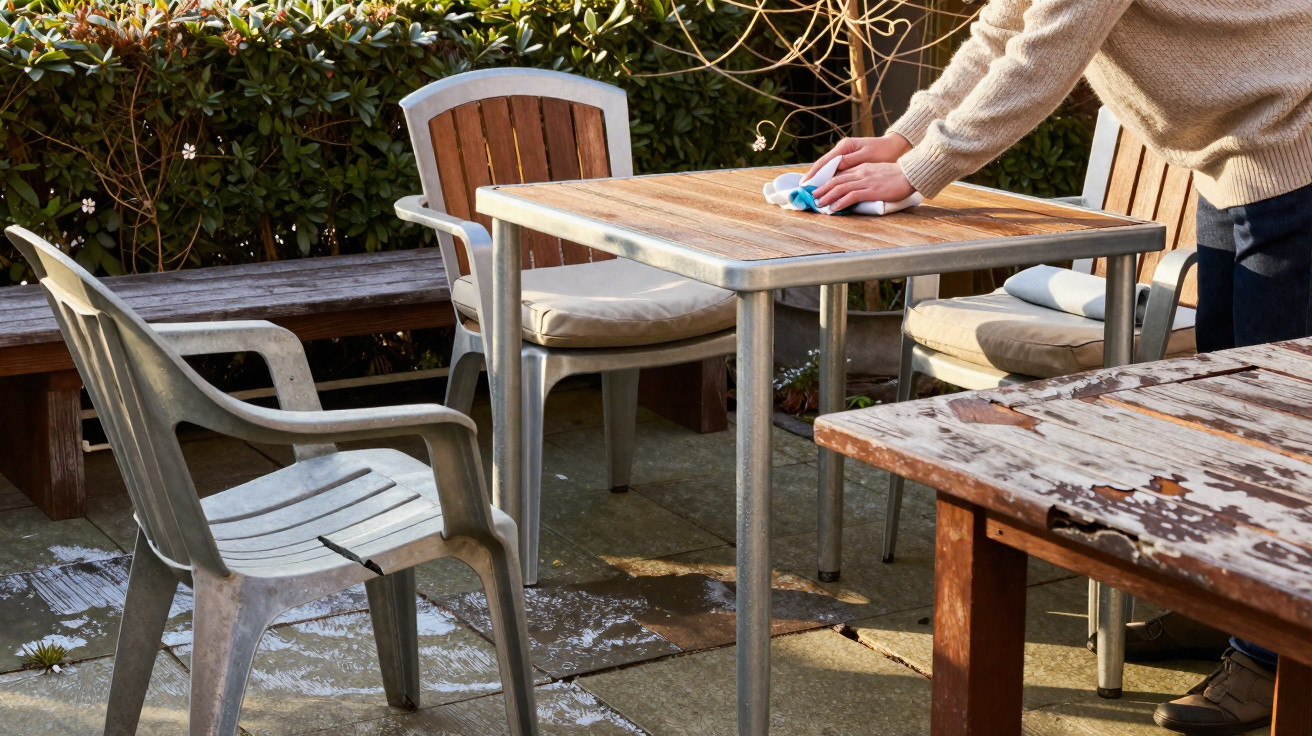
Many garden owners face the same unpleasant surprise in late winter: what looked smart in spring suddenly resembles something ready for the tip. Often the issue isn’t neglect at all, but the wrong materials. If you cut corners at purchase time or choose purely on appearance, outdoor use can make you pay twice.
Why winter weather quietly destroys your garden furniture
The real threat to outdoor chairs, tables and patio sets is rarely the summer sun. The worst damage tends to happen in the months when hardly anyone sits outside: November to March. During that period, rain, snow, frost and thaws collide again and again.
Moisture creeps into the tiniest cracks. When temperatures drop below zero, that water freezes and expands. The cycle repeats for weeks and months. The material shifts and flexes, loses its integrity, and eventually fails.
"The constant swing between wet weather and frost will eventually force open even surfaces that seem solid."
You usually notice the results most clearly in early spring:
- flaking paint or stain
- warped boards and wonky backrests
- timber that has swollen or turned soft
- hairline cracks that develop into visible breaks
Once damp has penetrated deep into the material, it’s difficult to halt the deterioration. At that point, sanding, repainting and covering up only help to a limited extent. That’s why many pieces end up in bulky waste collections far sooner than they should.
These timber types are a poor choice outdoors
In spring, DIY retailers often tempt buyers with inexpensive seating sets made from pale timber. They look fresh and modern, but they’re frequently built from unprotected softwood. Common examples include spruce and pine without any deep treatment.
This kind of wood absorbs water like a sponge. It also creates perfect conditions for fungi and wood-boring insects. After just one winter, the damage can be severe: dark marks, soft patches and loose joints.
"Untreated softwood outdoors is often not a bargain, but a short, planned appearance."
Typical warning signs when you’re buying:
- no statement that it is "suitable for outdoor use"
- very pale, budget timber mix with no clear species named
- only a thin decorative stain that seems aimed at looks rather than protection
- no information about the use class (for example, "Class 3" or "Class 4")
If you want real timber in your garden furniture, choose more durable species-or specifically ask for pressure-treated stock. Purely decorative wood outside usually lasts only one or two winters.
Cheap plastic: brittle after one summer and one winter
The second big problem category is low-cost plastic furniture. The white stackable chair for a few pounds seems convenient: light, wipe-clean and easy to replace. However, many of these plastics age extremely quickly.
Sunlight attacks the surface and makes it brittle. Then winter cold arrives: the material hardens and loses flexibility. One small knock or an awkward step is enough-and the plastic cracks.
Typical issues with poor-quality plastic outdoors:
- fine cracks running along the backrest
- yellowed or faded seats
- break points on armrests and legs
- unpredictable splintering if something is dropped
Visually, pieces like this look shabby in a short time, and structurally they can become unsafe. No one wants a guest to lean back and have the chair collapse.
Which materials actually stand up outdoors
Fortunately, there are alternatives that last far longer and have been standard choices in professional gardens for years. If you don’t want to replace everything every couple of seasons, these materials are worth a closer look.
Aluminium: light, tough and almost maintenance-free
Aluminium is a favourite among landscape professionals. It doesn’t rust, it barely reacts to frost, and it tolerates wet conditions without complaint. Better-quality pieces are powder-coated, meaning they’re covered with a hard, durable coloured layer.
"Well-made aluminium can stay outdoors all year-usually a spring clean with water is enough."
Benefits of aluminium in the garden:
- no classic rust like steel or iron
- low weight, easy to move around
- UV-stable coating when the quality is good
- clean, modern styling that suits many looks
If you’re unsure, you can often feel the difference in the shop: cheaper frames seem flimsy or thin-walled, while higher-end models still feel steady and substantial despite being light.
Wood composite materials: timber look without the usual drawbacks
Plenty of people love the natural appearance of wood but don’t want the ongoing chore of sanding and repainting. That’s where composite materials come in: blends of wood fibres and plastic.
These boards or planks may look like timber at first glance, but in day-to-day use they behave more like a stable, sealed mass. They rarely warp, seldom split, and absorb very little water.
Typical applications include:
- decking and boardwalks
- privacy screens and fencing
- bench tops and table surfaces
Over time the surface changes slightly, but it generally remains closed. Many manufacturers offer long guarantees against rot or pest damage because the material simply doesn’t provide much for insects or fungi to attack.
Pressure-treated wood: for anyone who wants real timber
If you enjoy visible grain and the warm feel of wood, you don’t have to give it up outdoors-provided it’s treated properly. Pressure-treated timber-often described as "pressure impregnated" or "autoclave treated"-is infused with preservatives deep into the wood under high pressure.
"Unlike a simple surface stain, this protection reaches right into the core of the board."
This timber is categorised by use class. For outdoor use, Classes 3 and 4 are usually the ones that matter. They’re designed for persistent damp or contact with the ground. Common uses include:
- garden paths and deck joists
- fixed built-in benches
- play equipment and climbing frames
- pergolas and trellises
As it ages, this wood often turns a silvery grey. That isn’t rot-it’s a normal change caused by UV light. If you want to keep the original colour, you can apply specialist stains, but it usually isn’t necessary for strength.
Moving away from throwaway gardens: invest smartly instead of replacing constantly
Buying garden furniture and outdoor surfaces based only on price can feel tempting at first. Over time, it often becomes a frustrating calculation: repeated new sets, bulky waste dates, annoyance at wobbly tables and sharp broken edges. Choosing long-lasting materials saves hassle and money-and reduces waste.
There’s another advantage too: low-maintenance materials give you time back. When chairs, tables and decking don’t need repainting every year, there’s more space for plants, veg beds or simply relaxing. Many garden owners only realise after a few years how expensive the initial "cheap" purchase actually was.
| Material | Typical outdoor lifespan | Maintenance effort | Winter risk |
|---|---|---|---|
| Untreated softwood | 1–3 years | very high (regular painting) | swelling, rot, cracking |
| Cheap plastic | 2–4 years | low, but ages quickly | breaks, brittleness, discolouration |
| Aluminium | 8–15 years and more | low (cleaning) | low; with good coating, hardly any issues |
| Wood composite material | 10–20 years | low | very stable, minimal cracking |
| Pressure-treated wood | 10–15 years | medium (optional stain) | robust; mainly greys cosmetically |
What to check next time you buy for the garden
On your next trip to a DIY store or while browsing online, it pays to scrutinise the specifications. Cushions, colours and decorative touches matter far less than the frame, the material label and the build quality.
- Ask for the exact timber species and the use class.
- Check whether the frame is properly coated or merely painted.
- Look for thickness and stability, not just styling.
- Make sure the product explicitly states it is "suitable for outdoor use all year round".
With bundle deals in particular, you often pay for attractive looks while the underlying material is the weak point. A sturdy aluminium table or a high-quality composite top with simple cushions will outlast a supposedly premium set made from delicate timber.
Practical tips to extend lifespan even further
Even the best materials benefit from a little help. A few basic habits can add years to your outdoor furniture:
- In winter, place chairs and tables on rubber feet where possible so they’re not standing in water.
- Choose covers that allow air to circulate-otherwise moisture gets trapped.
- Remove leaves and dirt regularly so damp patches don’t linger.
- Never place timber surfaces directly on paving; use small spacers instead.
This way, even hard-wearing materials can be supported in a targeted way. The crucial decision, though, happens when you buy: choose durable materials from the start and you won’t be staring at splintered chairs and crooked benches in January-you’ll be looking forward to your first coffee outdoors.

Comments
No comments yet. Be the first to comment!
Leave a Comment