
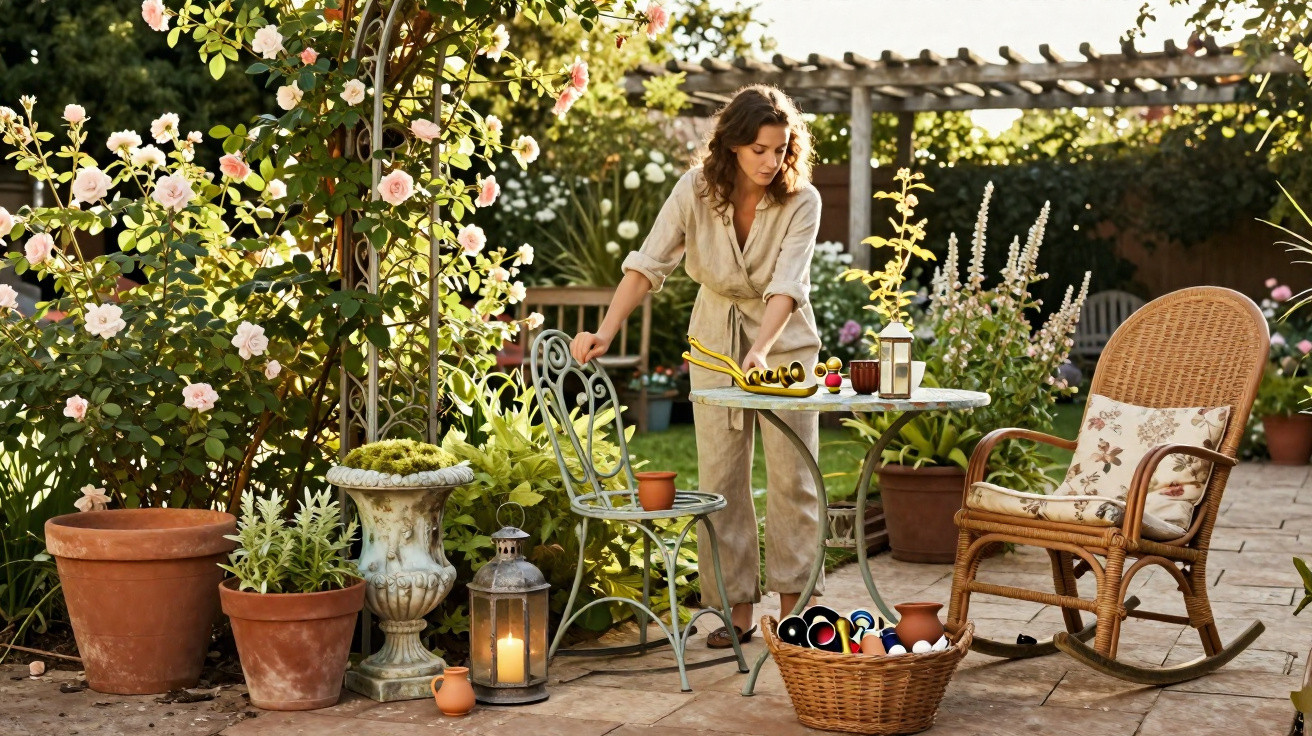
Strolling through flea markets at the moment, one thing becomes obvious: it is no longer just vases and pictures that people want, but anything that can begin a second life outdoors. External spaces have long been treated as an extension of the living room - and that is exactly where interior professionals focus their attention. They choose pieces with a past, rather than the sterile plastic patio set from a DIY superstore.
Vintage-look garden: Why the flea market is the better place to look
Terraces and gardens now feel like small stages. The starring roles are not played by factory-fresh furniture, but by items that have already lived a little. An enamel watering can, a dented potting table, a rounded zinc tub - finds like these bring a personality you simply cannot manufacture.
"The trend is clearly moving away from one-size-fits-all furniture towards one-off pieces that look as if they have stood in exactly that spot for decades."
More and more decorators deliberately work with second-hand pieces sourced at flea markets, house clearances or online. An old trolley becomes a mobile bar station; a wobbly folding table turns into the focal point of a city-balcony oasis with a fresh coat of paint.
1. Old outdoor lights: atmosphere instead of an off-the-shelf string light
Without lighting, there is no balmy summer evening. Rather than standard battery-powered fairy lights, an increasing number of stylists are opting for pre-owned fittings with real character:
- brass or copper lanterns from the 1960s or 1970s
- pendant lights with satin-finish glass above the garden table
- wall lights with visible patina next to the front door
Pieces like these appear regularly at flea markets or in online listings. With a little patience, you can find lamps that instantly elevate an entrance area or balcony. The wiring should be checked or replaced by a qualified professional, while the housing itself can (and should) show the marks of time.
"It is precisely this balancing act - modern wiring, an aged appearance - that creates the special atmosphere outdoors."
2. Terracotta pots and urns with patina: aged on purpose
In the garden, spotless can look strangely lifeless. Professionals specifically hunt for terracotta pots that already show algae, limescale marks or moss. The more imperfect, the better. Large, weighty vessels are ideal for structuring beds or framing entrances.
Typical places to use these brocante pots:
- as a statement piece with an olive tree or fig on the terrace
- as a matching pair to the left and right of the front door with box or yew
- grouped in varying heights to create a Mediterranean corner
If you cannot find older examples, you can cheat a little: brush limewater, yoghurt or buttermilk over the surface, then leave it outside in partial shade - after a few weeks, the pot will look noticeably older. A drainage hole in the base is essential; without it, roots rot and frost can crack the material.
3. Wrought iron: arches, portals and pergolas as a focal point
Forged elements are enjoying a genuine renaissance in the garden. They once decorated villas and townhouses; today they show up at junk markets with traces of rust. Particularly sought after are:
- gates and garden doors with ornamental detailing
- climbing arches for roses and clematis
- pergolas that frame a seating area or stage the path to the house
Older pieces often come from a time when material thickness and craftsmanship were significantly sturdier than many current mass-produced ranges. Covered in climbing plants, they create powerful focal points and break up gardens that are tidied to perfection and can quickly feel sterile.
"A single old iron arch can be enough to give a boring patch of lawn sudden depth and a sense of history."
Rust does not have to be the enemy: a light bloom of surface rust is part of the appeal. Only where areas are badly affected is it worth going over them with a wire brush and protective lacquer. If you want to keep the warm rust tone, use colourless wax or oil instead of an opaque topcoat.
4. Iron garden furniture: from flea market find to an outdoor dining set
Iron seating sets are also back in demand. Common features include curved lines, lattice patterns and round ornaments reminiscent of old café terraces. Many sets look shabby at first glance, but can be brought back with a few simple steps:
- remove loose rust and old paint with a brush or sandpaper
- treat rusty areas with a rust converter
- repaint with metal paint in cream, dark green or black
Classic brands from the 1950s or 1960s sometimes fetch collector prices, but lesser-known makers can offer surprisingly high quality too. The main advantage of this furniture is its toughness: it can handle years outdoors, can be stacked or folded away in autumn, and usually only needs a fresh coat of paint every few seasons.
"Paired with modern cushions or graphic outdoor rugs, even a very old set suddenly feels current."
5. Vintage seating: rocking chair, rattan & co. as a style booster
They once sat on American porches or in conservatories - now they bring a holiday feeling even to compact city balconies: old rocking chairs, rattan armchairs or wooden loungers with striped covers.
What makes these seats so desirable
Small details are what set them apart from new items:
- slightly battered armrests that tell the story of many summers
- fabrics that have faded a little, yet look softer because of it
- metal frames that have survived several house moves
An old rocking chair, in particular, can have a huge impact on a covered seating area: you sit down, slow down, and take in the garden in a completely different way. Wooden loungers with striped canvas evoke historic seaside bathing resorts, and new covers let you match them to any colour scheme.
How to get the mix right: practical tips for the brocante look in the garden
If you are now tempted by flea market garden design, keep a few points in mind:
- Check measurements: garden gates, pergolas and tables from older properties do not automatically match today’s standard widths.
- Assess stability: repair or replace wobbly chairs, brittle wood or feet that have rusted through in good time.
- Limit colours: two to three main tones are enough, such as cream, dark green and terracotta. Otherwise, the outdoor space can quickly look like a furniture store.
- Refresh textiles: feel free to buy new cushions, pads and covers - they add hygiene and comfort, while the frames are allowed to stay old.
"The art lies less in the perfect single piece, and more in a harmonious combination of old, new, rough and refined."
Sustainability, hidden costs and care: what you should know
A brocante garden has another advantage: it saves resources. Instead of producing new furniture, you reuse what already exists. Metal can be de-rusted, wood can be sanded back, and textiles can be replaced. If you negotiate well, you can get high quality at prices that many current mass-produced ranges cannot compete with.
Even so, there are pitfalls. Cast iron and stone are heavy and require load-bearing surfaces. Cheaply refurbished pieces can hide damage, such as hairline cracks in metal or rot in wood. A quick check with a screwdriver and a look at the weld seams can prevent trouble later.
To protect your finds, plan for upkeep: keep iron furniture somewhere dry over winter, wooden pieces appreciate a coat of oil or stain, and terracotta pots are best stored frost-free. That way, your treasures will remain usable for many years - and will tell a little more garden history with every season.
Comments
No comments yet. Be the first to comment!
Leave a Comment