
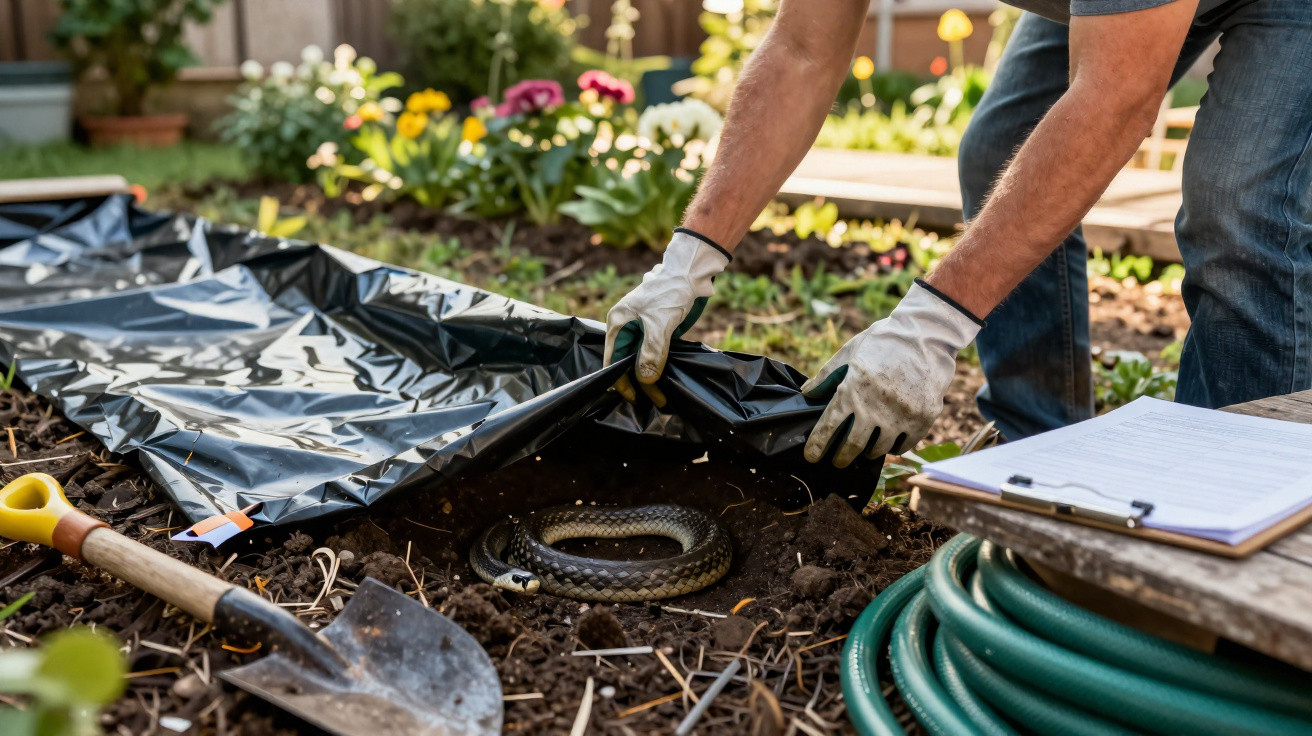
Between the patio, the vegetable patch and the tool shed, there’s often one detail most people barely register: a sheet of covering film, a piece of plastic quickly spread out on the ground. That’s exactly where perfect hiding places for snakes can develop - including venomous species such as the adder. If you care about your garden, it’s worth understanding how this supposedly practical aid can suddenly become a risk, and how a few straightforward steps can reduce it.
Why venomous snakes feel at home in gardens at all
Snakes are cold-blooded. They can’t regulate their body temperature internally, so they rely on sun, warm stones, wood and other structures to get going. In Central Europe, many species become active from around mid-March and remain so into autumn. During that period, they mainly look for three things: warmth, shelter and food.
- Warmth: ideally around 25 to 30 °C at the body surface.
- Shelter: protected, dark corners where they won’t be disturbed.
- Food: mainly mice, small rodents, frogs and lizards.
Private gardens increasingly offer exactly this combination: closely mown areas sit alongside wilder corners, log piles, compost heaps, walls and beds. And if certain materials are left lying on the ground, you effectively provide the perfect “snake harbour” as well.
The hidden magnet: black plastic sheeting on the ground
The real culprit is surprisingly ordinary: dark plastic sheets placed directly on the soil. In home gardens they appear in many forms - for example as a cover over unused ground, as plastic weed membrane, or as black film used for “solarisation” of the soil.
"A dark plastic sheet works for a venomous snake like a heater, a hiding place and a hunting spot all in one - especially when it’s lying loose on the ground."
The reason is straightforward:
- Dark film absorbs sunlight particularly well and heats up quickly.
- Air becomes trapped beneath it and stays warm for a long time.
- The area often remains dry, even after rain or thunderstorms.
- It tends to be quiet; people rarely spend long right there.
This creates a small, warm “room” at ground level. For a snake, it’s ideal for warming up, staying concealed and, if needed, waiting for prey. Sheets are especially problematic when they’re simply spread out loosely or crumpled up in a corner. Exposed edges practically invite a snake to slip underneath.
Typical garden traps many people underestimate
If you mentally walk around your own garden now, you’ll probably spot several common set-ups straight away:
- Black weed-control film around beds or shrubs
- Plastic tarpaulins left down in spring “for now”
- Winter covers for garden furniture folded on the ground
- Rolls of sheeting that are half-used and stored in a damp corner
A classic spring scenario: someone yanks the film away in one quick tug to prepare a bed - and a snake is lying underneath, having just been warming itself up. A fright is almost guaranteed; both sides are startled, and it’s in moments like that that bites are most likely.
Other hiding places in the garden that venomous snakes like
The sheeting is only one part of the picture. Plenty of other features around the house create similar conditions: warm, dark and undisturbed.
Common refuges include:
- Log stacks directly on the ground: they combine food (mice, insects) with cover.
- Pallets, boards, old doors: laid flat with a few centimetres of space underneath - ideal.
- Overstuffed tool sheds: sacks, sheets, empty tubs and boxes create countless niches.
- Garden storage boxes and chests against walls: warm, quiet and hard to see into from outside.
- Hoses left in the grass: even a garden hose can act like a gently warmed corridor.
Snakes are usually most active from late morning through the afternoon. On very hot days, they shift activity to early morning and evening. If you’re gardening during those times, it’s sensible to take a closer look at typical hiding spots - without panicking.
How dangerous are venomous snakes in the garden, really?
In Germany there are only a few species whose bite is genuinely venomous, such as the adder. In many cases, sightings in gardens are harmless smooth snakes or grass snakes. To non-experts they can look similar, but they avoid people even more strongly.
Even so, a residual risk remains. For countries with a similar snake fauna, clinicians speak of around a thousand bite incidents per year, with very few deaths. Modern treatment options and rapid emergency care make a major difference. The greatest danger is when children are affected, when the bite is on a finger or the face, or when help arrives late.
"The vast majority of snakes want no contact with people. It becomes risky mainly when they’re surprised or cornered."
What to do in a serious situation: the right response
If a venomous snake does turn up in your garden, staying calm matters more than bravado:
- Stop and quickly assess what’s happening.
- Step back slowly and quietly.
- Give the animal a clear escape route; never try to surround it.
- Don’t attempt to catch it, and don’t hit or kick.
If the snake remains in a heavily used spot, the local fire service, a reptile specialist or a nature conservation organisation may be able to help, depending on the area. Venomous snakes are usually protected; killing them is illegal and needlessly risky.
If someone is bitten:
- Call 112 and briefly explain what happened.
- Reassure the person affected and keep them as still as possible.
- Remove rings, bracelets and tight watch straps from the affected limb.
- Rest the bitten arm/leg and avoid putting weight on it.
- No cutting, no tourniquet, no sucking the wound, no “home remedies”.
Practical checklist: how to make your sheeting snake-safe
A few simple adjustments can significantly reduce the risk without giving up tried-and-tested gardening methods. A short routine in early spring is often enough.
- Walk the garden: check all sheets and tarpaulins lying on the ground.
- Remove unnecessary material: anything you’re not actively using should be taken away.
- Secure sheets in use: bury edges all the way round or weigh them down with stones so no gaps remain.
- Keep film taut: avoid folds and cavities, as these create air pockets underneath.
- Lift with care: use a broom handle or rake to raise an edge slightly first; never tear it up with bare hands.
If you’re thinking longer-term, you can replace plastic membranes in bed maintenance with organic alternatives such as woodchips, grass clippings or straw. These materials can still provide cover for small animals, but they generally don’t create the same stable, warm microclimate as dark plastics laid directly on the soil.
Rethinking the garden: safety and biodiversity don’t have to clash
Many people instinctively respond with dislike or fear when snakes in the garden are mentioned. Yet they play an important role in the ecosystem by keeping mice and other rodents in check. A garden that’s tidy but not clinically sterile can achieve both: a safer environment for children and pets, while still offering wildlife places to retreat.
For example, storing log piles a short distance away from the house on a raised base doesn’t just reduce the likelihood of snakes right by the patio. It also protects the wood from damp and rot. Keeping a short, clearly visible strip of about 1 to 2 metres around the house makes it less attractive for snakes to come right up to the walls - without turning the whole garden into a monotonous lawn.
It also helps to teach children a few basic rules: don’t reach under stones, don’t lift sheets or boards alone, and don’t touch unknown animals. If you keep these points in mind, you can garden fairly calmly even in snake-rich regions - despite black sheeting, log piles and nature right outside the door.

Comments
No comments yet. Be the first to comment!
Leave a Comment