
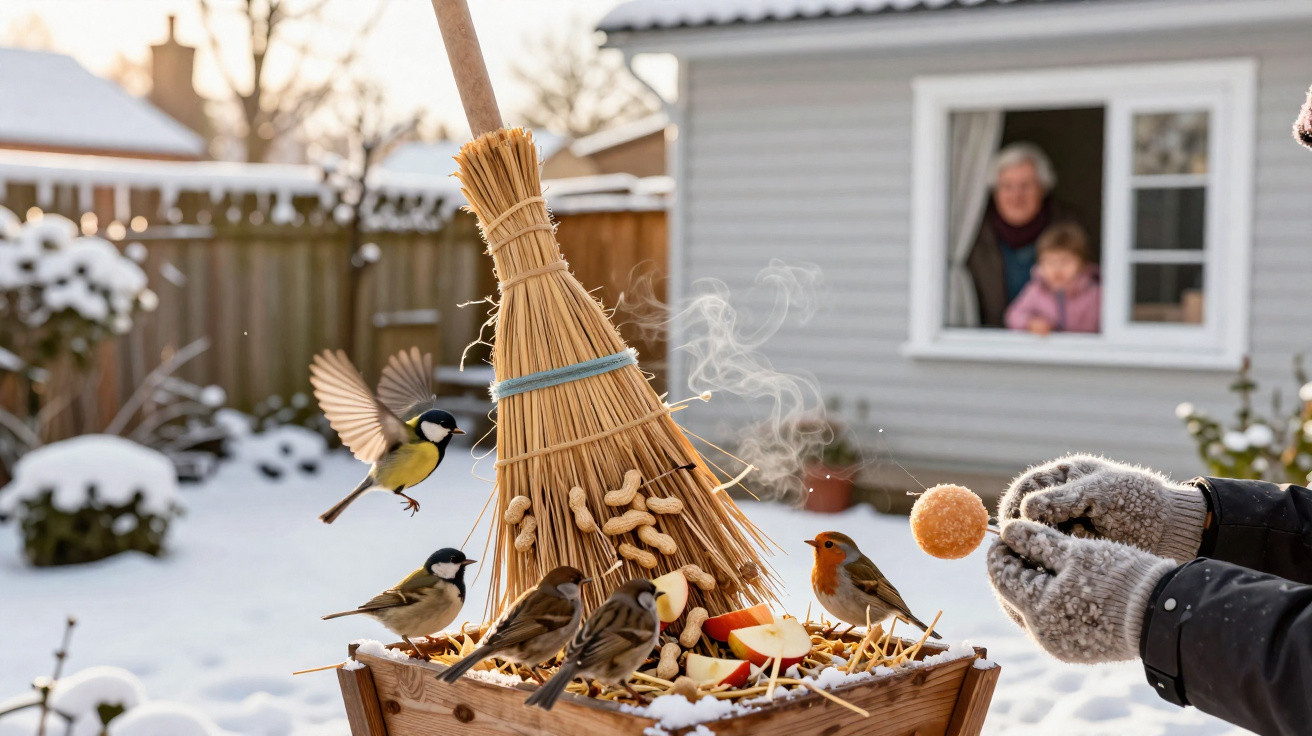
As we turn the heating up and shut the windows, blackbirds, tits and sparrows are quite literally fighting to get through winter one day at a time. Under a sealed layer of snow, there are barely any seeds, worms or berries to be found. Many garden owners immediately think of pricey feeding stations from DIY shops. Yet one of the smartest bits of help is often already sitting in the shed: an old, dusty broom.
Why winter is so dangerous for garden birds
When the thermometer stays below zero for several days in a row, small songbirds quickly reach their limits. During freezing nights they can lose up to ten per cent of their body weight, then have to top up their energy constantly in daylight hours. If food doesn’t appear, they can starve within just a few days.
On top of that, snow, ice and frozen ground lock away their entire larder. What was easy to reach in autumn is now buried under a thick, inaccessible layer. In heavily built-up neighbourhoods in particular, there are often too few hedges, wild shrubs and old fruit trees - the very things that normally provide natural food and cover.
"A small feeding and shelter spot in the garden can make the difference between life and death for many birds in winter."
Right now, birds need more than food: they also rely on safe places to land, corners sheltered from the wind, and little nooks where they can pause without being immediately spotted by cats or birds of prey.
How an old broom suddenly becomes a bird-protection pro
That is exactly where the broom comes in. Its shaggy bristles create lots of gaps that suit small birds perfectly: they can grip on, tuck themselves in briefly, pick out seeds and get out of the wind. The handle doubles as a handy perch and a way to climb up.
Instead of throwing the old thing away, you can turn it into a kind of mini feeding tree in just a few steps. This works with a traditional yard broom, a worn-out birch broom, or even a tired old scrubbing brush.
Positioning the broom properly
- Place it up high: Stand the broom upright against a fence or wall - better still, secure it in a large pot or push it into the ground.
- Hang it up: Fix it with a hook to a branch or to a beam under the carport.
- At least 1.5 metres high: This makes it much harder for cats to creep up unnoticed.
- Near the house, but not right by a window: Birds cope fine with people in view, but constant shadow, movement or noise can be disruptive.
The key principle is simple: lift the broom off the ground and into a spot where food stays dry and predators have a tougher time getting close.
How to turn the broom into a feeding station
With a few kitchen-friendly items and minimal effort, an old broom can become a popular meeting point for hungry birds. What matters is the right combination of energy, safety and easy access.
Suitable treats for cold days
- Suet balls or energy balls without a plastic net, tied to the broom handle or attached to the bristles
- Apple slices or half apples, secured with parcel string
- Raisins or dried grapes, placed in small nets or fabric pouches and knotted on
- Mixed seeds (sunflower seeds, oats, millet) pushed in between the bristles
- Hemp or poppy seeds for smaller species such as finches or siskins
Important: sweet or heavily seasoned leftovers do not belong on the broom. Bread is only suitable - at most - as a very hard supplement broken into small pieces, and it should not be the main offering. Pure fat without any seeds can also cause digestive problems.
"A mix of fat, seeds and a little fruit is ideal - it provides quick energy and important nutrients."
How to attach the food sensibly
For birds to land and feed safely, nothing should wobble or slide off. Basic household items are more than enough:
- Jute twine or natural string for tying on apples and energy balls
- Wooden skewers pushed through fruit or fat blocks, then tucked into the bristles
- Narrow fabric strips or old shoelaces to fasten small bags of seeds
The broom bristles have a big advantage: seeds wedge firmly between the fibres, letting birds pick them out one by one - much like they would from a natural seed head.
Protection from cold, wind and predators
A broom does more than hold food. The thick bristle structure acts like a small windbreak. Birds can press themselves partly into the bristles; the contact with the material retains a little warmth, and they are not left fully exposed in the draught.
At the same time, the broom offers camouflage. Among the bristles, birds’ outlines are harder to make out, buying precious seconds if a sparrowhawk or a cat appears. If you position the broom near a hedge or shrub, you create a sort of escape corridor: one quick hop and the bird is in dense cover.
"A good feeding spot doesn’t just offer calories, but also escape routes and hiding places."
Stories from the garden: how the broom brings people together
Once you have set the broom up and moved it into view, you quickly realise something else happens too: it becomes a little winter cinema. Great tits clamber upside down along the bristles, sparrows bicker over the best place by the apple, and robins hop cautiously to the edge.
Many hobby gardeners say birds come noticeably closer to the house when the feeding spot doesn’t look like a sterile metal frame, but more like a natural bundle of twigs. Children often enjoy stocking the “bird broom”, topping up the food and identifying the species that drop by. Particularly in towns and cities, a bleak winter can suddenly feel far more lively.
Other everyday items with hidden value for birds
Once you start, you tend to view the tool shed differently. Plenty of objects can be repurposed into shelters or feeding aids with very little effort.
| Item | Possible winter use |
|---|---|
| Old rake | Hung horizontally as a perch and feeding ledge |
| Broken wooden handle | Used as a stake for a feeder or a lookout perch |
| Metal bucket | Turned upside down as a dry platform for seeds |
| Wooden pallet | Propped at an angle as a windbreak and hiding place |
Ideas like these save money and cut down on waste. Using old garden tools creatively is a practical contribution to species protection - right outside your own front door.
What to bear in mind about feeding and hygiene
So that good intentions don’t turn into a problem spot, the broom feeding area needs a little care. Damp food moulds quickly and can make birds ill. Clear leftovers regularly, top up smaller amounts more often, and check that nothing is spoiling.
- Replace fat balls after a few weeks at the latest
- Throw away any mouldy fruit
- During heavy rain, move the broom under cover for a while or hang it in a more sheltered place
If you also plant berry shrubs, wild roses or rowan, you create extra natural food sources. The broom then becomes an additional “buffet point”, while shrubs provide longer-term shelter and nourishment.
Why this simple trick is about more than feeding
A repurposed broom is a striking reminder of how little it can take to make a difference in your immediate surroundings. Something destined for the bin gets a second life, resources are saved, and local birdlife benefits straight away.
It also sharpens your attention to things in the garden that are often overlooked: which species are actually visiting? When do they show up? Which food is preferred? A spur-of-the-moment idea can quickly turn into a small nature project that carries you through the winter - and sometimes even prompts you to make the garden permanently more bird-friendly.
So if you walk through the shed this year and trip over an old, wonky broom, pause for a moment. It might be exactly the help tits, sparrows and robins urgently need when the next cold snap hits.
Comments
No comments yet. Be the first to comment!
Leave a Comment