
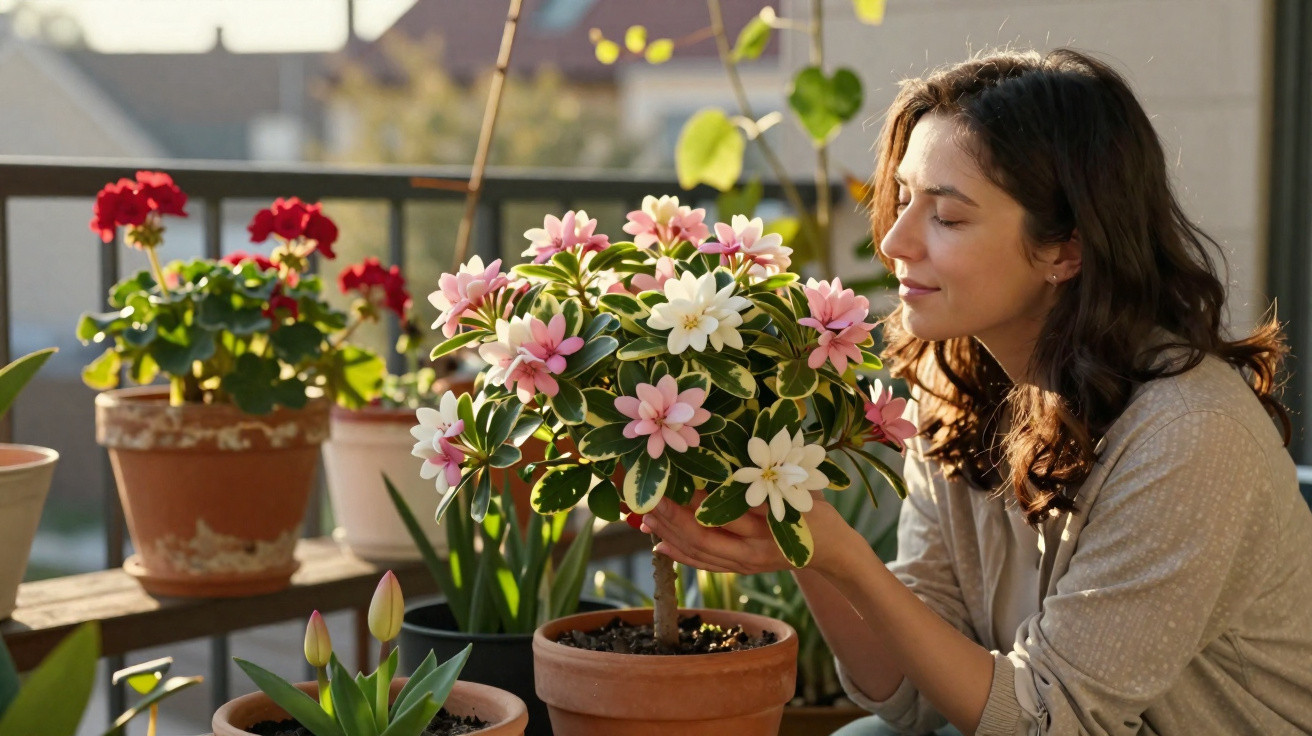
Many balconies end up with the same trusty geraniums in their boxes year after year. Yet more and more keen gardeners are after something a bit different: colour before spring has properly arrived, plus a scent that lifts the mood immediately. That is exactly where a shrub comes in-still something of a hidden gem in Germany, but with huge potential for genuine wow moments.
The late-winter star: Daphne odora ‘Aureomarginata’
The botanical name may sound daunting, but the plant itself is refreshingly straightforward: Daphne odora ‘Aureomarginata’, commonly known in English as winter daphne. It grows slowly, stays neat, and usually reaches around 1 to 1.5 metres in both height and spread. That makes it a strong choice for compact town gardens, front gardens, and large containers on a balcony.
Its leaves are a deep green, edged with a fine creamy-yellow margin. That pale outline keeps the shrub looking lively even on dull winter days. Unlike many ornamental shrubs, this cultivar does not drop its foliage, remaining attractive throughout the year.
"Winter daphne flowers when others are still shivering-and its perfume is so powerful that a single shrub can scent an entire part of the garden."
A fragrance like jasmine, clove and lemon
Flowering generally falls between February and March. At that point, masses of small blooms appear-soft pink on the outside and often almost white within. Visually, the flowers are rather understated; the real performance is all about fragrance.
Gardeners often describe the scent as sweet, spicy and gently citrusy. Some people think first of jasmine, others of cloves, and many pick up a blend of the two. On a mild late-winter day, you can notice it from several metres away as you pass.
How to enjoy the scent properly
- The aroma is usually strongest in late-morning sunshine.
- Gentle warmth intensifies the fragrant compounds, while cold conditions dull them.
- If you step closer, you can carefully “frame” the flowers with your hands and breathe the scent in more directly.
- Short, calm breaths make it easier to pick out the different layers of fragrance.
Over time, this shrub can become a kind of olfactory calling card for your home. Many visitors later associate that particular perfume with the garden itself-much like a signature fragrance linked to a person.
The ideal spot in the garden
Daphne odora is happiest when it is neither baking hot nor exposed to cutting draughts. It tends to thrive in bright partial shade, for example:
- on the east or north-east side of the house,
- beneath open, lightly branched trees and shrubs that do not cast a dense canopy in winter,
- near a path or entrance so you catch the scent in everyday life.
Soil should be humus-rich, free-draining, and slightly acidic to neutral. Heavy clay that stays wet is a poor fit: waterlogging is a real risk, and the shrub is notably sensitive to it.
"A wide planting hole that isn’t too deep, good drainage and humus-rich soil are half the battle for a healthy winter daphne."
Planting step by step
- Dig a planting hole at least twice the width of the rootball.
- Loosen the base slightly; if your soil is heavy, mix in a little gravel or grit.
- Position the plant so the top of the rootball sits exactly level with the surrounding soil.
- Backfill with a blend of garden soil, compost, and (if useful) ericaceous compost.
- Water thoroughly, then keep the soil evenly moist rather than wet.
- Finish with a thin mulch layer, such as composted bark or leaf mould.
On the balcony: a fragrant alternative to a geranium box
No garden is needed to enjoy it. Daphne odora can do very well in a large container. For pot growing, keep these basics in mind:
- Choose a pot with drainage holes, at least 30–40 cm in diameter.
- Bottom layer: expanded clay, gravel, or coarse crocks for drainage.
- Compost: a mix of loose multi-purpose compost, a little composted organic matter, plus some ericaceous (lime-free) compost.
- Site it near a seating area or the balcony door, but avoid a full south aspect with harsh midday sun.
In many parts of Central Europe, the shrub is considered hardy down to around –12 to –15 °C. In a container during clear frosty nights, it is best moved close to a sheltered house wall and the pot wrapped in hessian or bubble wrap to protect the roots.
Care: doing less achieves more
Winter daphne does not respond well to frequent moving or drastic pruning. If you give it the right position from the start, it can settle in for many years. Day-to-day care is mainly about restraint:
| Care task | Recommendation |
|---|---|
| Watering | Regularly but sparingly; the compost should stay fresh, not saturated. |
| Feeding | Work in a little organic feed or compost once in spring. |
| Pruning | Only a light trim straight after flowering; avoid heavy cuts. |
| Transplanting | Best avoided, as the roots react very sensitively. |
Keeping a thin mulch layer in place year-round helps buffer temperature swings and, during dry spells, reduces moisture loss from the soil.
Safety: beautiful, but poisonous
As intoxicating as the perfume is, the plant’s contents are hazardous. All parts are considered toxic, with the bark and bright berries especially so. Even small amounts can trigger stomach upsets, and contact with sap may irritate the skin.
- Do not plant within easy reach of small children.
- In households with cats or dogs, place it in a quieter corner rather than where pets lounge.
- Always wear gloves for any pruning, and wash your hands thoroughly afterwards.
- Dispose of prunings in household waste; do not compost them if pets can access the compost area.
Perfect partners for a fragrant winter finale
When planning a border for the colder months, winter daphne pairs well with other early bloomers. The key is not to crowd too many strongly scented plants into a tight space, otherwise the overall effect can feel overpowering.
"A handful of well-chosen partners turns the shrub into an even stronger focal point-visually and in terms of scent."
Harmonious combinations in the border
Reliable companions include, for example:
- Christmas roses and hellebores (Helleborus): provide elegant flowers in white, pink or purple at much the same time.
- Witch hazel (Hamamelis): delicate, thread-like blooms in yellow or orange that read well from a distance.
- Snowdrops and crocuses: form a gentle carpet at the shrub’s feet.
- Early-flowering viburnums (Viburnum): add to the seasonal fragrance without totally drowning it out-provided you use them sparingly.
For a balcony, it works well alongside early bulbs in neighbouring pots. One container with winter daphne, next to crocuses, miniature daffodils and an ornamental grass for structure quickly creates a small, distinctly personal spring display.
Why this shrub offers more than a geranium box
Geraniums certainly provide summer colour, but they are usually scent-free and disappear as soon as the first frost arrives. Daphne odora follows a different idea: it contributes all year, does not look bare in winter, and then reaches its peak precisely when the garden most needs a sign of life.
Its early bloom time also benefits insects. In late winter and very early spring, bees and other pollinators have few sources of food. Winter daphne opens its flowers in exactly that gap. So if you want an appealing garden while also supporting biodiversity, this shrub is an unexpectedly smart choice.
For many gardeners, the first encounter with its fragrance is a real lightbulb moment. You realise that one well-placed shrub can transform how an entire garden space feels. On small plots in particular, this approach pays off: one distinctive, characterful woody plant with personality, rather than ten interchangeable flower boxes that need replanting from scratch every year.
Comments
No comments yet. Be the first to comment!
Leave a Comment