
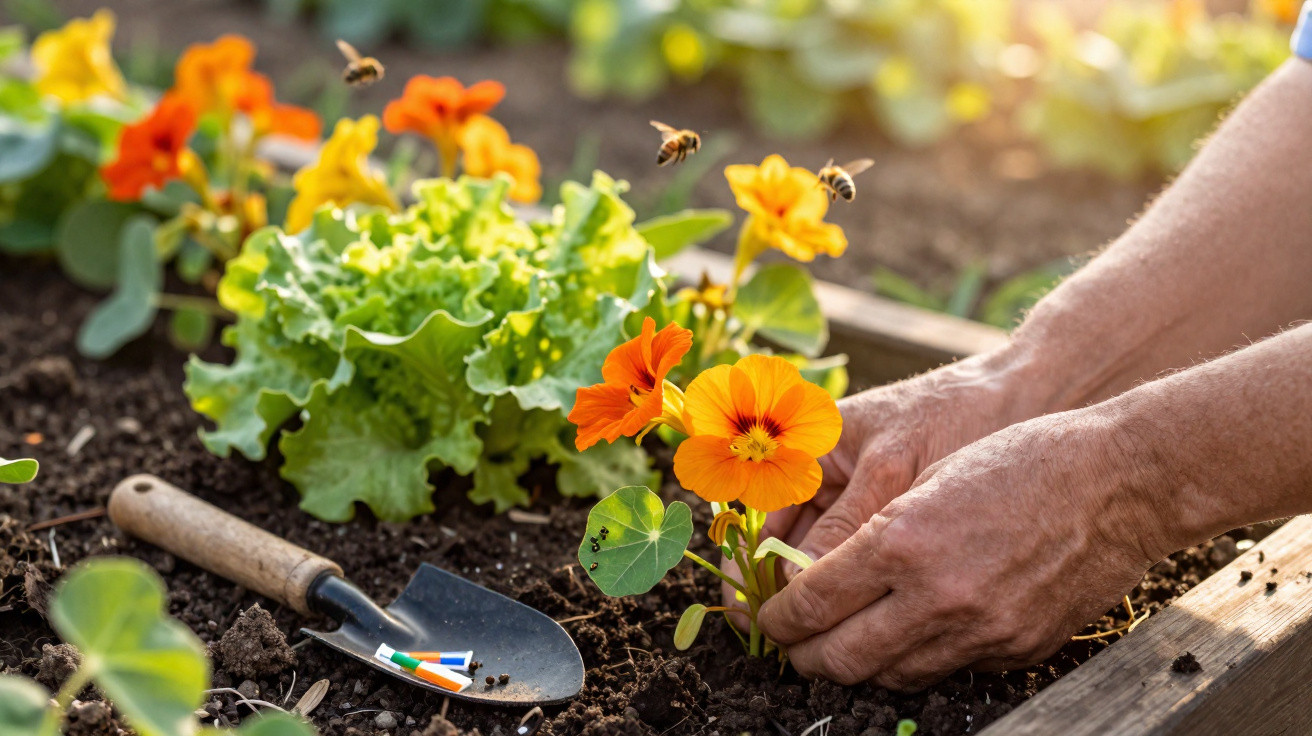
When you get your beds ready in spring, you usually start by thinking about carrots, tomatoes, courgettes or beans. Yet one extra plant can make the difference between vegetables being stripped by aphids later on and harvesting bowl after bowl in summer. Nasturtium, often dismissed as nothing more than an ornamental, turns out to be a real game-changer in an organic vegetable garden - especially when you get it into the ground in March.
Why a simple flower can save your vegetables
Plenty of home gardeners spend a lot of money in spring on sprays, fertilisers and specialist products. In reality, many common issues can be eased with a long-established approach that needs no chemicals at all: using plants that protect one another. This is exactly where nasturtium comes into its own.
"Nasturtium acts like a natural shield: it draws pests away, attracts beneficial insects and, along the way, improves the microclimate in the bed."
In the veg patch, it’s a classic companion plant. It shoots up quickly, covers the soil and produces vivid orange, yellow or red flowers. There’s more going on below ground too: its roots gently loosen the soil and encourage soil life. Together, these effects reduce stress on your crops and help them grow more strongly.
The perfect moment: why getting started in March matters
As soon as the days begin to lengthen and temperatures slowly rise, the soil starts to wake up. That’s why March is the ideal time to reach for a packet of seeds. Sowing early gives nasturtium a head start - and your vegetables benefit from that advantage.
The principle is straightforward: when the first seedlings of radishes, beans or tomatoes emerge, the nasturtiums should already be ready and waiting. That way they’re in place as soon as the first aphids arrive looking for tender new growth.
- Sowing: from March outdoors in a sheltered spot, or start in pots
- Position: sun to partial shade; avoid overly rich soil
- Spacing: roughly 20–30 cm between plants
- Water needs: keep evenly moist, but never waterlogged
You can pick up the seeds in almost any garden section, from a DIY store to a local nursery. They’re inexpensive, germinate quickly and are therefore ideal for beginners.
Redirecting aphids: nasturtium’s hidden superpower
How the natural decoy for pests works
Aphids - especially the dreaded black bean aphid - are extremely fond of nasturtium. And that’s exactly what makes it so useful. Rather than piling onto the young shoots of beans, peas, courgettes or tomatoes, the aphids tend to move onto the juicy leaves of the nasturtium instead.
"Nasturtium sacrifices itself in the truest sense of the word: it is deliberately used as a ‘sacrificial plant’ to take the pressure off the vegetables."
The result is that your main crops stay healthy for longer, grow with more vigour, and you don’t feel you need to reach for toxic sprays after every rain shower. It’s kinder to the environment - and to your wallet.
What to do with the ‘sacrificial plant’
If the aphids cluster on just a few nasturtiums, you can deal with those plants in a targeted way:
- cut off heavily infested shoots and put them in the bin (not on the compost)
- blast them off with a strong jet of water
- or spray with a homemade soft-soap solution
Because the pests are concentrated in a few places, it becomes a quick, contained job rather than a full-scale battle across the whole bed.
A magnet for bees and bumblebees - free pollination for beds and fruit trees
An early-season boost for garden pollinators
Nasturtium doesn’t only score points as protection against aphids. Its showy flowers provide nectar and pollen early in the year. Bees, bumblebees and other pollinators home in on them - and usually continue working nearby.
That local activity pays off: if you have fruit trees, berry bushes or squash-family crops, every extra bee that visits is a gain. Well-pollinated flowers set fruit more reliably. You’ll notice the difference in courgettes, cucumbers and pumpkins, and also clearly in apple and pear trees.
"The more pollinators are busy in the garden, the more likely a generous harvest becomes - nasturtium works like an invitation card to bees and their friends."
Better fruit set and higher yields
When nasturtiums grow close to your vegetables, pollinators take - quite literally - shorter journeys. They move from bloom to bloom, transfer pollen more effectively and increase the number of fertilised flowers. In practical terms, that means: more tomatoes per truss, more courgettes per plant, and more apples in autumn.
Where nasturtium needs to go: between rows and along the edge
A flowering protective barrier around the bed
Placement determines how well the protection works. One tried-and-tested approach is to create a kind of “flower belt” around your vegetable bed. Sow nasturtium along the edges, ideally in loose groups. This forms the first interception line for pests flying in from outside.
At the same time, you get a bright, decorative border. The transition between veg patch and lawn or path looks softer, and the bed appears tidy even while your crops are still getting established.
Sowing directly between vegetable rows
It’s often even more effective to plant nasturtium right among your crops. Common combinations include:
- between tomato plants
- at the base of bean poles
- alongside courgette or pumpkin plants
- along the edge of potato beds
The broad, round leaves shade the soil and help stop it drying out too quickly. Meanwhile, the shallow rooting lightly loosens the earth without competing heavily with your main crops. As the foliage fills in, it forms a natural carpet that keeps weeds under control.
How to sow nasturtium properly
Step-by-step guide for beds and balconies
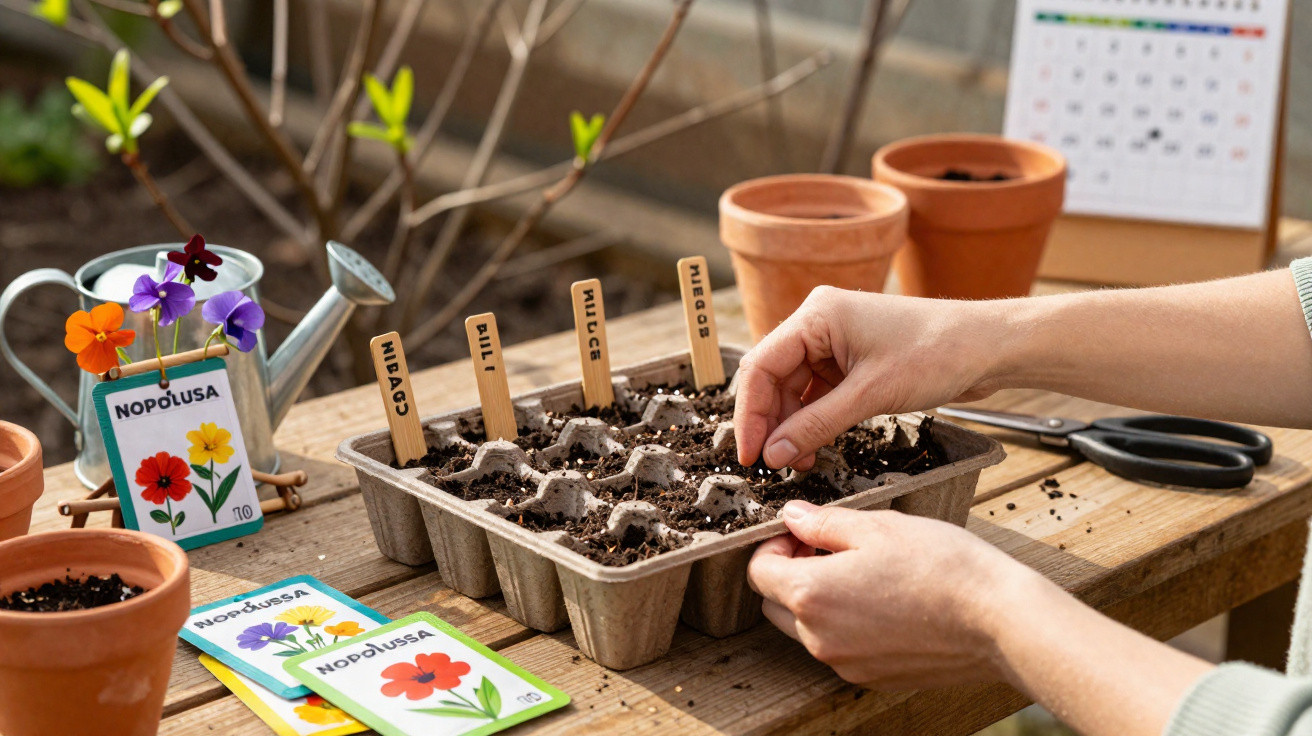
Whether you’re sowing into a traditional garden bed or a raised planter on the balcony, it’s very straightforward. Use this simple guide:
- Loosen the soil and remove large stones.
- Place the seeds about 2 cm deep.
- Keep 20–30 cm between plants; allow a bit more for climbing varieties.
- Water in gently without washing the soil into a crust.
- Keep evenly moist for the first few weeks.
After around 10 to 14 days, you’ll usually see the first seedlings. The plants grow rapidly, quickly fill gaps and soon begin to flower. If you like, you can train climbing types up small trellises or fences, while ground-cover forms can simply spread across the soil.
More than just a helper: edible flowers and leaves
A bonus many people overlook is that nasturtium is edible. The leaves and flowers have a mild peppery kick, similar to cress, and are popular in salads, on sandwiches, or as a garnish for soups and cold platters. Even the unripe seeds can be pickled like mild capers.
That makes the plant appealing in three ways: it protects your vegetables, draws in pollinators, brightens the bed - and ends up on your plate as well.
What else you should know
Nasturtium pairs well with other “helper plants”, such as pot marigolds or marigolds (tagetes). This creates a varied, lively garden where pests struggle to establish themselves for long. Monocultures can look like a laid table to many insects - mixed planting disrupts that balance.
One thing to bear in mind: if a plant is hit very hard by aphids, it may look a bit shabby. That’s part of its job as a ‘sacrificial plant’. If you can live with that, you’ll be rewarded with healthier main crops. If you’d rather not, remove the affected plants and re-sow elsewhere - germination is fast, so protection returns quickly.
If you start nasturtium in March this year, you’re effectively putting a natural insurance policy in place for summer. Instead of constantly checking for damage, you can watch flowers, beneficial insects and vegetables develop together - with far less stress and, often, a fuller harvest basket.
Comments
No comments yet. Be the first to comment!
Leave a Comment