
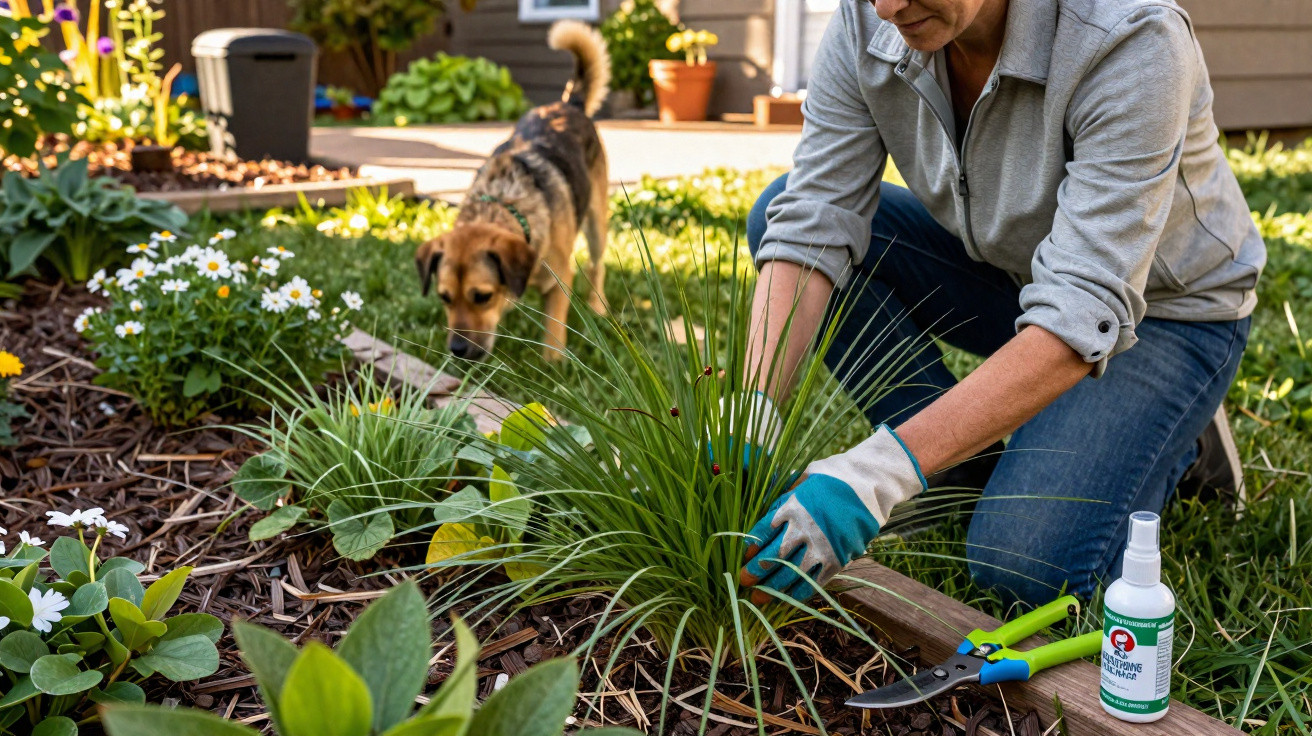
As soon as the weather warms up, tick season gets going too. Most people associate ticks with woodland paths or tall meadow grass out in the countryside. In reality, ticks often do better right outside your front door than deep in the forest - in ordinary private gardens. And certain planting choices can create the ideal hiding place for these parasites without you realising.
Why ticks love your garden so much
Ticks are not genuinely interested in particular flowers or shrubs. They do not track scents in the way bees or butterflies do. What draws them in is something else entirely: the garden’s microclimate.
"Ticks aren’t looking for a favourite plant, but for a damp, shady, wind-sheltered habitat - and that’s exactly what the wrong corners of the garden often provide."
If the ground stays consistently moist and sunlight rarely reaches the soil surface, ticks can thrive. Typical tick hotspots in gardens include:
- Boundary areas where lawn meets hedge or shrubbery
- Dense shrubs and evergreen hedges
- Long, unmown patches of meadow-like grass
- Piles of leaves and compost corners
- Climbing plants such as ivy on walls or trees
Specialists at universities such as Cornell and Texas A&M have been pointing out for years that the plant species itself is not the deciding factor - it is the damp shade created by dense greenery. Where air circulation is poor and the ground dries slowly, humidity remains high - perfect for ticks, which would otherwise dry out quickly.
These plants can create a tick paradise
Strictly speaking, no single plant “magically” attracts ticks. It becomes an issue when certain plants, combined with location and maintenance habits, form a dense carpet or an impenetrable hedge.
Typical high-risk areas in the garden
These areas are especially problematic:
- Bushy ornamental shrubs such as privet, cherry laurel or forsythia - particularly when they grow right down to ground level and are never thinned out.
- Tall grasses and ornamental lawns that are mown infrequently and left long.
- Groundcover plants such as ivy, Pachysandra, Japanese spurge or cotoneaster - especially when they create a continuous, thick mat.
- Hedges where leaves, fallen needles and moisture collect underneath.
Between leaves, ticks climb up blades of grass or twigs and wait for a person or animal to brush past. They do not jump, and they do not deliberately drop down - they simply sit at “latching height”, usually between the knee and the hip.
"The denser, shadier and more untidy a planted area is, the more likely it is to become a refuge for ticks."
Reducing ticks in the garden with simple steps
No one needs to turn their garden into a sterile sea of paving. A handful of targeted actions is often enough to bring the risk down noticeably.
Maintenance tricks to discourage ticks
These measures are particularly effective:
- Mow regularly: Keep the lawn short, especially along paths and around play areas.
- Clear leaves: Remove leaf piles in spring and autumn, particularly under hedges and around trees.
- Thin out shrubs: Prune dense bushes so that light and air can reach the ground.
- Keep groundcover under control: Do not let climbers like ivy grow unchecked up walls and trees.
- Dry out damp corners: Avoid standing water; if needed, use drainage or create a strip of gravel.
So-called “buffer zones” can be very effective:
"A strip of gravel, chippings or bark mulch between lawn and dense planting creates a dry barrier that many ticks are reluctant to cross."
These strips are useful, for example:
- between lawn and hedges
- around patios and seating areas
- at the edges of children’s play spaces
- along frequently used garden paths
Tick risk in common garden spots
| Garden area | Tick risk | Simple countermeasure |
|---|---|---|
| Under hedges | high (shady, damp, leaf litter) | remove leaves, thin out, plan a mulch strip |
| Children’s play lawn | medium to low | mow short, cut back growth around the edges |
| Log pile / firewood | high | store dry, keep away from seating areas |
| Compost heap | medium | not right next to the patio, keep the edges tidy |
| Ivy on walls | medium to high | cut back regularly, do not let it overgrow the ground area |
Pets as tick taxis
The most reliable way for ticks to get into the house is often via a dog or cat. Pets push through bushes, lie in the shade and pick up ticks without anyone noticing.
After each time in the garden, a quick check is worthwhile - especially:
- on the head, around the eyes and ears
- on the neck and between the shoulder blades
- in the armpits and groin
- between the toes
"A few minutes of checking after playing in the garden can save weeks of stress from tick bites and vet visits."
Vets offer different preventative options: spot-on treatments, collars and tablets. The right choice depends on the animal, its age and its health. Without professional advice, you should not experiment on your own.
How to protect yourself from ticks
If you work, sit or play in the garden a lot, you should take the same precautions as you would on a walk in the woods. Many tick bites happen during everyday tasks: watering flowers, weeding, pushing a child on a swing.
Practical everyday protective measures
- Suitable clothing: Long trousers, pull socks over the trouser legs, and wear closed shoes.
- Light-coloured fabrics: Ticks are easier to spot on a pale background.
- Use repellents: Apply sprays containing DEET, picaridin or oil of lemon eucalyptus to skin or clothing.
- Body check: After gardening, shower and check your body - especially behind the knees, in the groin, the navel area and the armpits.
If you live in a higher-risk area, it is also worth discussing vaccination against tick-borne encephalitis (TBE) with your GP. The jab does not prevent a tick bite, but it can protect against one of the most dangerous potential consequences.
What makes ticks so dangerous
Ticks themselves usually cause nothing more than small areas of redness. The real danger lies in the pathogens they can transmit. In Central Europe, two illnesses are particularly in focus: Lyme disease and TBE.
Warning signs after a bite include:
- an expanding, ring-shaped redness around the bite site
- fever, headache or aching limbs
- unusual tiredness or flu-like symptoms
"If you notice flu-like symptoms or a spreading redness after a tick bite, you should seek medical advice promptly."
In many cases, the sooner a tick is removed, the lower the risk of transmission. That is why fine tick tweezers or a tick remover card are a sensible item for any garden household.
More greenery, less risk - finding the compromise
A wildlife-friendly garden with shrubs, trees and flowering meadow areas can absolutely be compatible with tick prevention. The key is layout: play areas, paths and seating should be sunny and relatively dry, while denser zones are deliberately placed towards the edges of the property.
When planting new additions, you can build this in from the start: do not run groundcover right up to the patio, avoid hedges as an unbroken wall, and keep lawn edges clearly defined. That way the garden stays lively and green - but becomes far less welcoming for ticks.





Comments
No comments yet. Be the first to comment!
Leave a Comment