
When you plan a flower bed, you usually picture roses, hydrangeas or lavender. Hardly anyone thinks of Lantana camara. Yet this shrub offers something many gardeners long for: punchy, vivid flowers - on almost any day of the year.
A shrub that simply keeps flowering
Lantana camara originally comes from tropical parts of the Americas and Africa. In British gardens it can feel slightly exotic: while many plants make the most of spring and summer and then pause for the rest of the year, Lantana keeps going.
"Lantana produces new flowers continuously - without a classic ‘flowering break’."
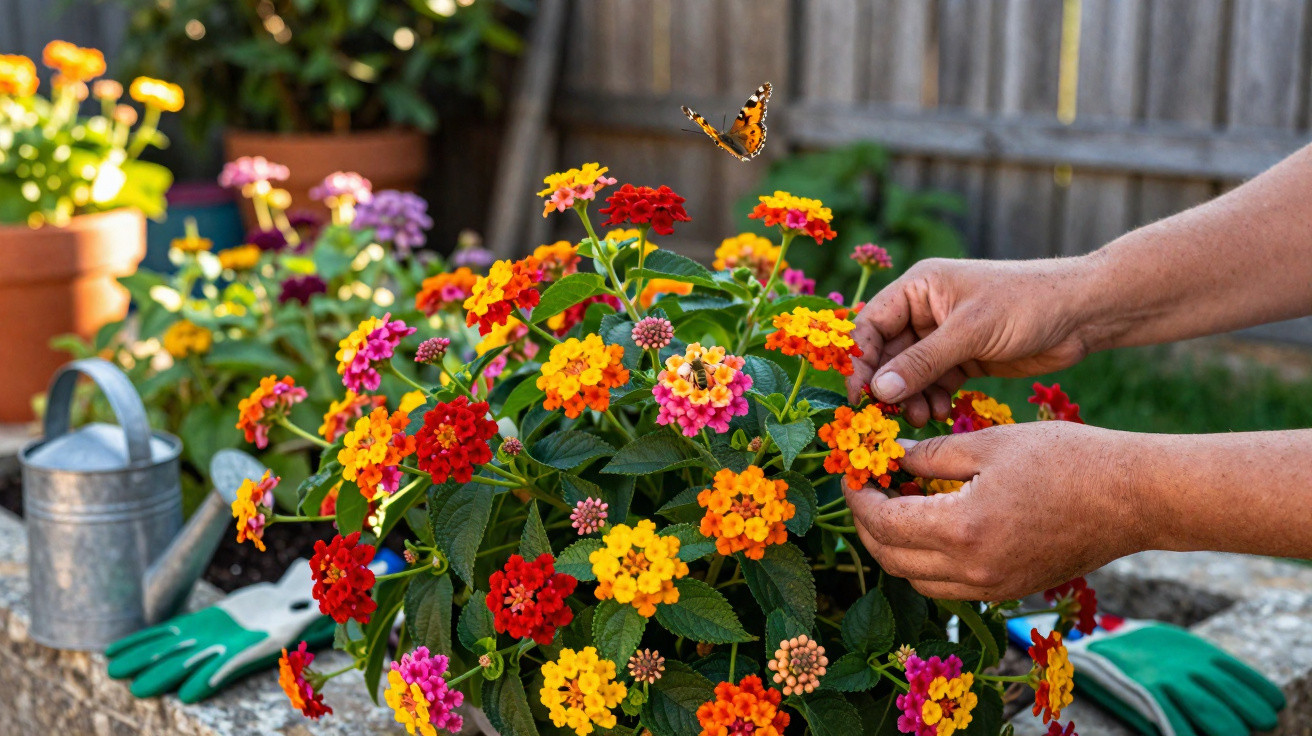
Its blooms appear in rounded clusters. Each cluster is made up of lots of tiny individual flowers that open in sequence. As older flowers gradually fade, fresh buds form straight behind them. The result is that there’s rarely a moment when the shrub looks bare.
Typical are intense colours, sometimes mixed on the very same plant:
- rich yellow
- orange and apricot shades
- bright pink
- reds through to purple
Because of this colour blend, even small plants look like deliberately placed accents in a border. Many experienced gardeners are surprised by how long the display lasts - particularly once other perennials have long since finished.
Winter lull? Not with Lantana
The clearest difference from more familiar ornamental shrubs shows up in the colder months. When roses have been cut back and summer perennials have died down, Lantana often carries on flowering through mild winters, or only stops briefly.
For anyone who sees their garden in January as little more than a grey patch, this shrub can be a genuine game changer. On a patio or balcony, a pot that keeps producing flowers becomes a visual anchor when everything else is stripped back.
Compared with early bloomers such as snowdrops, Lantana has another practical edge: it doesn’t need a long run-up. While some bulb plants produce no flowers at all in the first year after planting, Lantana typically gets started as soon as it has established.
Almost ridiculously easy to care for
Despite its generous flowering, Lantana is one of the more undemanding garden plants. It doesn’t call for high-tech watering, specialist feed or a complicated pruning schedule.
"Maximum flower output with minimal effort - Lantana fits perfectly into the lives of busy garden owners."
What Lantana actually needs
The basics are straightforward:
| Factor | What Lantana prefers |
|---|---|
| Water | Only water during prolonged dry spells |
| Soil | Free-draining; otherwise not fussy |
| Feed | Occasionally helpful, but not essential |
| Pruning | Cut back once or twice a year |
| Pests / diseases | Rarely an issue; naturally robust |
In areas with hot summers, another benefit becomes obvious: Lantana copes with drought far better than many classic bedding plants. If you don’t want to reach for the watering can every day in summer, it’s a reliable choice.
Position: the more sun, the more flowers
When it comes to placement, light is the key factor. In full sun, Lantana performs at its best: colours look stronger and the plant flowers much more heavily. In partial shade it will still bloom, but the effect is noticeably less dramatic.
Good spots include:
- along the sunny edge of a patio
- as a low hedge lining a path
- in a pot on a south-facing balcony
- in a border in front of taller shrubs that don’t cast too much shade
Where hard frosts are likely, growing in a container is the safer option. That way, in a cold snap you can move the plant into a bright, cool room. Water sparingly there until temperatures outside rise again.
A favourite for butterflies, bees and birds
Lantana isn’t only ornamental. The shrub acts like a small filling station for wildlife. Because it keeps producing fresh blooms, nectar is available over long periods - a real advantage at a time when many gardens are still designed with limited variety.
"Plant Lantana, and there’s a high chance you’ll attract more butterflies to your garden."
Common visitors include:
- butterflies that are drawn straight to the colourful flowers
- wild bee species and honey bees
- in warmer regions, nectar feeders such as hummingbirds (not typical here, but the principle is the same)
After flowering, Lantana forms small, dark berries. Many bird species use these as a food source. In that way, the shrub combines decorative value with a tangible contribution to biodiversity - nectar for insects, fruit for birds.
A versatile building block for any garden design
Its shape and growth are easy to control. Depending on how you prune it and how far apart you plant it, Lantana can play very different roles:
- as a spreading ground-cover option in sunny borders
- as a low, colourful “flowering hedge” along a boundary
- as a single specimen in a large pot on the patio
- as a cushion of colour in a mixed border among calmer green plants
Because it grows relatively quickly, it fills gaps in a bed in no time. If you’re not watching, it can catch you out: Lantana can put on strong growth and crowd out weaker neighbours. A confident cut-back once or twice a year keeps it in check and, at the same time, encourages fresh flowering.
Practical tips for day-to-day life with Lantana
Pairings in the border
Lantana is especially striking alongside plants that peak at different times, keeping the border looking lively throughout the year. For example:
- with ornamental alliums and tulips for a strong spring start
- with daylilies or coneflower to take over in high summer
- with evergreen shrubs that maintain structure if Lantana briefly slows down
If you want to support insects more deliberately, combine Lantana with native perennials such as knapweed, catmint or sage. This creates a ribbon of flowers that offers many species food over long stretches.
Risks and special considerations
In some tropical countries, Lantana is considered invasive because it can spread unchecked. In north-western and Central European gardens this is largely irrelevant due to winter conditions, and it’s even less of a concern when kept in a container. One point does remain: in many parts of the world, parts of the plant are classified as mildly toxic, especially for grazing animals.
If you have young children or pets that like to nibble leaves, choose the position carefully - for instance, in a raised bed or in a pot set away from play areas.
Why this ever-bloomer is so underrated
In UK-style garden centres, Lantana is often tucked away on the margins, among summer flowers and impulse-buy patio pots. Many people assume it’s a short-lived seasonal plant, much like geraniums. In reality, it has more to offer: with the right wintering spot, the same shrub can thrive for years, becoming denser and more floriferous each season.
If you don’t have time for fussy plant care but still want colour, Lantana is a practical middle ground. It shrugs off the odd watering mistake, doesn’t require daily attention, and still rewards you again and again with bright, rounded flower heads.
In small city gardens or on balconies - where every pot has to earn its place - this unassuming candidate deserves a second look. Because, in everyday life, the question is often simple: what is actually flowering when you get home in the evening - in April, in August and in November? Lantana is one of the few plants that can answer that with a relaxed “almost always”.

Comments
No comments yet. Be the first to comment!
Leave a Comment