
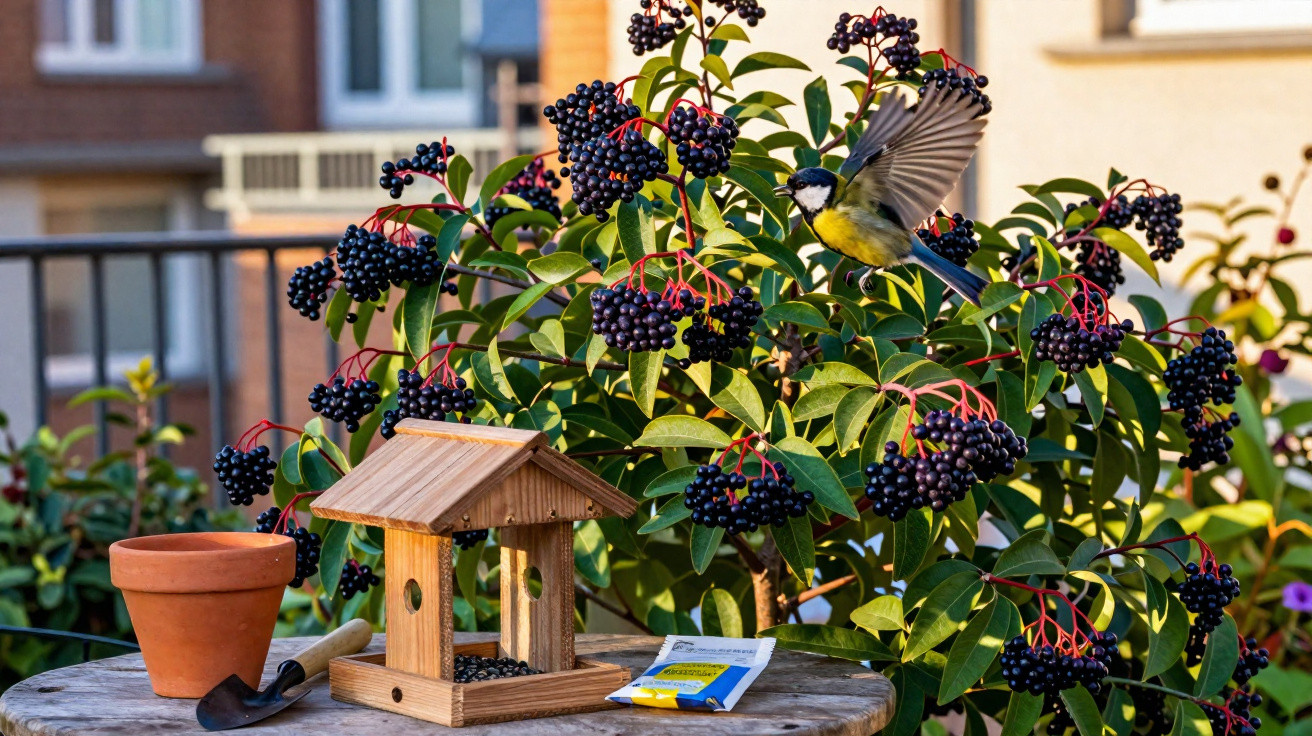
A seemingly ordinary shrub can transform the whole picture overnight.
If, in spring, you’re waiting in vain for the chatter of great tits, you’ll often look in the wrong place for the reason. More feed, new fat balls, pricier mixes - and still, nothing. The real answer is rarely the feeder itself; it’s a native shrub that many amateur gardeners even dig out simply because they don’t realise its value.
Why great tits stay away even when feeders are full
The great tit is considered a common garden visitor across Europe. In some areas, more than 300 pairs breed per square kilometre. In theory, that means almost any garden could get regular visits. When that doesn’t happen, the problem is usually not a lack of seed - it’s a lack of insects.
In spring in particular, when great tits are rearing chicks, they have little interest in grains and seeds. What matters then is caterpillars, midges and other small invertebrates. A great tit can manage to bring up to 500 insects a day to its nestlings. Without a rich insect supply right within the territory, young birds simply starve - even if there’s a well-stocked feeder close by.
"If you only feed birds but don’t produce insects, you’re offering great tits a nice façade - not a home that actually works."
Many tidy gardens look ideal to people: closely mown lawns, evergreen screens, exotic ornamentals. For insects, they are close to lifeless. This is exactly where a shrub comes in - one conservationists have been recommending for years.
Black elder (Sambucus nigra) as a natural great tit magnet
Black elder (Sambucus nigra) is a native shrub valued by birds, insects and wildlife gardeners alike. Public bodies and conservation organisations explicitly advise planting native woody plants such as elder because they support local wildlife far better than many exotic options from the garden centre.
In our climate, elder naturally grows along woodland edges, farm tracks and in hedgerows. Planted in the garden between November and March, it can become a 3–5 m-high bush in just 3–4 years. Its airy, multi-stemmed shape provides both cover and a steady supply of food.
How elder supports great tits through the year
- Spring: Black aphids colonise fresh shoots - an easy feast for hungry parent birds.
- Summer: Insects, spiders and caterpillars use the leaves and branches as habitat.
- Late summer: Ripe berries provide energy-rich reserves ahead of winter.
- Winter: Branched crowns and deadwood offer shelter for insects and small birds.
What many gardeners see as an “aphid problem” functions, for great tits, like a laid-out buffet. The adults don’t need to fly far, waste little energy, and can find hundreds of small prey items right on the shrub for their chicks.
"A single elder can become an entire pantry for a tit family - from the first cheep of the chicks right through to autumn."
The great tit: a small bird with a huge appetite
The great tit is about 14 cm long, rarely weighs more than 20 g, and is easy to recognise by its black cap, white cheeks and yellow underside. Despite its small size, once chicks are in the nest it places heavy demands on the surrounding feeding habitat.
A breeding pair typically lays five to twelve eggs. After roughly two weeks of incubation, the chicks hatch. From that point the parents start an exhausting routine: for two to three weeks they deliver insects to the nest box almost constantly. If there isn’t a productive source nearby, many broods fail. In densely built-up areas with stone gardens, gravel surfaces and exotic hedging, chick mortality rises noticeably.
City studies show that tit chicks there starve more often, even though plenty of feeders hang nearby. The reason is straightforward: artificial feed cannot replace living prey. Elder closes that gap because it draws in insects in huge numbers - without the gardener having to do much at all.
Planting elder: a simple guide to a bird-friendly garden
The best time to plant is from late autumn to the end of winter, as long as the soil isn’t frozen. Elder is undemanding and will grow even in heavier or chalky soils.
- Choose a site: Sunny to partially shaded, with enough room upwards and to the sides.
- Prepare the hole: Three times as wide as the root ball and loosen the soil.
- Improve the soil: Mix in two to three shovelfuls of well-rotted compost.
- Plant: Set the shrub at the same depth as it was in the pot, then firm in the soil.
- Water in: Give around 10 litres of water - even if it’s raining - to remove air pockets.
Over the next few years, elder mostly needs one thing: to be left alone. Hard pruning straight after planting slows establishment. It’s better to let it settle and only trim lightly if branches are in the way or look diseased.
Practical example: turning a sterile hedge into a living feeding zone
A common garden setup looks like this: a dense line of thuja or cherry laurel provides a green privacy screen but supports hardly any native insects. Feeders are put up in front, yet spring remains quiet.
If you remove just 2 m of that hedge and replace it with an elder, the ecosystem changes in a noticeable way. Aphids and other insects arrive quickly, spiders follow, and then birds move in. Add a nest box and consistently avoid pesticides, and you create a complete habitat - not merely a decorative barrier.
"Even a single native shrub can turn a sterile garden backdrop into a lively territory with great tits, blackbirds and robins."
What gardeners can do in addition to help great tits
Alongside elder, a few other changes can make your garden far more attractive to tits:
- Put up nest boxes: Simple boxes with an entrance hole of about 32 mm in diameter are perfectly adequate.
- Maintain lawns less strictly: Slightly longer grass with wildflowers supports more insects.
- Delay cutting dead branches: Many insects overwinter there, and birds hunt them out.
- Avoid chemical products: Poisons hit insects - and therefore the birds’ food supply.
- Tolerate moss in the garden: It’s used as nesting material and shelters tiny ground-dwellers.
Elder for people and wildlife - a double benefit
Letting the shrub grow pays off beyond birdwatching. In early summer, the flowers can be made into syrup or jelly, and the berries - cooked - can be used for juice or purée. They shouldn’t be eaten raw because of their contents; when heated, they’re a popular ingredient in the kitchen.
For birds, the key benefit is the fat-rich berries in late summer. They help top up energy stores before cold nights and scarce insect periods arrive. Great tits make strong use of this resource because they stay in our gardens over winter rather than migrating south.
A small shrub with a big impact in built-up areas
In densely developed neighbourhoods, there’s often no space for large trees. Elder fits almost anywhere: it grows vigorously but responds well to pruning, combining screening with genuine ecological value. Choosing native species instead of purely ornamental plants quickly creates stepping stones for birds and insects.
Most interestingly, even when great tits already live nearby, they will only start using a garden once it offers more than a hanging feeder. Shrubs such as elder give them cover from cats and birds of prey, food for their chicks, and places to roost. Provide that combination and, next spring, you’re far more likely to get what many people are hoping for: a garden that rustles, sings and flutters with life.
Comments
No comments yet. Be the first to comment!
Leave a Comment