
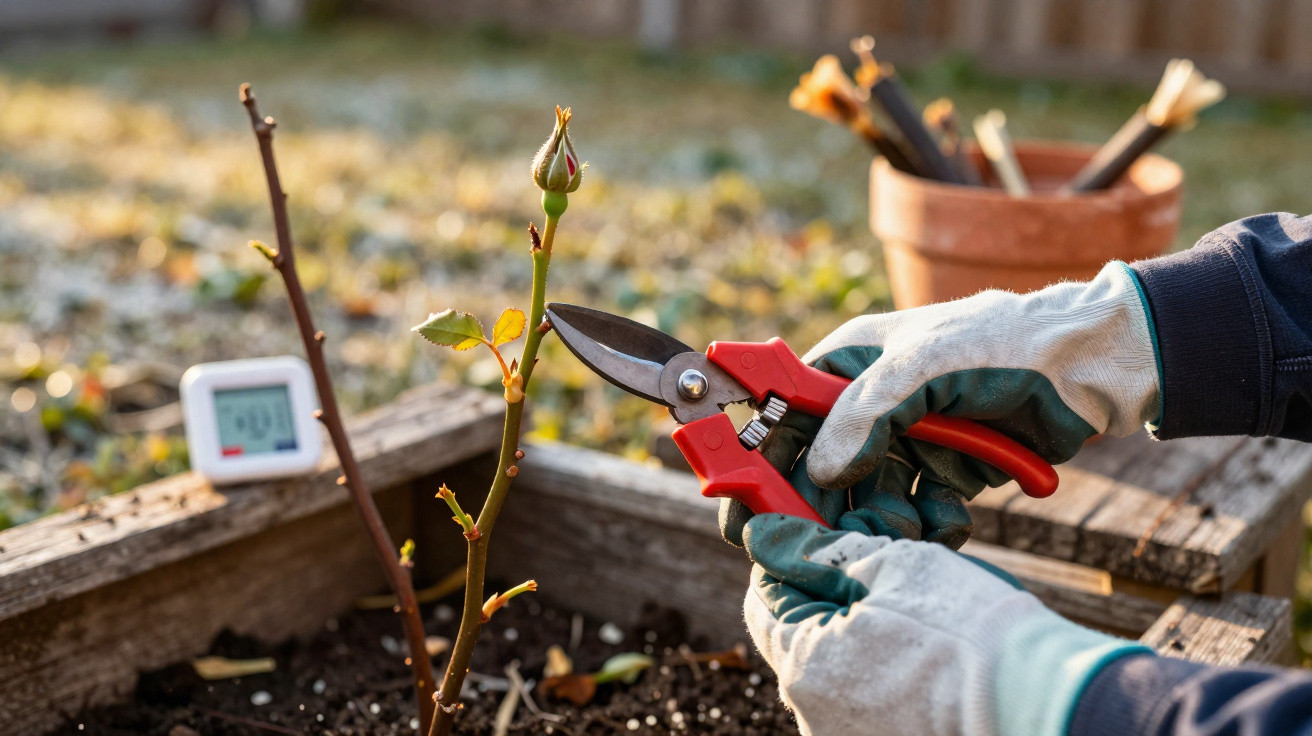
Many amateur gardeners find themselves staring at their roses each year, unsure what to do - and the wrong pruning date can be the difference between a riot of flowers and a few bare stems.
As winter starts to loosen its grip, the days lengthen and the first buds begin to stir - and the same question comes up every time: when, exactly, is the perfect moment to prune roses? Cut too early and a late frost can wipe out fresh shoots. Leave it too late and the cut robs the plant of valuable energy, weakening the display. If you want your roses to turn into a true burst of blooms, you need a feel for timing, temperature and what is happening inside the shrub.
The key question: when is the ideal time for rose pruning?
Roses follow a clear annual rhythm. If you understand it, you are already ahead. The main pruning window sits right on the boundary between winter and spring - just before the plant properly gets going.
“In most areas, the best time for rose pruning is roughly between mid-February and mid-March - depending on region and weather.”
At this point the plant is slowly waking up: sap is beginning to rise, but the foliage is not yet fully developed. That lets the shrub cope with pruning particularly well and direct its strength into a smaller number of strong shoots. By contrast, reaching for the secateurs in mid-January can lead to serious frost damage.
Late frosts are the danger: why “too early” is risky
A mild weekend in January or early February can tempt you into getting stuck into garden jobs. For roses, that is often a mistake.
- Early pruning encourages early new growth.
- Those new shoots are soft, full of water and extremely sensitive to frost.
- Frost can penetrate deep into the wood through fresh cut surfaces.
- One freezing night can undo months of progress.
If you wait until the worst frosts are largely over, you protect the shrub’s structure and greatly reduce the risk of dead shoots.
Use the thermometer, not the calendar: wait until hard frosts have passed
What matters is not the date on the calendar, but the conditions outside your own door. A simple rule of thumb applies: as long as nights with hard frost are still common, rose pruning remains off limits.
“The green light comes when the spell of hard night frosts is over and daytime temperatures become noticeably milder.”
In many places, that points to around early to mid-March. If you are unsure, it is safer to delay by a few days than to act too soon and put the entire flowering season at risk.
Learn to read the buds: the plant shows you when to start
Alongside temperature, bud development is a highly reliable cue. When buds swell and take on a slight reddish or pink tinge, new growth is beginning.
At that stage sap is already circulating in the shoots, but the leaves are not yet fully out. This is the sweet spot: the shrub has plenty of energy, can seal pruning wounds quickly and can channel its strength into the buds you leave behind. If lots of leaves have already formed, you are running out of time - because the plant has already spent reserves that a late cut would simply remove again.
Comparing regions: why roses are not pruned at the same time everywhere
If you garden in a mild wine-growing climate, your reality is not the same as someone in the Bavarian Forest. That is why a fixed date never suits every garden. Local climate character determines the exact timing.
Mild areas and wine-growing regions: pruning can start in February
In places with gentler winters - for example in many river valleys, and across parts of the west and south-west - severe frosts are uncommon from mid-February onwards. In these areas, the main prune can often be done in the second half of February.
If gardeners there wait until late March, many roses will already be pushing strong new growth. A late, heavy cut then strips off unnecessary amounts of fresh green growth - and with it, energy.
Cooler regions, higher ground and exposed gardens: better to wait until March
In the north, at higher elevations, or anywhere prone to late frosts, the picture changes. In these conditions, patience is a clear advantage. Exposed, open sites also cool down more at night.
“If you live in a cooler region, you usually only make the sharp cut between mid and late March - sometimes even a little later.”
The shrub may begin the season slightly later, but it tends to stay sturdier and healthier. Many gardeners also take guidance from well-known traditional sayings and years of experience in their own garden.
What happens inside the rose: why timing makes such a difference
Pruning a rose is not mere “tidying up”. It directly affects the plant’s energy budget.
Use sap flow to your advantage: concentrate energy into fewer buds
Over winter, the rose stores its reserves mainly in the roots. With increasing light and rising temperatures, the roots push those reserves back into the shoots so buds can break. If you prune at this point, energy is shared among fewer buds - which typically produces stronger shoots and larger, more abundant flowers.
Pruning late costs strength
If you cut very late, when many leaves are already present, you are quite literally removing hard-earned growth. The rose must sprout again, uses additional reserves and can look weakened by summer.
“If you prune your roses in the right time window, you promote not only flowering but also the long-term vitality of the whole shrub.”
Prune correctly: the technique amateur gardeners should know
Perfect timing on its own is not enough. With blunt tools or poor cutting technique, you can cause damage even at the best moment.
- Use sharp, clean, disinfected rose secateurs.
- Make clean cuts - do not crush stems.
- Remove dead and diseased shoots without compromise.
- Encourage strong, well-positioned shoots deliberately.
The three-bud rule for shrub roses
For many bedding roses and shrub roses, a simple basic rule works well: each shoot is usually left with three well-positioned buds. Count from the base of the shoot upwards, then make the cut just above the third bud.
It matters that this bud faces outwards. That way, the new shoot grows away from the centre rather than into it. The result is an open, elegant shape where air and light can circulate.
An angled cut helps shed moisture
The cut surface should slope slightly and sit just above the chosen bud. The slope should run away from the bud. This helps rain and dew run off instead of collecting over the new growth, lowering the risk of rot or fungal infection at the fresh wound.
Spring clean for the rose shrub: make space for new flowers
Rose pruning is not only about shortening stems; it is also about clearing out. Over time, dead, diseased and weak growth builds up inside the shrub and drains strength.
Remove old, dead and weak wood decisively
You can spot dead wood by its grey-brown colour and brittle texture; if you nick it, there is no green beneath. These shoots should be taken out completely. Very thin, weak twigs rarely flower well and can go too. What remains are strong, healthy main shoots - the framework for the season ahead.
Keep light and air moving through the centre
An old reminder goes: “A bird should be able to fly through the rose bush without bumping into anything.” It refers to an open centre. Shoots that cross, rub against each other, or grow strongly inwards should be removed. This helps prevent leaf diseases, which readily spread in a crown that stays damp and poorly ventilated.
| Measure | Effect on the rose |
|---|---|
| Removing dead wood | Reduces sources of disease and encourages young, vigorous growth |
| Thinning the centre | Better airflow, less fungal infection, more even flowering |
| Cutting back to three buds | Stronger shoots and a more compact, floriferous shrub |
Care immediately after pruning: how to support recovery
After the main prune, the plant goes through a stress phase. Numerous wounds must heal while new growth begins. A few straightforward steps can make the restart much easier.
- Clear away prunings carefully, especially diseased leaves and shoots.
- In damp locations, prioritise airflow and avoid waterlogging around the roots.
- Lightly loosen the soil around the root area.
- Only apply organic fertiliser once new growth is visible.
If you feed heavily too early, you often push the plant into soft, vulnerable growth. A moderate, balanced nutrient application is better once it is clear the shrub is properly moving again.
Practical tips for beginners and common mistakes
Many newcomers to gardening hesitate to prune roses because they fear cutting off “too much”. In practice, being too timid often does more harm than making a clear cut.
It can help to be deliberately brave with one robust rose and watch closely how it responds. One or two shrubs can act as “practice subjects” while you build confidence with secateurs and bud placement.
Another frequent mistake is clipping just the tips year after year while leaving old, tired wood in place. The flowers then move progressively higher, and the lower part becomes bare. The remedy is a bold rejuvenation prune spread over one to two years, where older shoots are shortened hard or removed entirely in stages.
If you make use of the right timing, cut cleanly, and do not shy away from thorough thinning, you will be rewarded - with strong, healthy rose bushes that, in spring, genuinely look as though they are exploding with flowers.


Comments
No comments yet. Be the first to comment!
Leave a Comment