
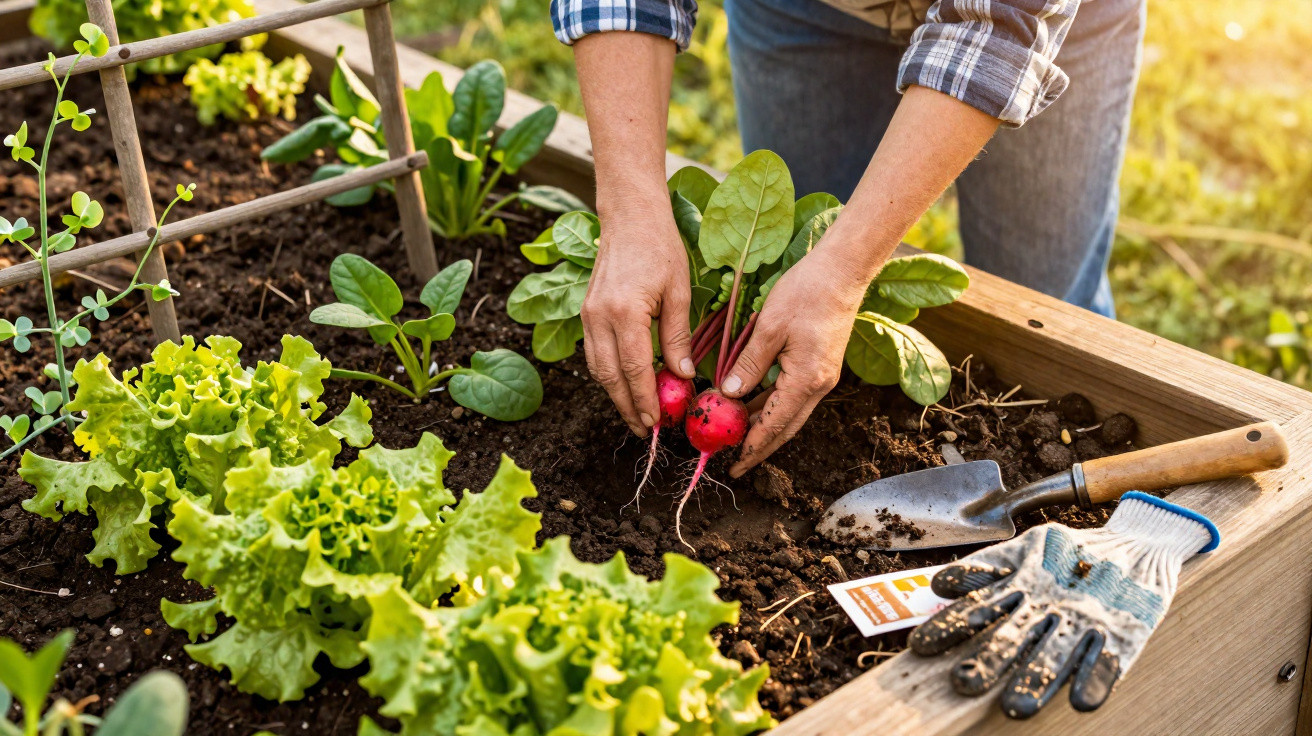
Winter has barely loosened its grip, yet you can already get properly stuck into the garden - and enjoy fresh vegetables in just 30 days.
Plenty of hobby gardeners leave their first sowings far too late. The truth is, there are several hardy varieties that cope surprisingly well with cold snaps and grow at impressive speed. If you plant smartly in March, you’ll often be eating crisp radishes, tender leaves and the first sweet peas roughly a month later - while others are still turning the soil.
Why March is ideal for quick wins in the vegetable patch
March is when the garden starts to shake off winter. The days lengthen, the ground begins to thaw, and the sun has more strength again. That combination suits many early vegetable crops perfectly. They don’t need real heat, they tolerate cool nights, and they repay each extra bit of daylight with rapid growth.
"If you sow in March, you’ll often harvest after around four weeks - giving yourself a solid head start for the whole season."
There’s another bonus, too: beds sown early can be cleared later on for tomatoes, peppers or courgettes. That way you effectively use the same space twice and get far more from a small garden or raised bed.
Before you sow: how to get the soil ready
Before the first seed goes into the ground, your bed benefits from a quick spring refresh. Those few minutes pay off because plants establish faster and stay healthier.
Clear out the old, build a fresh base
Start by removing anything left behind from winter: dry stems, twigs, leaves and dead roots. Debris like this can harbour pests and diseases and can slow down young seedlings.
- Remove leaves and old plant material thoroughly
- Loosen the top layer with a garden fork or rake
- Pick out stones and thick pieces of root
- Work in a little well-rotted compost or an organic fertiliser
Important: for spring sowings, it’s enough to loosen only the surface layer. Heavy digging into deeper layers disrupts soil life and the crumb structure. A loose, crumbly soil with plenty of humus is the best foundation for a fast start.
The 4 vegetables that really take off in March
There are countless options for the veg garden, but a few are genuine early sprinters. These four are ideal for getting going in March and filling your first harvest basket within about 30 days.
1. Radishes - the classic for impatient gardeners
Radishes are among the quickest vegetables you can grow. In the right conditions you’ll often spot the first seed leaves after just a few days. After three to four weeks, you can usually pull the red roots from the soil.
"If you sow radishes in March, you’ll usually harvest before April has really got going."
Tips for a reliable crop:
- Row spacing: about 15–20 cm; sow loosely within the row
- Cover only lightly with soil - radishes are light germinators
- Keep moisture consistent, otherwise the roots turn hot and woody
- Check every few days and thin out plants that are too crowded
Radishes cope well with cool temperatures. A simple fleece tunnel helps against heavy rain and birds pecking, and also adds a little extra warmth.
2. Lettuce - tender leaves even with cool nights
Many people hesitate to put butterhead lettuce or cut-and-come-again lettuce into the bed as early as March. Unnecessarily so: plenty of varieties tolerate temperatures just above freezing, and in moderate cold they can grow more compact and develop better flavour.
You can either plant small young plants or sow directly. Direct sowing saves money, but you’ll need a bit more patience for germination. Cut-and-come-again and pick lettuces are particularly handy: you harvest only the outer leaves and leave the centre intact. The plant keeps growing, giving you a steady supply of fresh leaves.
About four weeks after sowing, you can usually snip the first leaves for a small bowl of salad. If you sow a new row every ten days, you’ll have continuous pickings for weeks.
3. Peas - the first sweet pods from the spring bed
Peas are a classic spring vegetable. They prefer cool conditions to heat and tend to suffer from drought in high summer. Sown in March, they germinate readily and quickly form sturdy plants.
"Peas reward a simple support frame with a wealth of tender pods - a highlight for children and anyone who likes to nibble in the garden."
What to keep in mind:
- Soak the seeds overnight in water so they germinate faster
- Sow peas about 3–4 cm deep, cover with soil and firm gently
- Put up a simple trellis with canes and string before the plants get tall
- Feed only lightly - peas bind nitrogen from the air themselves
Depending on the variety, a full harvest takes longer than 30 days. Even so, after a month many plants are far enough along for the first young pods to be picked, especially with mangetout.
4. Spinach - ultra-fast leafy greens for the first meals
Spinach thrives in cool weather and grows particularly quickly in spring. If you sow in March, you can often harvest young leaves after around four weeks. These “baby leaves” are mild and tender, and work brilliantly in salads, smoothies or as a quick sautéed side.
For spinach to develop well, it needs:
- A semi-shaded to sunny position, not scorching heat
- Nutrient-rich soil that stays slightly moist
- Regular watering so the leaves don’t turn bitter
Spinach is also an excellent early crop before heat-loving vegetables. As soon as the plants start to bolt (send up flower stalks), clear the bed and make room for tomatoes, cucumbers or beans.
How to get the most out of 30 days
Four weeks pass faster in the garden than you’d expect. With a few simple tactics, you can push growth along and secure the best possible first harvest.
| Measure | Effect |
|---|---|
| Fleece or a polythene tunnel | Traps warmth, protects from wind and heavy rain |
| Mulch made from fine grass clippings | Keeps moisture in the soil, reduces temperature swings |
| Regular, gentle watering | Prevents growth checks and stress |
| Mixed rows | Radishes, lettuce and spinach use the space efficiently |
Especially with early sowings, it’s worth checking the bed more often. Slugs, birds and sudden cold snaps matter more in March than they do in summer. Simple protection with fleece or fine mesh can save an entire row of young plants.
What beginners should know
A lot of gardening terms can feel a bit daunting at first. In this context, two points come up again and again: sowing density and the right moment to harvest.
Seed is often scattered very thickly in practice, even if it comes from a packet. With radishes and lettuce in particular, it pays to thin later on: carefully lift out the extra seedlings or snip them off just above soil level. That gives the remaining plants the room they need to grow strong.
When harvesting leafy crops such as lettuce and spinach, you don’t have to wait until a plant looks “finished”. The earlier you cut the first leaves, the more tender and aromatic they are. At the same time, cutting encourages fresh growth - a kind of natural boost.
More ideas for a spring start in the bed
If the first quick harvests whet your appetite for more, you can expand the fast-cropping approach. Cress, rocket and Asian salad leaves can also be sown early and produce fresh greens in very little time. In containers and raised beds, it works just as well on a balcony or terrace.
If you plan your beds in waves, you create a sort of harvest carousel: radishes sprout at the front, lettuce and spinach fill in behind, and peas climb their supports in between. The result is a garden that feels lively and varied - and a menu that follows suit.
Anyone who starts boldly in March soon realises this: a vegetable patch isn’t only for professionals with lots of land. A few square metres, a little patience and the right varieties are enough to pull your first home-grown vitamin bombs from the soil after just a few weeks.
Comments
No comments yet. Be the first to comment!
Leave a Comment