
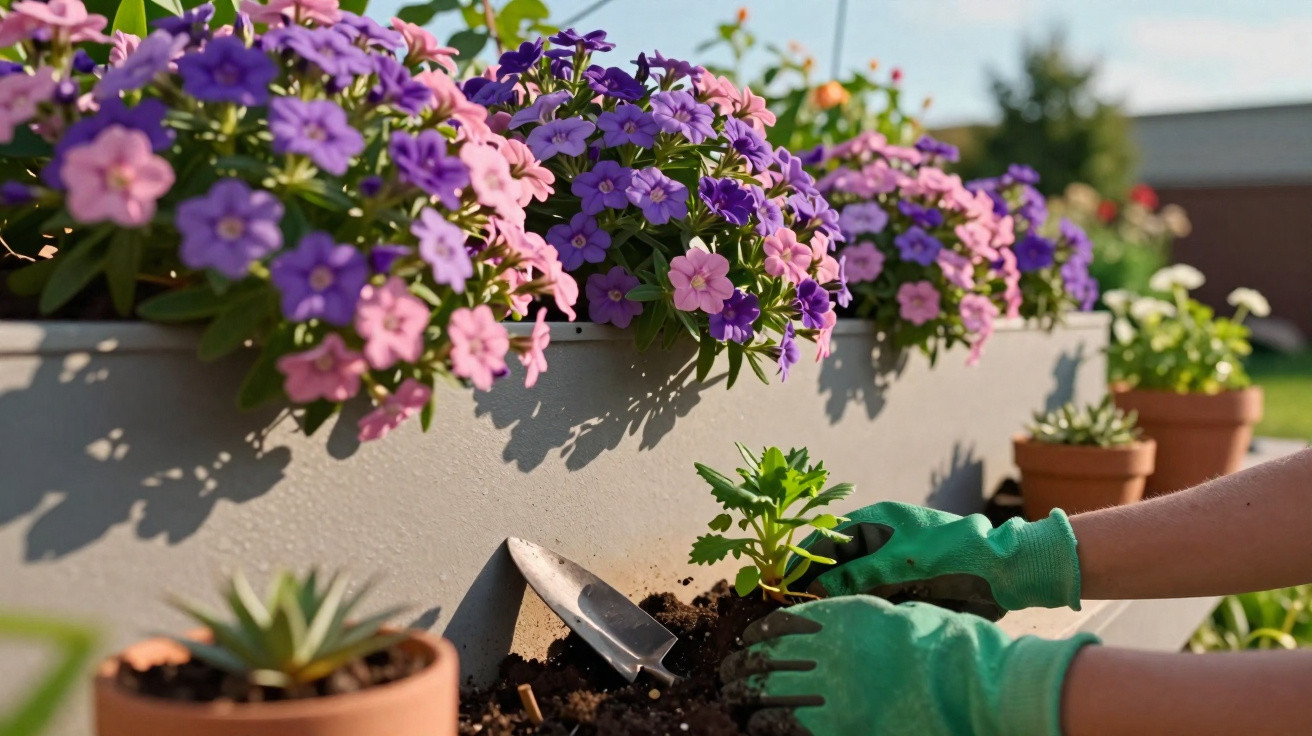
A grey, bare retaining wall can spoil the whole feel of a garden - but one unassuming plant can completely change it in a short time.
Plenty of amateur gardeners get fed up with an exposed retaining wall: stark, grey, cracked and awkward to plant. What seems like a hopeless case often turns out to be the perfect spot for a particular perennial with violet flowers, which spreads across the stone like a carpet and turns a cold concrete face into something alive.
From problem area to a flower wall
Retaining walls are often seen as a necessary evil in the garden. They stabilise slopes and banks, but they rarely look attractive. There’s usually very little soil, the surface dries out quickly, and the sun beats down relentlessly on the stone. In many cases, plants give up there in no time.
That’s exactly the sort of place aubrietia enjoys. This low, cushion-forming perennial comes from rocky regions and is happiest in cracks, joints and poor, stony soils. It’s not especially suited to a traditional garden border - but on walls it really shows what it can do.
"Within a few weeks, aubrietia turns a drab wall top into a violet curtain of flowers."
From spring onwards, a dense cushion of small violet to purple flowers covers what would otherwise be a hard, unwelcoming stone surface. Instead of your eye sticking on the grey masonry, it’s drawn to a bright, lively sheet of colour.
What makes aubrietia ideal for retaining walls
Garden aubrietia (botanically Aubrieta deltoidea, often called “blue cushion”) stays very low - around 10 to 15 cm tall - and spreads out to form a mat. It produces long-lasting, evergreen cushions that spill over the edge of a wall and hang down in cascades.
- Height: around 15 cm
- Growth habit: cushion-forming, slightly trailing
- Flowering period: roughly mid-April to early summer
- Flower colours: violet, purple, pink, occasionally blue forms
- Position: full sun, warm, free-draining
Its natural preferred habitat is very similar to the top edge of a retaining wall: lean soil, little risk of waterlogging, and plenty of sun. Many ornamental perennials struggle in those conditions, while aubrietia thrives. Once it has rooted in properly, it copes well with dry spells and also comes through frosty winters without trouble.
The flexible stems creep into the smallest gaps, branch out, sometimes root again, and then drape over the edge. Over time, this creates a flowing transition from the bed at the top down across the wall face.
The best spot on the wall
If you want to green up a retaining wall, it’s best to start right at the top. The top edge is the key area for the later flower cascade. It works particularly well on a south- or west-facing wall, where the cushions get several hours of direct sun.
A base that lets water drain away quickly is essential. Aubrietia really dislikes wet roots. A loose, stony mix with low nutrient levels is far better than heavy, rich garden soil.
"The leaner and stonier the substrate, the denser and more long-lasting the flower carpet remains."
Substrate mix for the wall top
For planting pockets, a narrow groove or a small cavity between stones is usually enough. This mix has proved reliable:
- 1 part standard garden soil
- 1 part mature compost (use sparingly)
- at least 2 parts grit or coarse gravel
The high mineral content helps prevent waterlogging and anchors the plants in the joints. If you only have clay-heavy soil available, add even more grit or coarse sand.
Planting: small pots beat seed
On a retaining wall, many gardeners opt for young plants in pots. Seed is cheaper, but on a dry, stony surface it often germinates poorly and dries out quickly.
The best planting window is in spring after the last frosts, or in a mild autumn. That way, young plants still have enough time to establish a good root system.
- Open up small pockets or cracks along the top edge of the wall.
- Fill with the loose substrate and press down lightly.
- Remove the plant from its pot and gently tease the root ball.
- Set it in at a slight outward angle so the shoots grow over the edge.
- Water in well so the substrate settles around the roots.
During the first few weeks after planting, occasional watering is worthwhile, particularly in hot weather. Once established, aubrietia tolerates surprisingly long dry periods.
Care: minimal effort, maximum impact
This cushion perennial is among the easiest garden plants to look after. It doesn’t need constant feeding, complicated pruning or regular watering. The most important task comes immediately after the main flowering period.
Cutting back after flowering
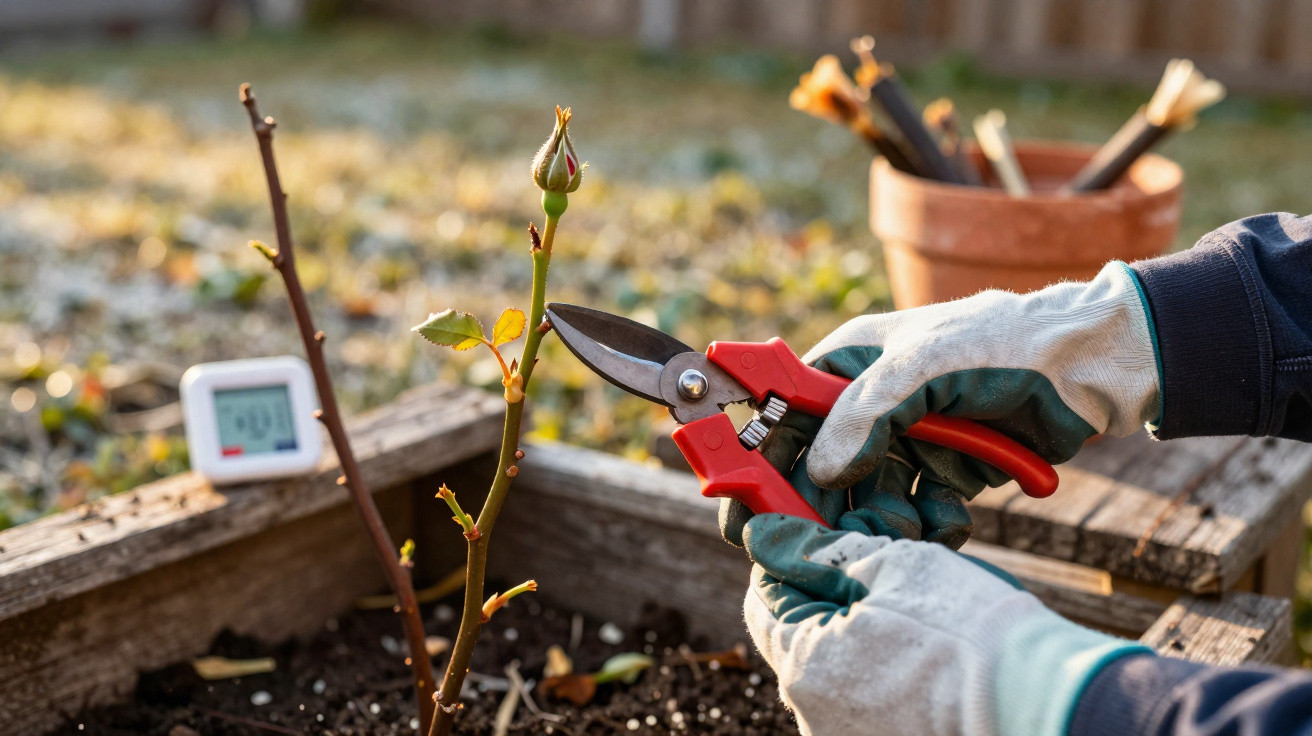
When the violet carpet starts to fade in May or June, it pays to be bold with the shears. You can cut the cushions back by about half. That brings several benefits:
- Growth stays compact and dense.
- The plant produces fresh, healthy foliage.
- Flowering is improved the following year.
A light tidy-up in late winter removes dead shoots and restores a neat shape. In most cases, that’s all aubrietia requires.
Who shows up in the flower wall?
The small flowers are a real magnet for insects. Honeybees, solitary bees and various butterflies use the wall as a nectar stop. At the same time, deer and rabbits usually leave the plant alone, which is particularly helpful on rural slopes.
Pairing with other rock-garden plants
Aubrietia on its own can already look striking. The display becomes even more interesting if the top of the wall is extended with other drought-tolerant perennials. The best choices are plants that still provide structure in winter.
Suitable companions include, for example:
- houseleek (Sempervivum) as small rosettes between the stones
- stonecrop and other Sedum species for additional colour accents
- thyme or other low-growing herbs for scent and bee forage
Together, they create a mosaic of flowers, foliage and forms that offers interest all year: fresh cushions in spring, strong structure in summer, and graphic shapes in winter.
Common mistakes and how to avoid them
Despite its toughness, aubrietia is sensitive to two things: waterlogging and excess nutrients. If you treat it like a hungry border plant, you risk fungal problems and floppy growth.
| Mistake | Result | Better approach |
|---|---|---|
| Heavy, clay soil without grit | Root rot, losses in winter | Make the mix much leaner; work in grit |
| Regular all-purpose fertiliser | Soft, unstable growth; fewer flowers | Hardly fertilise; at most a little compost when planting |
| Permanently shady position | Weak, leggy growth; patchy cushions | Choose sunny, warm sections of wall |
How long does the transformation take?
A common question is how quickly you’ll see results. With several young plants spaced about 25 to 30 cm apart, you can usually spot the beginnings of the future flower line in the first year. The “curtain” effect typically looks most impressive from the second or third spring.
If you want faster coverage, plant the cushions closer together. Although they spread gradually, they will close gaps over time and form an almost continuous flowering sheet that pushes the stone visually into the background.
Why the effort is worthwhile
A planted retaining wall doesn’t just change the garden - it changes how the space feels. The hard boundary between terrace and slope becomes less stark; everything looks softer, more natural and more lively. The violet cushions reduce the visual weight of the structure and turn a purely functional element into a design feature.
If you’re dealing with tricky sloping ground or you’ve simply had enough of bare concrete edges, aubrietia offers a straightforward solution: low maintenance, manageable cost and a big visual payoff. Even small walls or steps can be turned into a flowering feature that takes centre stage in the garden for a few weeks each spring.
Comments
No comments yet. Be the first to comment!
Leave a Comment