
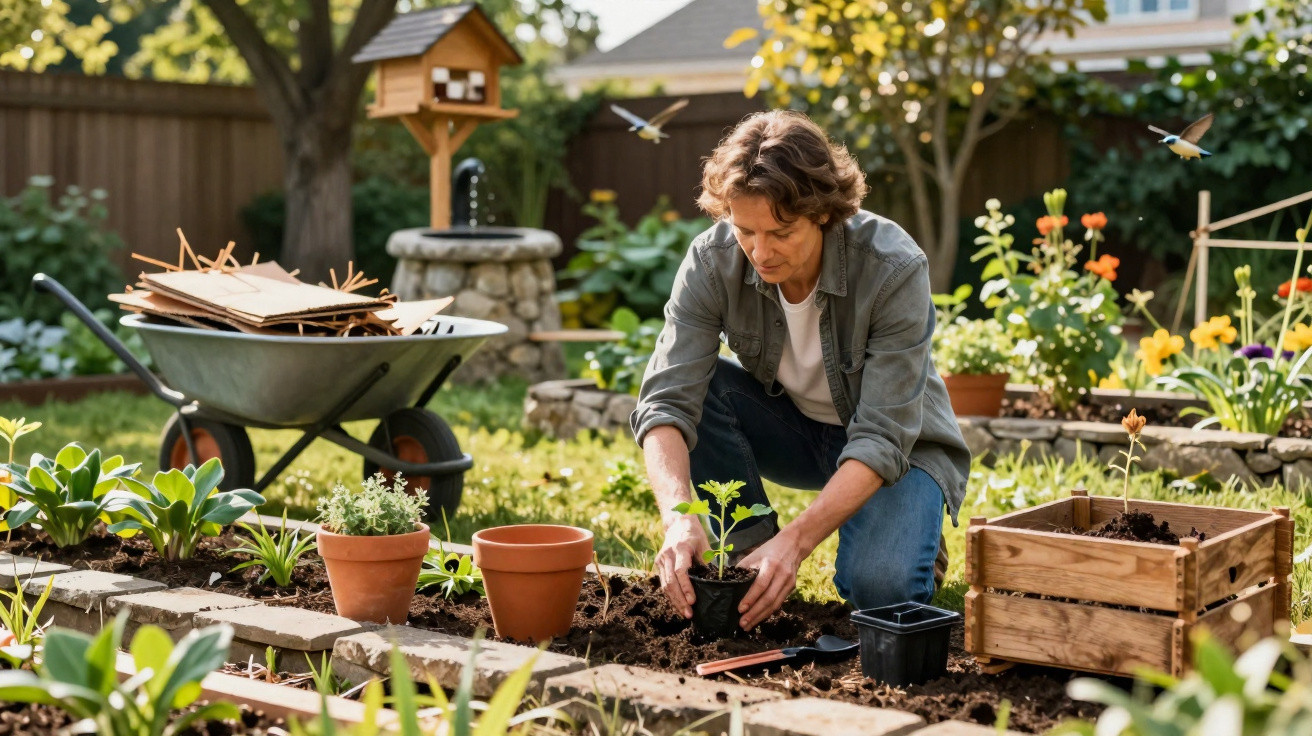
An overgrown bed, pots everywhere, sheets of plastic, half-empty bags - and then it hits you: this is not what a natural garden looks like.
At the end of one winter, standing between soggy beds and browned-off perennials, the eye wasn’t drawn to buds or fresh shoots, but to plastic: split plant pots, torn sheeting, and piles of leftover compost bags. A patch of green that had always felt cared for had, almost unnoticed, turned into a small open-air dump. That moment sparked a decision: replace every plastic item, one by one, with durable, natural alternatives - not through a frantic clear-out, but as a planned, gradual conversion.
The shock moment in the hobby garden
Anyone who has gardened for a few years will recognise the slow build-up: each season brings a couple more plastic pots, a bit of sheeting for a bed, a spray bottle, a hose. Nothing that feels dramatic in isolation. Then, suddenly, the overall impression changes. Instead of soil, timber and stone, it’s sun-faded, brightly coloured plastic that takes over.
“A so-called natural garden loses its credibility when plastic is lurking in every corner - either visible or as microplastic in the soil.”
That realisation became the turning point. The aim: a productive and ornamental garden that manages with almost no plastic. Not as a strict ideology, but as a practical approach. No ruthless decluttering and binning - just a slow swap: plastic items stay in use until they fail, and only then are they replaced with long-lasting alternatives.
Plant pots and compost: the biggest problem areas
From disposable trays to terracotta pots and wooden crates
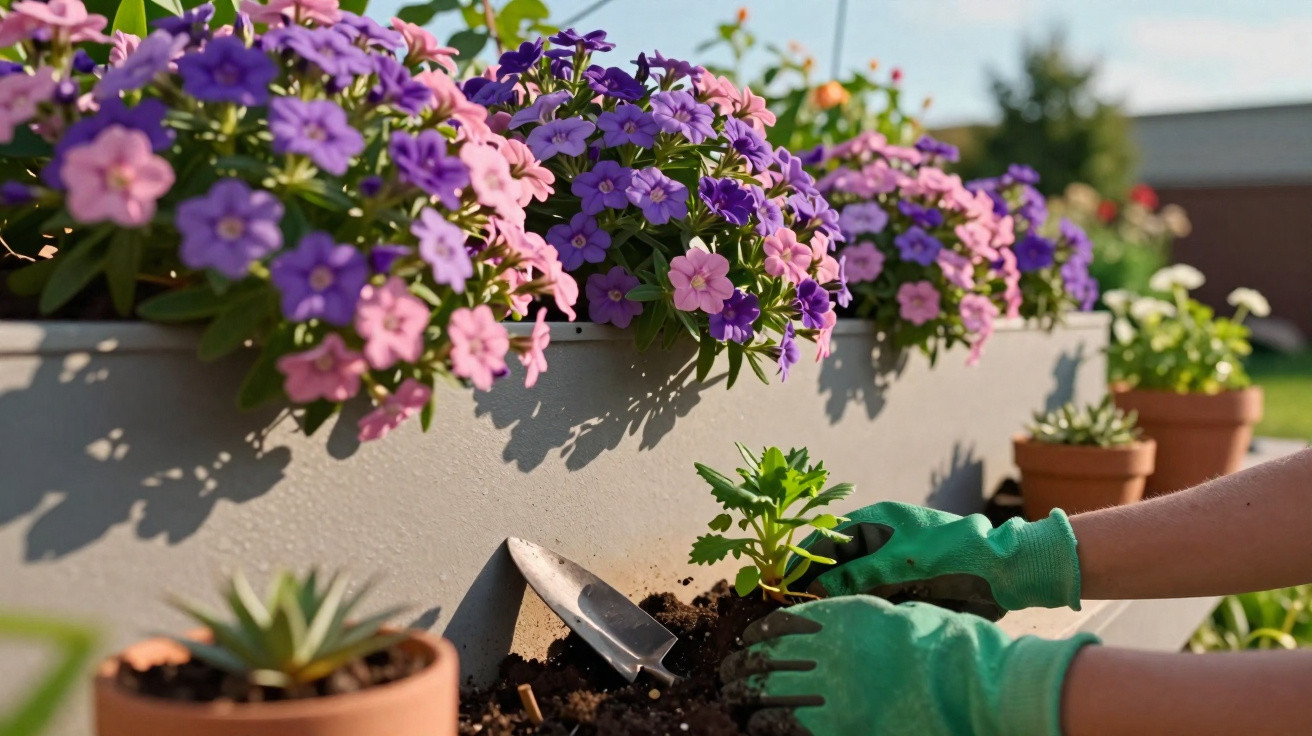
The first change was containers. Rather than buying new flimsy plastic mini-pots and seed trays every year, traditional terracotta pots and boxes made from untreated reclaimed timber took their place. This shift improves more than just the look - it can influence how plants grow.
- Terracotta pots are porous, let air reach the roots, and help prevent waterlogging.
- Wooden crates made from leftover boards work well for young plants, salads or herbs.
- For sowing, a simple soil-block press is enough: moisten compost, press blocks, sow - and later the whole soil blocks go straight into the bed.
Anything made from soil can ultimately go into the compost heap. No trays crumbling into waste, and no fine plastic fragments ending up in the ground.
Mixing your own compost instead of hauling plastic sacks
The second major source of plastic is bagged compost and vegetable growing mixes. They’re expensive, quality is often average - and every purchase comes with another plastic wrapper. The alternative is to blend your own growing medium.
“A home-mixed growing medium saves money, cuts packaging waste and can be tailored perfectly to your own soil.”
A straightforward mix that works well for vegetables, container plants and sowing is:
| Component | Proportion | Purpose |
|---|---|---|
| Mature compost | ca. 50 % | Provides nutrients and introduces beneficial microorganisms |
| Garden soil | ca. 30 % | Adds structure and helps plants adapt to the site’s native soil |
| Drainage material (e.g. sand, fine grit, coarse plant fibres) | ca. 20 % | Improves permeability and prevents compaction |
For fine sowings, the mix can be pushed through a sieve with a five millimetres mesh. That way, seeds germinate evenly instead of being displaced by larger pieces.
Protecting the soil: mulch instead of plastic sheeting
Cardboard as a first layer to suppress unwanted growth
Many home gardeners reach for black plastic to keep beds “weed-free”. While it can cover the soil, it also creates long-term problems as it breaks down into fragments and microplastic. A far more soil-friendly option is a layer of plain brown cardboard, for example from packaging without coloured coatings.
- Lay the cardboard straight onto the ground, bending down grasses and other growth or cutting it short.
- Avoid glossy prints and remove any tape.
- Overlap sheets so no strips of light can reach the soil.
Cardboard blocks light, weakens unwanted plants, and is gradually broken down by earthworms and other soil life.
Mulch made from your own garden
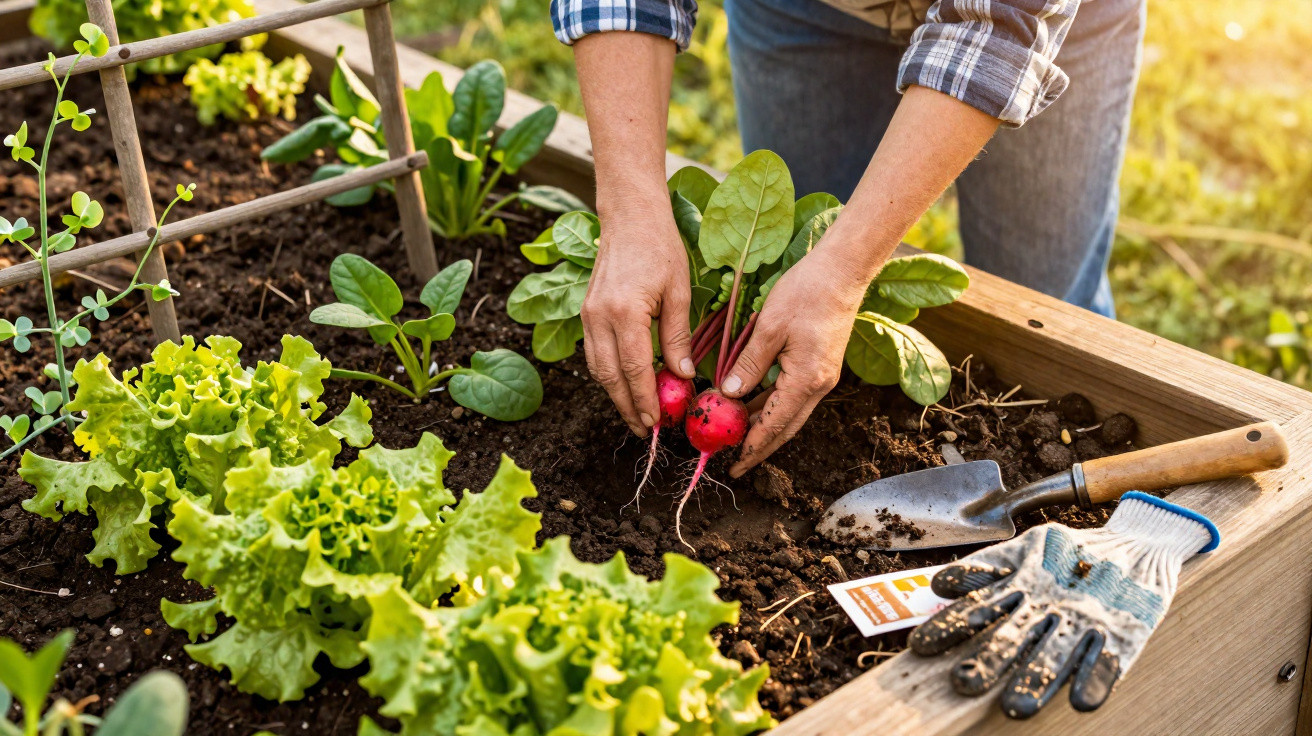
On top of the cardboard goes a thick layer of organic material: hay, straw, leaves, or chipped branches (often referred to as “BRF”, meaning wood-rich ramial chipped material). This layer holds moisture, reduces surface sealing and splash, and feeds the soil.
“Living soil works like a sponge: it holds water, builds humus and makes many extra inputs unnecessary.”
With consistent mulching, the need for watering drops noticeably, and constant hoeing becomes almost unnecessary. Instead of plastic waste, you’re creating fertile humus.
Saving water without plastic hoses and drip systems
Terracotta vessels in the ground: moisture delivered at root level
For hungry crops such as tomatoes, pumpkins or courgettes, so-called Olla vessels made of terracotta are a strong option. They are buried between plants and filled with water. Because the clay is porous, water seeps slowly into the surrounding soil.
The benefit is that only the root zone is watered while the surface stays mostly dry. Evaporation losses fall, and water use can drop by up to two thirds compared with conventional watering.
Collecting rainwater in concrete and stone
Instead of plastic tanks, durable options made from concrete or stone can be used. Old livestock troughs, mortar tubs made from mineral material, or built brick cisterns are all excellent choices. They don’t rust, weather only slowly, and they don’t introduce microplastic into stored water.
The better your soil is built up with compost, well-rotted manure and wood chip, the more rainfall it retains. Soil rich in humus can hold up to three times as much water as exhausted sandy ground - a major advantage in dry summers.
Feeding birds without plastic and without specialist mixes
Putting kitchen leftovers to good use
A lot of bird food is sold in plastic nets or buckets. In reality, simple kitchen leftovers are often enough to help tits, blackbirds and other garden birds through harsh winter spells. Suitable options include:
- mild grated cheese
- overripe or bruised fruit
- cooked, unseasoned rice
- pieces of unsalted, firm fat
- baked potatoes without a seasoned crust
- oats
These scraps can be shaped into small “feed balls”, for example by mixing oats with fat and smearing it onto branches or boards. This creates a natural feeding spot without nets or plastic holders.
What can be harmful for birds
Not every leftover belongs outdoors. Fat produced during frying mixes with meat juices. This combination becomes greasy, can cling to feathers, and damages the insulating effect of plumage. Highly salted or heavily seasoned foods are also more likely to do harm than good.
“If you choose leftover food carefully, you help birds twice: less waste, and more energy exactly when it’s scarce in the garden.”
Anything that isn’t suitable as feed goes into the compost or the woodchip heap and becomes soil improvement again. That’s how the garden cycle closes.
Compost, green waste and wood chip: the engine of a low-plastic garden
The real foundation of a garden without plastic is how you handle organic material. Every bucket of grass clippings, every bundle of twigs and every fallen leaf can be turned into a resource. Shrub prunings become chip for paths or mulch; leaves and kitchen scraps become compost, which then replaces bought-in growing media.
The more consistently the gardener keeps organic matter within the garden’s own cycle, the less need there is to purchase products - and with them, plastic packaging. Over time, the garden becomes a semi-closed system that largely supplies itself.
Practical tips for getting started with a low-plastic garden
If you want to make the switch, you don’t need to change everything at once. A sequence that fits everyday routines works best:
- Stop buying new plastic pots first; use terracotta, and reuse old wooden or metal containers.
- Replace compost sacks gradually with home-mixed soil.
- Use mulch instead of plastic sheeting, with cardboard as the starter layer.
- Where possible, use Olla vessels or other clay-based watering methods.
- Make bird feed from suitable kitchen leftovers instead of buying plastic nets and plastic dispensers.
At first, moving towards an almost plastic-free garden can feel like a big project. In reality, it happens through lots of small decisions: what you pick up at the garden centre, what you put in the food-waste bin, whether you reach for the hose. Each choice can be a step away from plastic and towards a robust, living garden.
Over time, it’s not only the materials that change, but your perspective as well. Compost, leaves and green waste become more valuable; plastic matters less. Once you start, you quickly notice the garden feels calmer, more natural and more coherent - and the recycling bin stays much emptier.
Comments
No comments yet. Be the first to comment!
Leave a Comment