
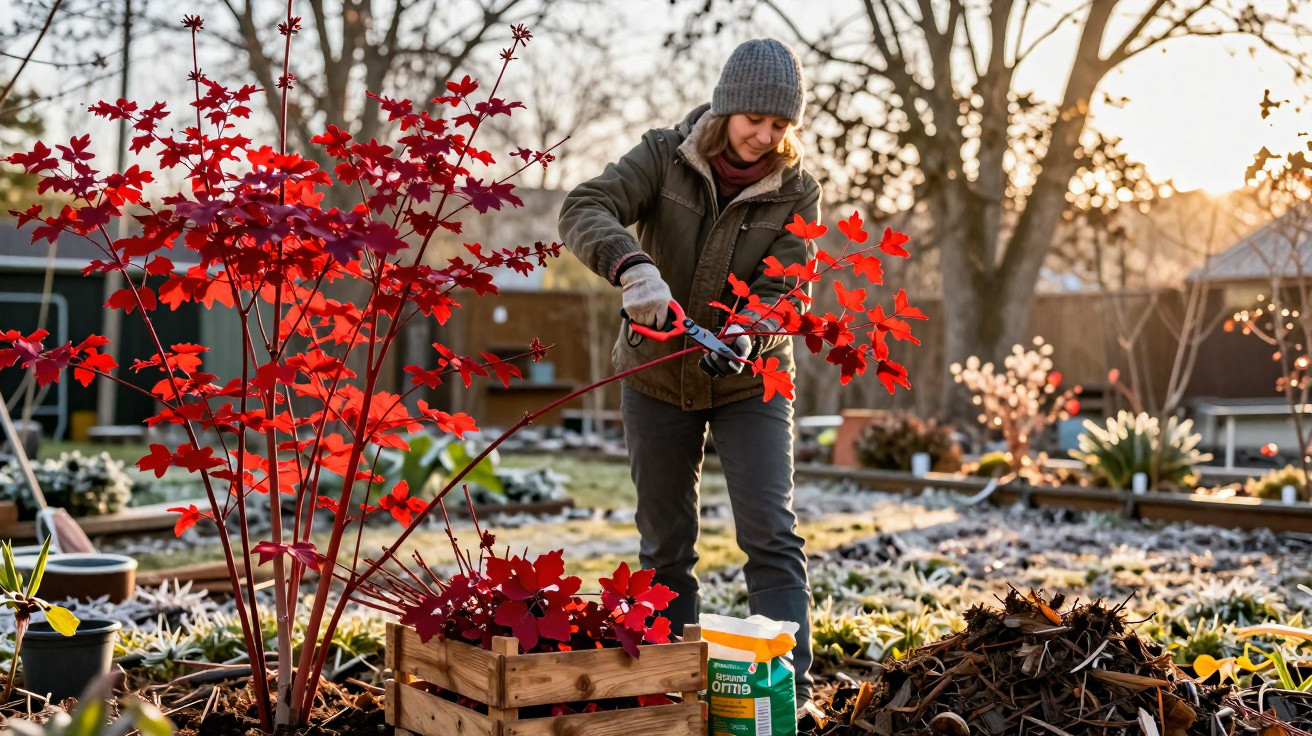
If you want vivid red shrubs in the garden through winter, you need the confidence to pick up the secateurs in February - otherwise everything stays a dull grey-brown.
Plenty of gardeners scratch their heads when their neighbour’s dogwood is blazing away in January like a strip of fire, while their own looks more like a neglected hedge. It’s not down to secret varieties; it comes from a disciplined prune at exactly the right time. Miss that moment and you’re effectively giving up a whole year of winter colour.
Why dogwood sometimes glows in winter - and sometimes looks bland
Common dogwood (Cornus sanguinea) and its pale-leaved relatives such as Cornus alba have a feature many people overlook: the bark changes as shoots age. The younger the stem, the stronger the colour.
Only young wood really shines - old wood turns grey, dull and visually disappears.
If you let dogwood grow on year after year without pruning, something subtle happens: the bright, fresh shoots are increasingly hidden behind a curtain of older, thicker-barked stems. That bark becomes grey and cracked, and the plant starts to look like any other ordinary shrub.
To get a strong winter display, the plant must keep producing new, vigorous shoots. That’s exactly what the right cut is for: it forces the shrub to stay youthful - at least in appearance.
The key window in a cold month: why mid-February matters so much
In the garden, a handful of days can make all the difference. For pruning dogwood, the sweet spot is between 10 and 25 February. At that point the winter pause is easing, buds are swelling, but they haven’t opened yet.
- Cut too early: wounds sit open for longer in frost, and the base can be damaged.
- Cut too late: the plant has already invested energy in shoots and buds that you then throw away.
- Cut at the right time: the shrub is awake enough to seal cuts quickly and push out new growth.
Stick to this February window and you take advantage of the natural early-spring energy surge. The shrub responds with plenty of strong young stems - the same ones that deliver next winter’s show in red, orange or yellow.
Remove the old wood: how to spot which stems really need to go
The most common mistake is simply trimming the tips. It can look neat, but it does almost nothing for colour. For genuinely vibrant dogwood, one rule of thumb applies:
Any wood older than two years can be removed without mercy.
You can judge age at a glance:
- 1st-year shoots: very thin, smooth, intensely coloured (signal red, yellow, orange depending on the cultivar).
- 2nd-year shoots: still quite colourful, but a little duller near the base and more branched.
- Wood from 3 years onwards: grey, flat-looking, cracked, often covered in small knobbles and twiggy side growth.
It’s this older grey framework that steals the display - not only visually, but structurally: less light reaches the centre, young shoots start higher up, and the lower parts remain colourless.
When you cut consistently, you’re doing the plant a favour. Old sections give way, light reaches the base again, and new stems can rise straight from ground level - ideal if you want colour from bottom to top.
Recépage for the brave: a hard reset for maximum winter colour
If you want a truly dramatic effect, a strong rejuvenation cut is hard to beat. In professional horticulture this is known as “coppicing” or “stooling”, and it’s often referred to simply as “recépage”: the shrub is cut back almost completely.
How the hard cut works, step by step
You’ll need sharp, clean secateurs and, for thicker stems, sturdy loppers. Then work down at the base:
- Cut all older stems back to about 10 to 15 centimetres above ground.
- Make clean, angled cuts so water can run off.
- Remove any crossing, inward-growing or damaged stems completely.
If you cut dogwood this low, you often hesitate at first - but next winter you’ll have the most spectacular shrub in the neighbourhood.
Strong cultivars such as Cornus alba ‘Sibirica’ cope very well with this treatment. Many professionals coppice these shrubs this hard every two years. Confident home gardeners even do it annually to build a dense bundle of red stems.
A gentler option for older or weaker plants
If the shrub looks generally tired or is growing on poor soil, a staged approach over several years is often better:
- In year one, remove around a third of the oldest stems close to the ground.
- In year two, cut out another third of the oldest remaining stems.
- In year three, take out what’s left of the old framework.
That way the dogwood is always rebuilding and can recover more easily, while the planting never looks completely “bare” in the garden.
Aftercare following pruning: feed, water, mulch
After a hard cut, the bed can look alarmingly empty. But the bare stumps are misleading: inside, the plant is gearing up fast. You can steer that energy with a few simple steps:
- Spread well-rotted compost and lightly work it into the surface.
- Use an organic fertiliser, such as horn meal or a shrub feed.
- Mulch the area, for example with bark compost or chipped prunings.
- In dry springs, water regularly so the fresh shoots don’t stall.
Feed after pruning and you’ll get more, stronger young shoots - and that means noticeably more winter colour.
Don’t bin the cut stems - they’re a ready-made decoration
Those colourful rods don’t belong in the garden waste as a first resort. Dogwood stems are surprisingly useful:
- as sculptural branches in large floor vases indoors
- as colourful supports in the vegetable patch
- for simple hurdles, edging, or decorative trellis panels
- for straightforward weaving in a “wild basketry” style
If you like a wildlife-friendly garden, small bundles of red or yellow stems create striking structure with no need to buy anything new.
Suitable cultivars and locations for stronger winter colour
Pruning technique matters most, but cultivar choice also plays its part. Popular options for colour include:
- ** Cornus alba ‘Sibirica’**: glowing red bark, very tough.
- ** Cornus alba ‘Elegantissima’**: red stems, variegated leaves in summer.
- ** Cornus sanguinea ‘Midwinter Fire’**: orange-red to yellowish shoots, especially impressive backlit.
A sunny to lightly shaded position intensifies the effect. In deeper shade the stems look noticeably duller. Planted in groups, dogwood creates a bold band of colour, particularly in front of dark hedges or alongside evergreen plants.
What can happen with frost, disease, and the wrong soil
Dogwoods are generally resilient, but a few points are worth remembering:
- Hard frost after pruning: usually not a major issue as long as the soil isn’t completely exposed and dry. Mulch adds extra protection.
- Waterlogging: dogwoods dislike it. Aim for free-draining soil or plant slightly raised.
- Fungal issues: uncommon, but more likely if the centre stays too dense and is never thinned.
A clear framework that allows plenty of light and airflow reduces risk and boosts the colour at the same time - a double benefit.
Ways to push the colour effect even further
If you want the full performance, lean into contrast. A few tried-and-tested ideas used by garden designers:
- Red-stemmed dogwood in front of a dark green yew hedge.
- Yellow-stemmed cultivars beside blue pots or steel features.
- Pairing with winter grasses, whose pale stems weave through the coloured rods.
A short row of mixed cultivars can also look superb - for example alternating red and yellow. In winter it reads like a natural “light strip” through the bed, visible even from the street.
Why this weekend can make the difference
If you have dogwood in the garden and haven’t pruned it yet, February is the time to ring-fence a slot. On a single shrub the job often takes less than half an hour, yet it determines how your garden looks throughout the next winter season.
With a clear cutting plan, a few practical aftercare steps, and the nerve for a hard rejuvenation cut, a forgettable bush becomes a real feature - exactly when the rest of the garden offers almost no colour at all.


Comments
No comments yet. Be the first to comment!
Leave a Comment