
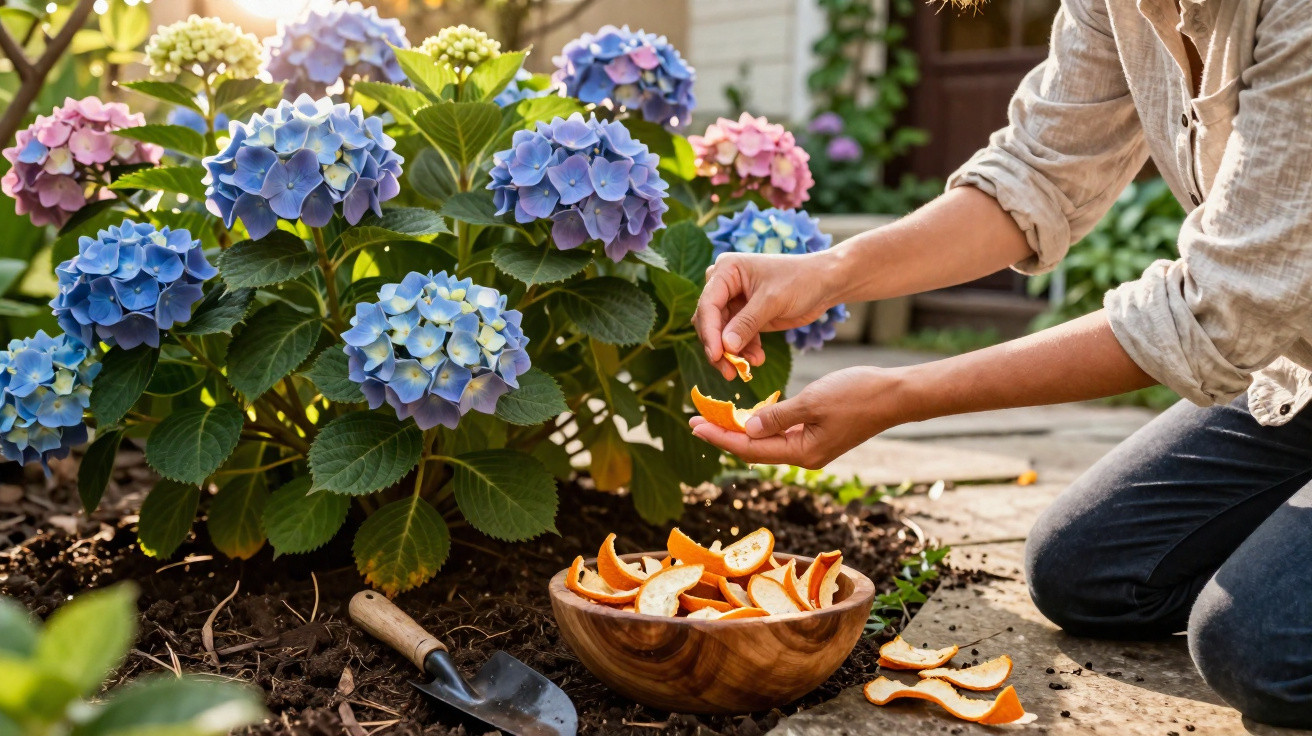
Many gardeners will recognise the signs: a hydrangea shrub looking tired, leaves turning yellow, and flower heads staying smaller than expected. It is easy to blame the weather or watering habits, yet the fix is often sitting in the food caddy-specifically, citrus peel.
Why many hydrangeas flag in summer
Hydrangeas do best in slightly acidic soil. A pH between 5 and 6 is ideal. In plenty of gardens, however, the soil is more chalky or lime-rich, and that slows the plant down even if you feed it regularly.
When the soil is too alkaline, several issues tend to appear:
- The roots absorb iron and potassium poorly.
- Leaves fade to yellow while the veins stay darker (iron deficiency).
- New shoots remain thin and soft, and snap more easily.
- Flower heads are smaller and paler than normal.
A pH that is out of balance can lock up nutrients even when there is actually enough of them in the soil.
That is exactly where dried citrus peel comes in. Used correctly, it nudges the soil back towards the range hydrangeas prefer-while also adding useful nutrients.
The understated star: dried orange peel for hydrangeas
Orange peel offers much more than fragrance. It contains minerals and trace elements that can support hydrangeas, including:
- Potassium – strengthens plant tissue and helps flower formation.
- Nitrogen – encourages leafy growth and fresh new shoots.
- Magnesium – a key component of chlorophyll, keeping foliage a rich green.
- Calcium – supports cell walls and root development.
On top of that, the peel’s gentle acidity gradually lowers pH in the immediate root area. Unlike strongly acidic specialist products, the change is slow and mild. The plant is not “shocked”; instead, the soil conditions shift steadily over time.
The combination of natural acidity and nutrients makes orange peel a cheap, effective helper for hydrangea growers.
There is another benefit as well: orange peel contains d-limonene, a scent compound insects can detect and that helps deter certain garden nuisances.
How to prepare orange peel properly for hydrangeas
If you simply throw fresh peel under a hydrangea, you risk mould, fruit flies and even attracting mice. Drying the peel is the crucial step.
Step 1: dry it thoroughly
You can dry the peel in two reliable ways:
- In the sun: Tear the peel into small pieces and spread it on a baking tray or rack. Leave it somewhere warm and airy for several days until it is hard and brittle.
- In the oven: Lay the peel on a tray and dry at roughly 50–70 °C (fan setting). Keep the oven door slightly ajar. Turn the pieces occasionally until there are no soft spots left.
Important: the peel must be completely dry. Any remaining moisture can trigger mould later, especially once the pieces are in the soil.
Step 2: chop or grind
The finer the peel, the faster it starts working. Suitable options include:
- an old coffee grinder or spice grinder,
- a sturdy knife for very fine chopping,
- a mortar and pestle for smaller amounts.
You will end up with a coarse-to-fine orange-peel mix. Store it in a screw-top jar and keep it dry.
Using it in the bed: how often hydrangeas need a citrus boost
Application is straightforward and fits easily into a normal gardening routine:
- Sprinkle a loose ring of orange-peel powder around the hydrangea’s root area (do not pile it directly against the main stem).
- Work it gently into the top 1–2 cm of soil, taking care not to damage thicker roots.
- Water well so the compounds move down towards the root zone.
A practical schedule is:
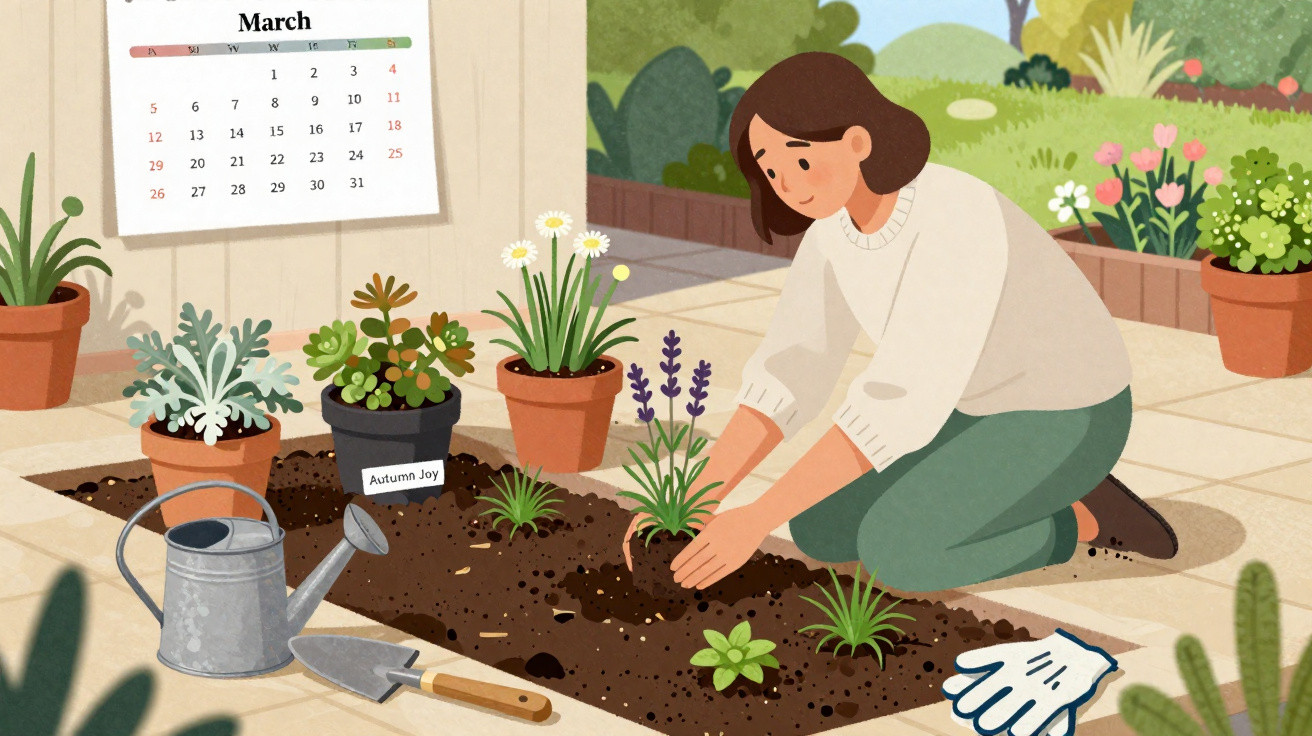
- Period: from March to the end of August, during active growth and flowering.
- Frequency: about once a month.
- Amount: for an average-sized shrub, roughly a handful of powder per application.
More does not automatically mean better-small, regular doses tend to work more reliably than a single heavy application.
Double effect: natural feed and a barrier against pests
Alongside its feeding effect, orange peel has a second advantage. The d-limonene scent can disrupt, among others, ants and certain types of aphids. Scattered around hydrangeas, it creates a kind of fragrance “belt”.
This will not make a serious infestation disappear on its own, but it can reduce pressure on the plant. For anyone trying to avoid chemical treatments, it can serve as one element within a broader, more natural approach.
Which other plants also benefit from orange peel
This approach is not limited to hydrangeas. Many acid-loving plants can benefit, for example:
- rhododendrons
- azaleas
- camellias
- heathers (Erica) and heathland plants
- blueberries grown in the garden bed
With more sensitive plants, it is sensible to start with a small amount first. If they respond well, you can increase the dose gradually.
Common mistakes and the limits of this garden hack
As helpful as this kitchen scrap can be, it still needs to be used with the rest of your garden conditions in mind. Three points are often overlooked:
- Water: Without consistent watering, extra nutrients do little. Hydrangeas in particular quickly respond with drooping leaves.
- Soil structure: Very heavy clay soils should be improved with compost or bark humus before use, so water and air can actually reach the roots.
- Combining with other fertilisers: If you already rely heavily on mineral fertiliser, you risk overfeeding. In that situation, use orange peel only sparingly.
Also worth noting: orange peel lowers pH only slightly and slowly. It will not turn extremely lime-rich ground into a bog garden. It works best as a supplement alongside rhododendron compost or a suitable specialist substrate in the planting hole.
How to spot the effect in the garden
If you try the orange-peel method, watch your hydrangeas over the next few weeks. Early signs often include:
- new leaves appearing stronger and evenly green,
- sturdier shoot growth,
- fuller flower heads with deeper colour.
Some gardeners also report a subtle shift in bloom colour, especially in varieties that naturally react to changes in pH. Deep blue shades depend mainly on aluminium levels in the soil, but the right pH also plays a part.
Background: what “acidic soil” really means for hydrangeas
Many hobby gardeners assume “acidic soil” must mean something extreme. For hydrangeas, a mildly acidic range is usually sufficient. The pH scale runs from 0 to 14, with 7 being neutral. Values below 7 are acidic; values above 7 are alkaline.
Simple test strips from a garden centre can give you a rough pH reading in your bed. If you regularly use orange peel, bark mulch and ericaceous compost, the soil often settles into a suitable range on its own. In that case, harsh specialist products are frequently unnecessary.
In this way, what looks like a worthless kitchen leftover becomes a practical aid for healthier hydrangeas-supporting a garden that creates less waste and relies more on natural cycles.
Comments
No comments yet. Be the first to comment!
Leave a Comment