
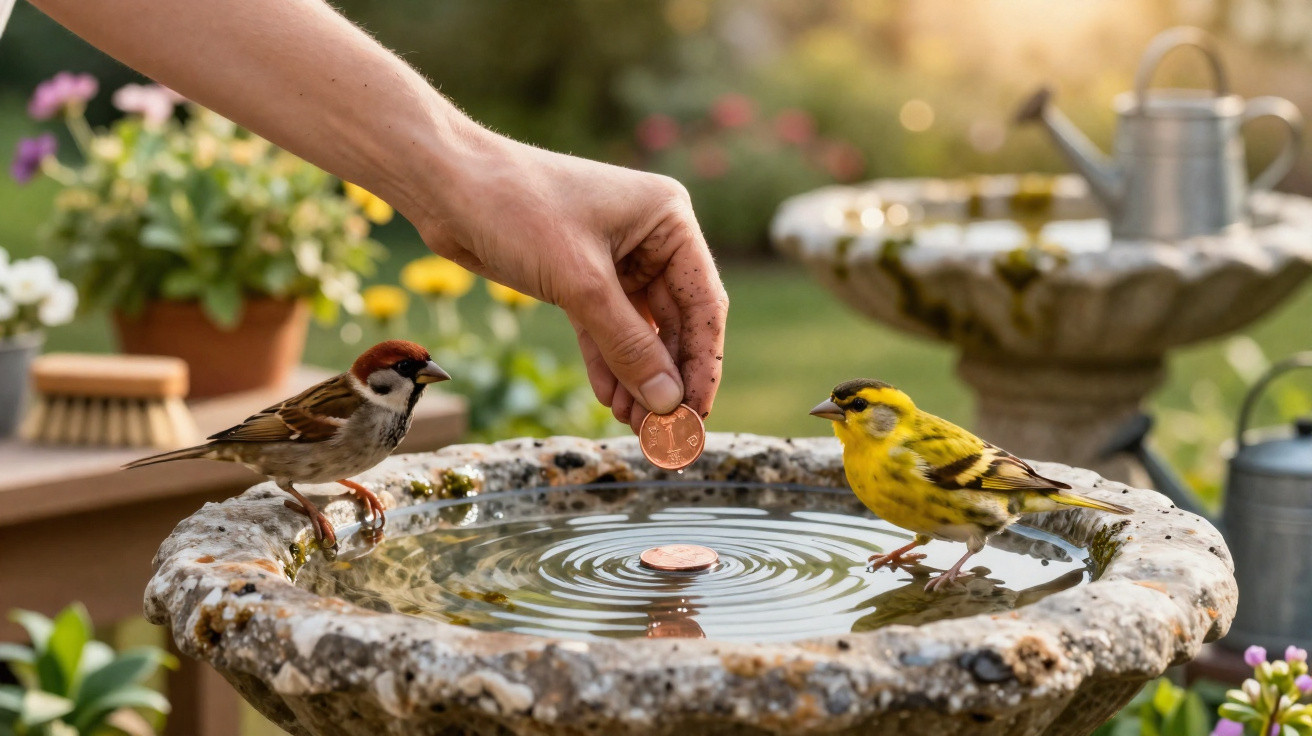
What initially sounds like a quirky online craze has a serious side: bird baths can foul surprisingly fast, turning green, developing an unpleasant smell and potentially harming birds. A tip that has been doing the rounds in the UK has now caught the attention of keen gardeners elsewhere too: dropping a small copper coin into the water is said to curb the problem - at least to some extent.
Why bird baths turn bad so quickly
Anyone with a bird bath in the garden will recognise the pattern. After only a few warm days, a slimy greenish coating appears. The water turns cloudy, a stubborn film clings to the edges and there’s sometimes a faintly rotten odour.
This happens because sunlight, nutrients and stagnant water are an ideal combination. Leaves, dust and pollen drop into the bowl, along with crumbs of bird food and even grass clippings from mowing. Birds also add droppings and grime carried on their feet. Some of this material settles to the bottom and is broken down by micro-organisms - effectively feeding algae.
"Where water sits still, warmth builds up and nutrients are present, algae thrive - especially in shallow bird baths."
Bird conservation groups have been warning about this for some time: a dirty bath is not merely unsightly. Stale water can allow pathogens to multiply more easily and then spread from bird to bird. Standing puddles and bowls also attract mosquitoes looking for places to lay their eggs.
The copper coin idea
This is where the social-media tip shared by garden enthusiasts comes in: if you have a bird bath, place a single cent coin in the water. The suggestion comes from the English-speaking world, where the “penny in the bird bath” is repeatedly promoted as a secret weapon.
The logic is that copper, in low concentrations, can inhibit algae growth. Over time the metal releases tiny amounts of copper ions into the water. These ions disrupt the metabolism of many types of algae, so they grow more slowly or form less of a coating.
"The copper coin doesn’t replace cleaning - it simply buys the bird bath a bit more time before it turns green again."
In countries that use cent coins, many people choose a 1- or 2-cent coin. These coins have a steel core with a thin copper coating. That copper layer can be enough to release small amounts of the metal into the water when the coin is kept continuously wet.
How to use the 1-cent trick properly in a bird bath
Garden experts stress that copper is a helpful aid, not a miracle cure. If you want to use a coin sensibly, it’s worth sticking to a few straightforward rules.
A simple care routine for the bird bath
- Replace all the water every one to two days, particularly during hot weather.
- Once a week, scrub the bowl thoroughly with a brush or sponge.
- Use only clean water, with no cleaners or additives.
- Position the bath in partial shade where possible, so it heats up less.
Only after this basic routine does the cent coin come into play. When refilling with fresh water, place a single 1- or 2-cent coin in the bowl. For larger dishes, a maximum of two coins is considered sensible.
How many coins are still safe?
Specialists advise against stuffing the bowl with copper. If the concentration is too high, copper can become problematic for small birds. Their bodies are light and they may only take a few sips - exposing them to an unnecessary metal load is best avoided.
That’s why many guides suggest this rule of thumb:
- Small bird bath (up to around 30 cm in diameter): 1 coin.
- Large bowl or pedestal bath: no more than 2 coins.
- Replace the coins every three months, especially if they look heavily worn.
Once coins are badly corroded, they become less effective. Swapping them out also reduces the chance of metal fragments accumulating in the water.
What copper can do - and what it can’t
Experts tend to describe copper’s effect as a “small bonus”. The bath usually stays clear a little longer and the green film takes more time to form. A cent coin will not, however, create a crystal-clear, perfectly hygienic bird “bar” on its own.
There’s another consideration: copper doesn’t only affect algae; it also influences other micro-organisms in the water. At low doses and for short-term use in a garden bird bath, this is not an issue. In aquariums or ponds, by contrast, people handle copper far more cautiously.
"Anyone who relies on the copper trick alone and leaves the water standing for days still risks a dirty bowl that birds will avoid."
So cleanliness remains the key lever. Regular scrubbing may be tedious, but it’s essential. In most cases, a brush and tap water are enough. Harsh products such as chlorine cleaners, anti-algae treatments intended for ponds, or even salt do not belong in a bird bath.
More than decoration: why a good bird bath can make a real difference
Bird baths are not just attractive garden features. In hot summers they can become genuine lifelines for tits, blackbirds, sparrows and other feathered visitors. Many natural water sources dry up during heatwaves. A shallow dish in the garden helps birds drink and keep their feathers in good condition.
Bathing is particularly important: it loosens dirt and parasites, helps birds rearrange their plumage and preserves the insulating layer of air between the feathers. Keeping the bath well maintained is therefore a practical way to support garden birds.
A useful design combines two zones: a very shallow edge where birds can stand in just a few millimetres of water, and a slightly deeper centre for proper bathing. A rough base improves grip, while smooth, slippery surfaces can put some species off.
Practical tips for placement and design
Alongside the copper tip and regular cleaning, the location also affects how well the bath is used. A few simple measures make a difference:
- Place the bowl where birds have a clear view of the surroundings.
- Keep a few metres away from dense bushes so cats can’t ambush from cover.
- Use a stable base so the bath doesn’t wobble - unsteady stands can deter birds.
- In winter, choose crack-resistant materials so the bowl doesn’t split in frost.
If you spend time in the garden regularly, you can also note which species use the bath and when it’s busiest. That makes it easier to spot when the water has turned or when birds start avoiding it.
When the 1-cent trick is genuinely worth trying
Using a copper coin is most suitable for gardeners who already look after their bird bath properly but still struggle with rapid algae growth - for instance in very sunny spots. In that situation, a cent coin can be a simple tool to stretch cleaning intervals slightly without giving up on clearer water.
If you leave the bath for days on end, though, copper won’t make up for neglect. For healthy garden birds, the priority is fresh, clean water replaced regularly. The small cent coin in the bowl is then simply the finishing touch to an already well-kept bird “bar”.

Comments
No comments yet. Be the first to comment!
Leave a Comment