
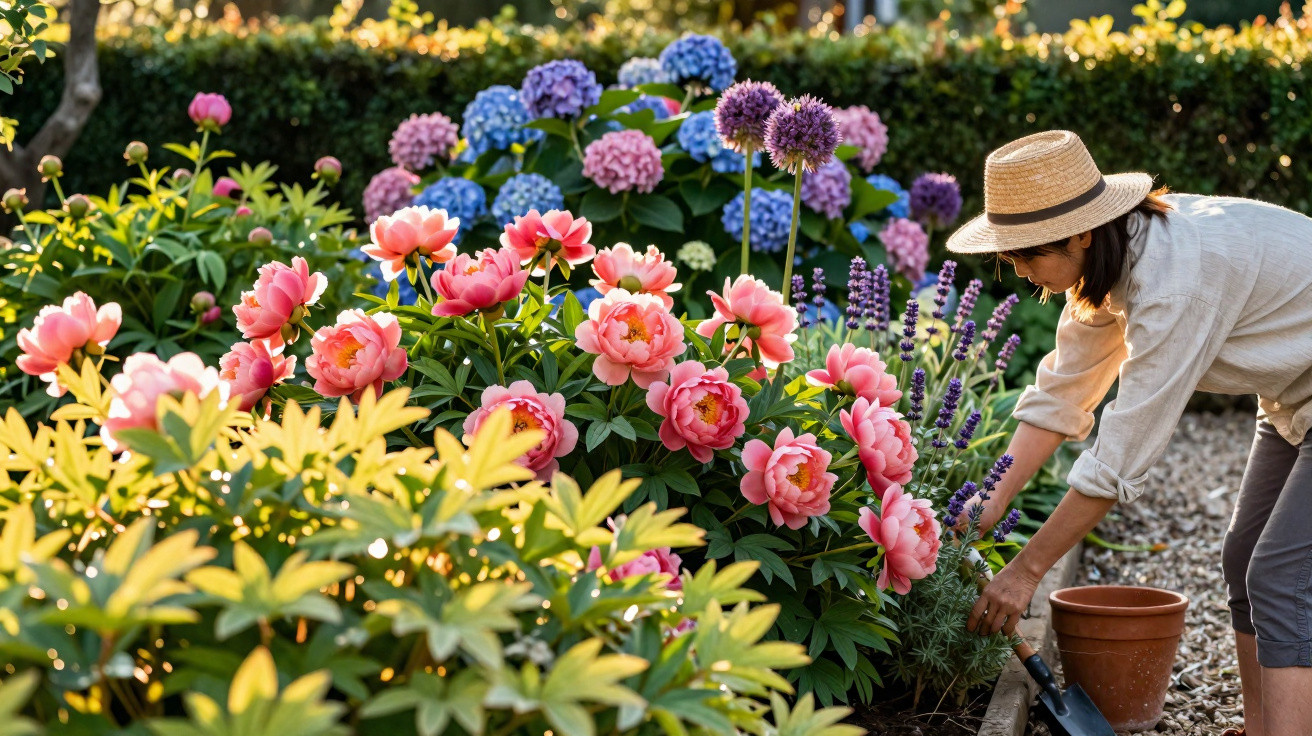
Many gardeners tuck peonies into any spare spot in a border and then wonder why the display never looks as impressive as it does in a palace park. The secret is rarely the variety; far more often it’s the plants around it. When you understand what these perennials need and choose suitable companions, every peony performs better - visually and in terms of health.
What peonies really need before you give them neighbours
Peonies are among the most long-lived perennials you can grow. They will often stay in the same place for decades, but they only flower lavishly when the basics are right. The planting position determines whether you get a yearly burst of blooms - or just a few tired buds.
- Plenty of sun: ideally at least six hours of direct light per day.
- Deep, fertile soil that drains well.
- No winter waterlogging, otherwise the roots can rot.
- Sufficient airflow between plants so foliage dries quickly.
When perennials are planted too close together, moisture clings to the leaves for longer. Fungal problems such as grey mould then spread quickly and can ruin buds and foliage. A packed border may look “full” in the first year, but it often comes back to bite later with struggling, disease-prone plants.
"Around each peony there should be a clearly free ring so that air and light can reach every shoot."
Underground competition matters as well. Vigorous, greedy root systems from neighbouring plants can deprive a peony of water and nutrients. So, when planning the border, it pays to look twice at how strongly potential companions grow.
The ideal partners: gentle contrasts rather than competition
Alchemilla (lady’s mantle): green clouds that make peonies glow
Alchemilla - commonly known as lady’s mantle - is widely regarded as one of the best companions for peonies. It forms dense, low cushions of soft foliage topped with delicate yellow-green flower sprays. That particular hue makes pastel and pink peony shades look brighter, both in the border and in a vase.
- It stays relatively low and doesn’t steal light from the peony.
- It spreads in a controlled way and leaves space for neighbouring roots.
- It neatly fills gaps at the front without pressing into the peony clump.
If you like cutting flowers, the pairing of lady’s mantle and peonies is close to unbeatable: the frothy blooms frame the large heads and add structure to an arrangement.
Bellflowers and other perennials with nodding blooms
Bellflowers look light and romantic, and their airy flowers sit beautifully alongside the plump, rounded peony blooms. Many varieties remain fairly compact and don’t rise up into the peony’s height. The result is a balanced picture where the peony remains the clear focal point.
One detail is worth keeping an eye on: some bellflower species are more susceptible to pests. Near peonies this isn’t a major issue, provided you include fragrant plants such as lavender or ornamental alliums in the planting. Their scent disrupts many insects and acts like a small protective shield.
Hydrangeas as a strong backdrop at the rear
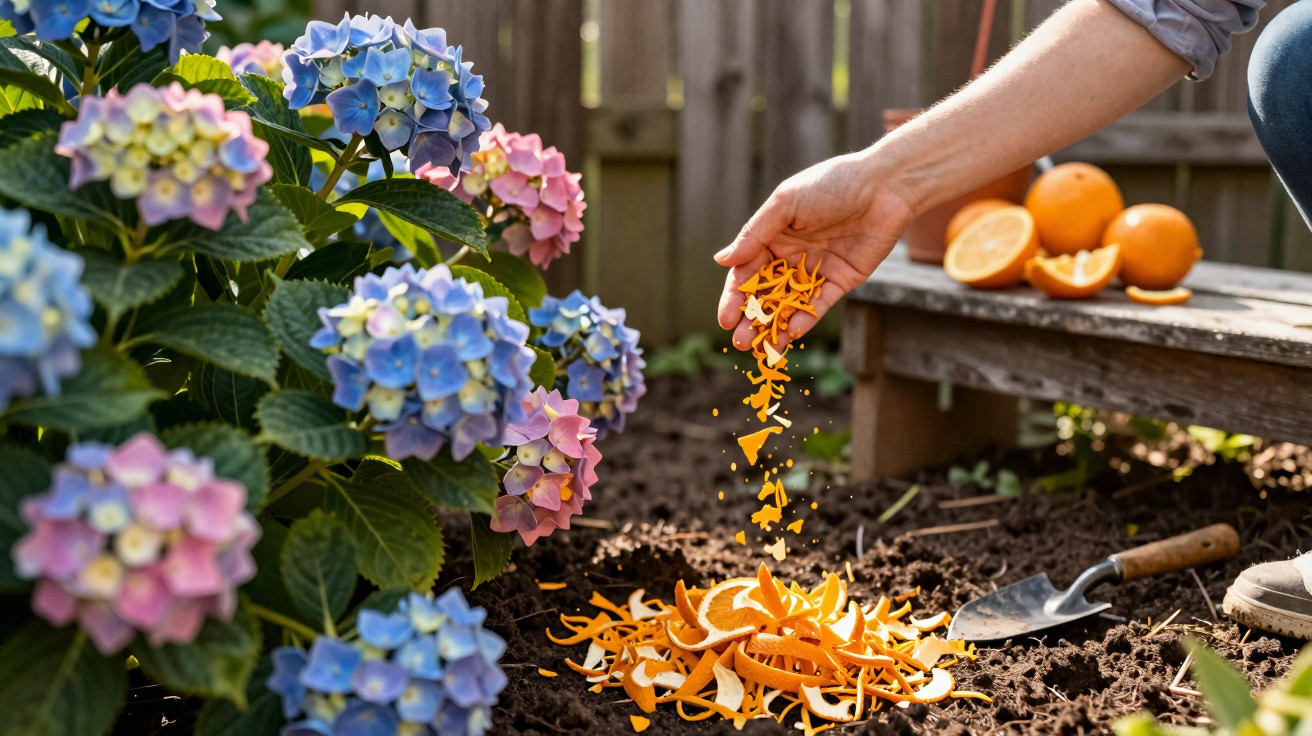
Hydrangeas are excellent for visually finishing a peony bed at the back. Their large flower heads echo the rounded shape of peony blooms and extend the season of interest well into late summer.
"Planted with a bit of distance, hydrangeas provide a calm, flowering background without shading the peonies."
That spacing is crucial: too close, and they reduce light levels and draw too much moisture. Set slightly further back, however, they can cast a light shade during the hottest weeks, easing stress on the plants without forming a heavy canopy.
Colour and timing: keeping the border flowering from spring into summer
Peonies have a relatively short flowering window, but it’s an intense one. With smart planting, you can bracket that peak so the border doesn’t fall flat before or after.
| Time | Plant | Role in the border |
|---|---|---|
| Spring | Bearded iris | Flowers shortly before peonies, signalling the main show. |
| Late spring / early summer | Peonies | The highlight, with large, eye-catching blooms. |
| Early summer | Ornamental allium (Allium) | Adds vertical accents between clumps. |
| Summer | Daylilies | Take over for colour once peonies finish. |
Bearded irises usually bloom just ahead of peonies. Their upright flower stems introduce early height to the planting. As they fade, the peonies take centre stage. Ornamental alliums sit in between like small, upright brushes, lifting the eye with spherical flowers held on slender stems.
When peonies drop their last petals, daylilies step in. Their trumpet-shaped flowers open fresh each day and keep colour going for several weeks, often in a similar palette to the peonies. This makes the border feel as though it continues seamlessly.
Lavender and ornamental allium: scented protection for healthy peonies
For many, lavender is the essence of the Mediterranean. In a peony border it plays several roles at once. Like peonies, it thrives in sunny, free-draining positions. It forms tidy rows or cushions and, with its strong fragrance, discourages a range of garden nuisances.
- Helps deter mosquitoes, flies, certain aphids and even some browsing by wildlife.
- Visually lightens the edge of the bed with blue-grey foliage.
- Sets off pink and white peonies with a cooler counterpoint.
Planted as edging, lavender works like a natural barrier. The area around the peonies tends to be calmer, less nibbled and often less prone to fungal issues too, because airflow remains good and foliage dries quickly.
Ornamental allium combines protection with ornament. These bulbs don’t just provide architectural, globe-like flower heads; their slightly sulphurous scent creates conditions many insects prefer to avoid. Positioned among peonies, lady’s mantle and daylilies, they add striking changes in height without anyone robbing anyone else of light.
These plants are more likely to harm peonies
As attractive as many plant pairings can be, some simply don’t suit peonies. The biggest problems come from tall, aggressive grasses and species that prefer consistently wet ground.
"Anything that keeps the soil permanently heavy and damp, or grows with brute force, rarely suits peonies."
Large, spreading ornamental grasses can form dense root mats that take water and nutrients from peonies. They also quickly flop into the border, cast shade and trap humidity in the middle of clumps - exactly where fungal infections often begin.
Plants that naturally thrive at the edge of ponds, or in very heavy clay, can also make life difficult for peonies. They draw and hold more water, leaving the soil wet for longer and encouraging rot and fungal problems. If you’re keen on peonies, it’s better to give those moisture-lovers their own area of the garden.
Practical tips for a convincing peony border
Whether you’re planting from scratch or remodelling an existing bed, a few straightforward steps make peonies far easier to grow:
- Don’t plant peonies too deep - the buds should sit only a few centimetres below the soil surface.
- Allow at least 60–80 cm to the next larger perennial.
- Avoid dense ground cover pressed right up against the stems.
- Cut off spent blooms promptly so wet, collapsing petals don’t cling to the plant.
A border planned with colour in mind almost automatically looks well kept. A proven combination for a typical home garden is: white or pale-pink peonies in the middle, lady’s mantle and lavender in front, and hydrangeas or lower shrubs behind. Add a few ornamental allium spheres and the odd daylily between them - and you quickly get a look reminiscent of professionally planted display gardens.
One step further: soil preparation and ongoing care
Peonies repay any effort put into preparing the soil. Before planting, it’s worth loosening the ground deeply and working in plenty of well-rotted compost. In heavy soils, coarse sand or fine gravel helps water drain away faster, which greatly reduces later problems with rot.
In spring, these perennials benefit from a moderate feed, such as an organic general fertiliser or compost. Too much nitrogen, however, mainly pushes leafy growth and leaves plants softer and more vulnerable. A lighter approach - but applied consistently every one to two years - is usually the better option.
When peonies are paired with the right neighbours, they need surprisingly little attention over time. Cut back foliage in autumn, add a little compost in spring, and thin out the immediate area occasionally - that’s often all a well-planned peony bed requires. The reward is dense clumps with impressive flowers, set within a plant community that stages the show anew each year.

Comments
No comments yet. Be the first to comment!
Leave a Comment