
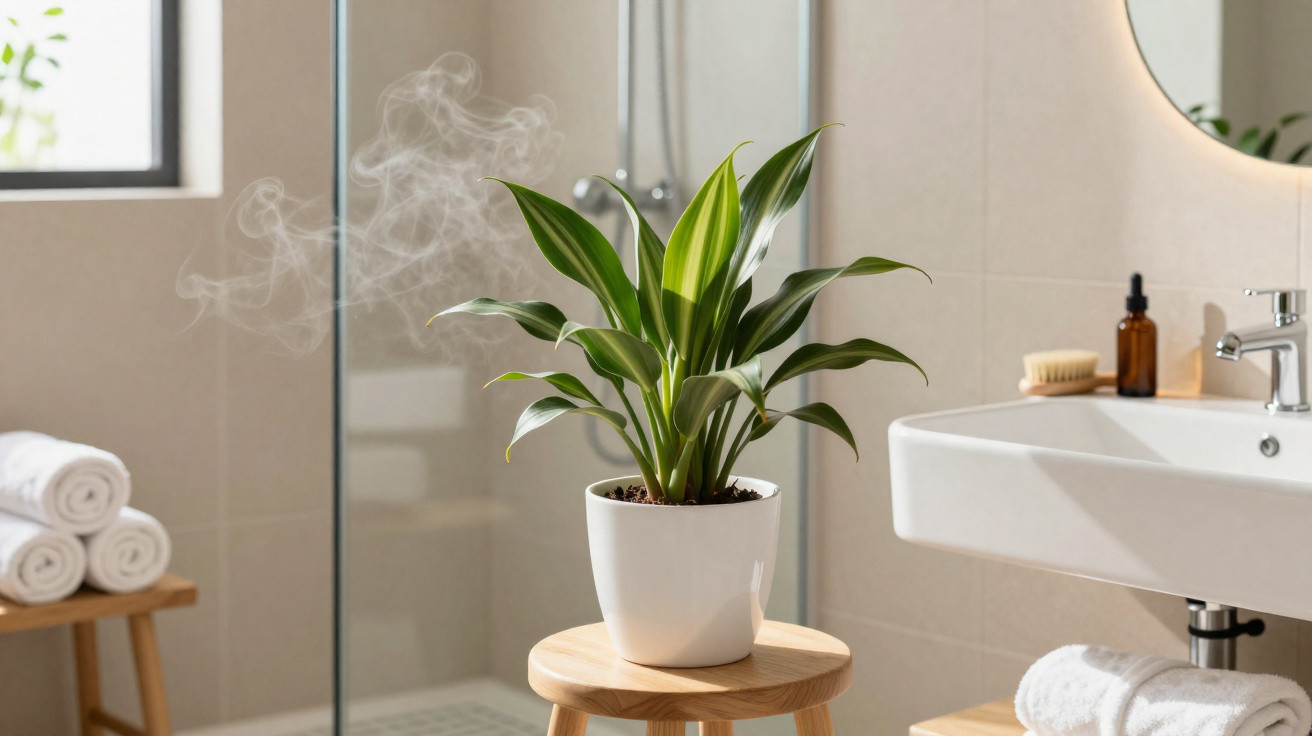
If you step into a tired bathroom each morning-cold ceiling light, yellowing grout lines, and surfaces crowded with bottles-you will know the feeling: it does the job, but it does not feel inviting. Rather than paying for a full renovation, more and more professionals are turning to one simple addition that changes the atmosphere straight away: a compact houseplant that thrives on water vapour and fits even where space is tight.
Why a compact green plant can completely change the bathroom
Bathrooms are often treated as purely practical rooms. Cool tiles, bare walls, harsh lighting-useful, but not especially homely. That is exactly where a small, humidity-loving plant earns its keep. It introduces a natural counterpoint to ceramic and chrome without making the room feel visually cluttered.
"A single pot on the edge of the basin can change the mood in the bathroom more than a new mirror or an expensive shelving system."
Interior designers use plants like this deliberately to soften sterile-looking bathrooms. Compact varieties are particularly popular because they:
- cope well with high humidity,
- take up very little surface space,
- manage in normally bright bathrooms without direct sunshine,
- and do not demand complicated care.
One variety stands out in particular: a compact form of the well-known spider plant, sold under the botanical name Chlorophytum comosum ‘Ocean’.
Chlorophytum ‘Ocean’: small, tough, and made for humid rooms
‘Ocean’ was bred specifically to stay much smaller than traditional spider plants. While older varieties can sprawl out dramatically, this one typically tops out at around 20 centimetres in height. That makes it a strong choice for a narrow windowsill, the edge of the washbasin, or a small wall shelf.
Visually, it looks modern without shouting for attention: the leaves are shorter and broader, the centre is a rich green, and the edges are a pale creamy white. The subtle striping adds structure to a bathroom while keeping the overall look calm.
"The compact spider plant feels almost like a graphic element-alive, but clean and ordered."
Humidity is a benefit, not a drawback
Many houseplants struggle in bathrooms: too damp, too changeable, and often not enough light. With this variety, it is largely the other way round. It is happiest at roughly 40 to 60% humidity-right in the range most bathrooms naturally sit in. After a warm shower, the air can temporarily be much more humid. As long as the room is able to dry out again and there is some light, the plant remains resilient.
That is why it works particularly well in:
- small bathrooms that fog up quickly,
- bathrooms without a radiator but with regular ventilation,
- family bathrooms with frequent use and a daily shower.
How to position the plant properly in the bathroom
The right spot is what makes the difference. This plant prefers bright light, but not harsh glare. Direct sun through a clear south-facing window can scorch the leaves; soft, diffused light suits it far better.
Good places in the bathroom include:
- a windowsill with frosted glass or a semi-sheer curtain,
- a shelf by the mirror, but not directly beneath a hot lamp,
- a small side table next to the bath, provided splashing is limited.
If your bathroom has no window at all, you will need bright artificial lighting that stays on for a decent stretch-ideally a ceiling or mirror light with a daylight-like colour temperature. In completely windowless rooms the plant grows more slowly, but with good lighting it can still cope.
Care: low effort, big impact
The compact spider plant is known for being easy-going. Follow a few basics and it can stay attractive for years.
Water properly rather than topping up every day
Instead of adding tiny amounts constantly, it does better with a clear routine:
- Soak the compost thoroughly until water runs out of the drainage holes.
- Tip away excess water from the saucer after a few minutes.
- Let the top layer of compost dry slightly before watering again.
It does not tolerate waterlogging in a cachepot. A pot with drainage holes is essential, along with a loose houseplant compost that lets water run through easily.
Feed and trim to keep the plant looking neat
From spring through to late summer, the plant benefits from a liquid foliage feed once a month mixed into the watering can. It does not need more than that. In autumn and winter, plain water is usually enough.
If you notice dried or brown leaf tips, simply snip them off with clean scissors. If you want to keep the plant especially compact, you can shorten longer leaves selectively. That encourages side growth and helps maintain a dense, rounded shape.
"With a few trims each year and a little feed in summer, the small green plant stays fresh and presentable long-term."
Interior designers’ styling trick: a bathroom that feels like a mini spa
Interior designers choose the compact spider plant not only for botanical reasons, but also very deliberately as a design tool. In bathrooms with older tiles or slightly yellowed grout, a well-placed plant can pull the eye away from problem areas. Attention shifts from what looks tired to what looks fresh.
It also suits a wide range of styles:
- Scandi look: in a matte, pale ceramic pot next to a wooden vanity unit,
- Clean white bathroom: as a colour accent against white tiles,
- Industrial style: in a dark metal cachepot on a slim wall shelf.
If you like the effect, you can repeat it with several small pots in the same style-one by the basin, one on a cupboard, one on the windowsill. That creates a green thread through the room without making it feel overfilled.
Multiply for free: new plants from offshoots
Over time, many spider plants produce small side shoots with baby plants at the ends. The compact variety usually makes fewer, but the method is the same. Once the little rosettes show the beginnings of their own roots, they can be rooted very easily.
Quick method:
- Carefully separate the offshoot from the mother plant.
- Pot it into a small container with moist compost.
- Keep it lightly moist at first and in a bright spot, but out of direct sun.
In this way, you gradually build up a whole set of bathroom plants for other rooms-or for gifting-without spending anything extra.
What else to keep in mind
Even though it enjoys moisture, the plant still needs fresh air regularly. A bathroom that stays constantly wet and poorly ventilated will, in the long run, damage not only grout and walls but also the plant. A quick burst of ventilation after showering, or an extractor fan that runs on for a few minutes, helps both.
If your tap water is very hard, you may sometimes notice pale deposits on the compost surface or brown tips on the leaves. In that case, it is worth watering occasionally with filtered water or water that has been left to stand.
"The combination of a humid room, fresh air, and moderate light makes the bathroom a surprisingly ideal spot for this mini plant."
More comfort in the bathroom on a small budget
For anyone who wants a more comfortable-feeling bathroom without immediately replacing tiles and furniture, this compact green plant is an easy first step. An inexpensive pot, a bag of compost, and a little attention are enough to turn a purely functional washroom into a noticeably more pleasant space.
Combined with a new shower curtain, a warmer light tone above the mirror, and two or three colour-coordinated towels, a single plant can lift the whole impression-almost as if you have brought a small spa into your own home.
Comments
No comments yet. Be the first to comment!
Leave a Comment