
You’ve scrubbed the terrace, cleaned the paving joints, sprayed natural vinegar - and two or three weeks later dandelions, plantain and the rest are pushing back up between the stones. If that irritating déjà vu sounds familiar, it usually isn’t because you’re doing everything wrong. More often, it comes down to one key mistake: reaching for the joint scraper or the spray bottle at the wrong time. Getting the timing right is the biggest lever for saving yourself work long term.
The real mistake: it’s not the product, it’s the timing
Since chemical pesticides have been heavily restricted for private gardens, many people have turned to household fixes such as vinegar, boiling water or bicarbonate of soda. The problem is that the results often fade quickly. The reason is rarely just the mixture you use - it’s the plants’ biology combined with the calendar.
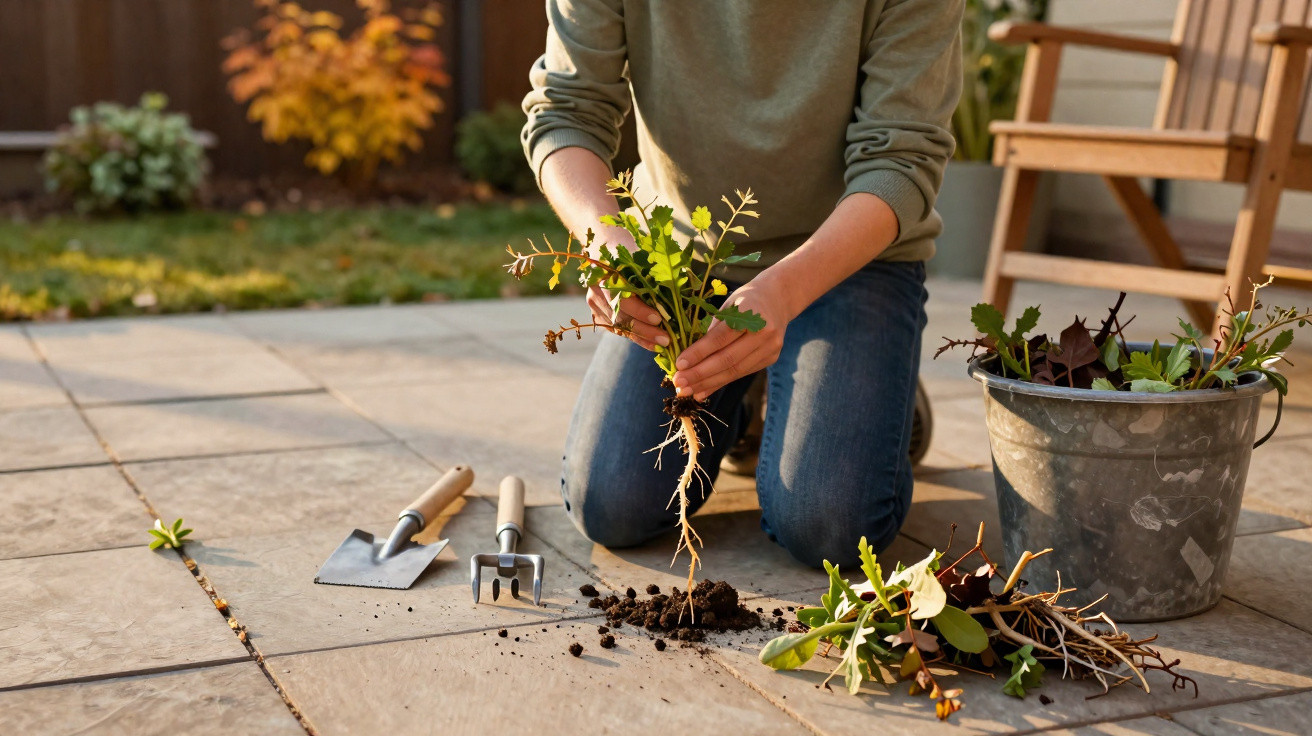
Most typical joint weeds such as dandelion or thistle develop a strong taproot. That root often reaches about 15 centimetres down into the soil. If you simply pull off or snap the growth at the surface, you are essentially removing at most a tenth of the plant’s total mass.
"If around 90 percent of the root remains in the ground, the plant often regrows even more vigorously afterwards - a classic boomerang effect."
That is why gardening associations and specialists advise removing the roots as completely as possible. Even with the right tools, though, the weather ultimately determines whether your effort lasts. Work at the wrong moment and you all but schedule the next round of weeding.
Spring: why it’s better to wait until after mid-May
Many people begin joint maintenance with enthusiasm as early as March. The days are longer, the first mild spells draw you outside - but from a weather point of view, this period is tricky.
March and April are typically changeable, with frequent showers. That creates a real issue for biological contact treatments such as vinegar solutions, plant-based brews and similar preparations: they only affect the plant parts they touch, and they dissolve readily in water.
If heavy rain arrives within 48 hours of application, the active film is washed off the leaves before it can do its job properly. The result is predictable: the visible effect is slight, and the weed recovers quickly.
"The most sensible starting line for major spring weeding is after the period known as the ‘Ice Saints’, meaning roughly from mid-May onwards, combined with at least 72 hours of dry weather."
How to pick the best spring time window
If you want terrace care in spring to be genuinely effective, don’t plan around a spare weekend alone - use a few clear criteria:
- Check the forecast for at least five days
- Aim for a three-day dry window
- The ground and joints should be dry, not soaking wet
- Treat weeds in the morning so sunshine can intensify the effect
- Avoid blanket spraying; work the joints precisely
A simple hands-on check is the so-called tissue test: place a paper tissue over the joints. If it stays dry, the surface and foliage are ready for treatment. If it immediately becomes damp or soaks through, it’s too early.
Autumn: the best time to truly weaken roots
A second - and often decisive - round in the fight against joint weeds comes much later in the year: between early September and the end of October. During this period, many plants run important storage processes.
At that time, the plant shifts sugars and nutrients from the leaves down into the root to prepare for winter. If you intervene mechanically now and lift out the entire plant with its root, you remove a large share of those reserves.
"If you work thoroughly in autumn, you’ll notice it immediately the following spring: fewer new shoots, longer gaps between jobs and overall cleaner surfaces."
Tools and technique for the autumn push
For this targeted work, mechanical aids are the most suitable option:
- Joint knife or a dedicated weed puller with a slim blade
- Asparagus fork or root fork for deep taproots
- Wire brush for moss and fine surface remnants
- Clean, washed sand for refilling the joints
Technique is what makes it effective: place the blade as close to the stem as you can, push it vertically into the joint, then lever the plant upwards with gentle pressure. The ideal situation is when the soil has loosened after rain or thorough watering. Dry, rock-hard joints won’t release roots easily and lead to breakages.
After lifting the weeds, it helps to make a quick pass with a wire brush to clear moss, fine root fragments and loose particles. Then it’s worth filling any gaps with clean sand and sweeping it in well. Fully packed joints leave less space for new seeds to take hold.
Keep your hands off salt and other “miracle cures”
Online, you’ll find countless tips claiming to eliminate weeds “for good” using household products. Table salt in particular is repeatedly promoted as a quick fix. The visible effect can be misleading: leaves wilt and the plant can look scorched in a short time.
But what seems convincing at first can cause damage over time. Salt seeps into the ground, disrupts the balance there, draws out moisture and can worsen soil structure. In paving joints, this creates tension, cracks and unstable areas - and plants often adapt to the stress surprisingly well.
"Salt shifts the problem away from plant growth and towards damaged joints, weakened terraces and stressed soils."
There is also the risk that salty runoff reaches neighbouring beds or drains into groundwater. If you want to protect your terrace, the environment and nearby plants, it’s best to leave the salt shaker solution in the cupboard.
Common mistakes that actually encourage weeds
A lot of well-intended action in spring or summer ends up creating more work rather than less. Three recurring classics are especially common:
- Weeding too early in March or April: household treatments are washed away by rain, while mechanical work only removes the foliage.
- Working on wet surfaces: contact treatments cannot adhere properly, joints smear, and the impact stays weak.
- Quick tearing without proper root removal: the visible part disappears, but most of the plant remains in the ground and regrows in a branched form.
If you avoid these pitfalls and stick to two key timings - mid to late May for contact treatments and September to October for root work - you noticeably reduce the frustrating cycle of “clean - regrow - clean again”.
Why joint weeds seem so persistent
Many weeds that establish themselves in paving joints are among the most adaptable plants of all. They tolerate heat, drought, foot traffic and low nutrient levels. A dandelion’s taproot, for example, stores water and nutrients, allowing the above-ground growth to bounce back quickly after a setback.
There’s also a smart quirk of plant physiology: when the plant tip is removed, dormant buds at the root crown take over. They produce new growth - often with multiple branches. That is why, after a half-hearted attempt at weeding, the area can look greener and denser than before.
Practical add-ons for calmer terraces over time
Alongside correct timing, a few extra measures can make things easier in the long run, including:
- Wider, fully filled joints with firm jointing material or compacted sand, so fewer seeds can lodge.
- Occasional sweeping to stop organic debris and seeds working their way down into the joints.
- Thoughtful plant choices in nearby beds, so heavy-seeding species do not self-sow unchecked.
- Deliberate tolerance in little-used spots: in a few edge areas, a light cover can even be desirable.
If you combine these points with an eye on the calendar, you can save many hours of joint work over the years. What matters is not how aggressively you go after the greenery, but how well your effort matches the plants’ life rhythm and the weather. Align your own weeding plan to mid-May and early autumn, and it can quickly feel as though nature is finally working with you - rather than against you.
Comments
No comments yet. Be the first to comment!
Leave a Comment