
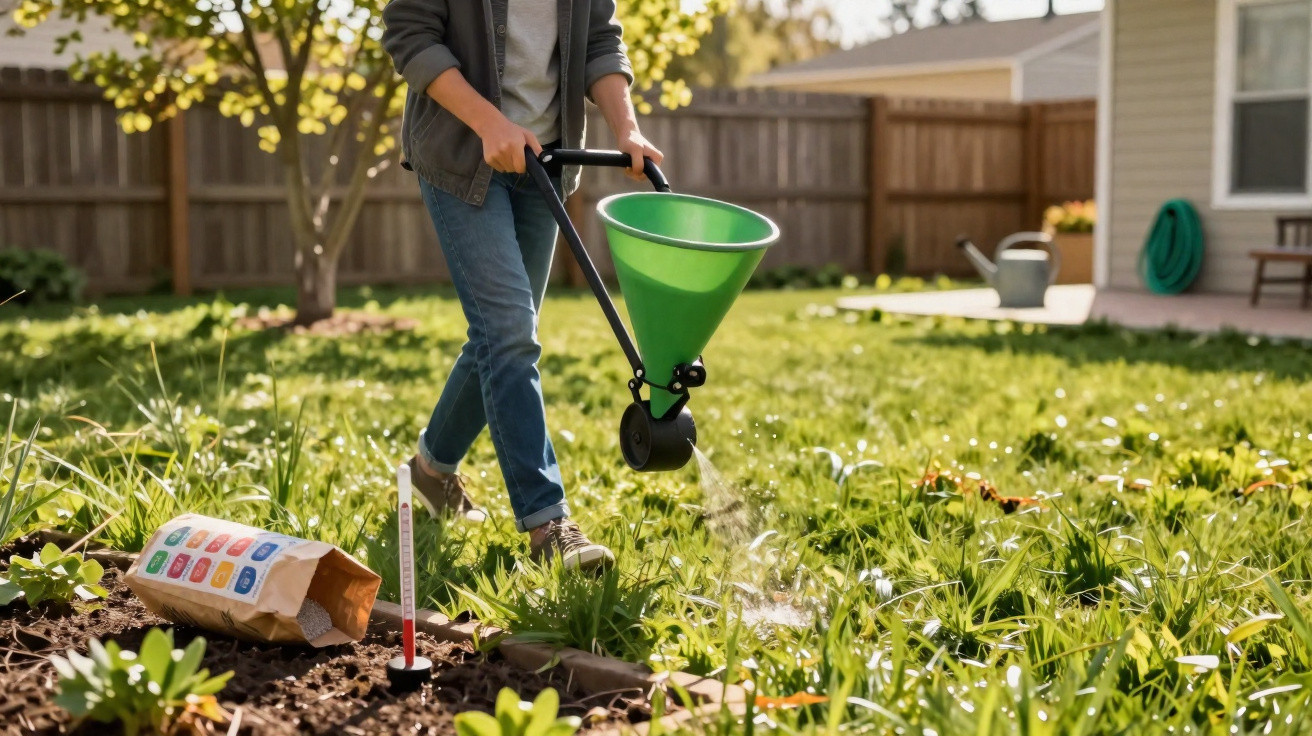
Many amateur gardeners reach for the lawnmower in March and hope for a miracle. In reality, the real turnaround starts underground. If you choose the right moment and the right fertiliser, you can set the groundwork now for a thick, deep-green lawn right through to autumn.
Why spring fertiliser can completely transform your lawn
Spring is the soil’s restart button: temperatures rise, roots wake up, and the grass begins to grow again. At this time of year, turf responds very strongly to nutrients - for better or for worse.
"In spring, you decide whether your lawn just looks ‘fine’ or makes the neighbours jealous."
Lawn fertiliser almost always shows an NPK value, for example 10-2-4. Those numbers refer to three key nutrients:
- N (nitrogen): drives growth and rich green colour
- P (phosphorus): supports strength and encourages root development
- K (potassium): boosts resistance to drought and disease
For most home lawns, two feeds a year are usually enough: one in spring and one at the end of summer or in autumn. If your lawn gets heavy use - children playing, sport, frequent garden parties - you can add a lighter top-up in June.
In spring, the best timing depends largely on soil temperature. Once the ground reaches around 10–12 °C, growth properly kicks in. In many areas that’s roughly March to April, while cooler locations may not get there until May.
Common warning signs that your lawn is crying out for fertiliser include:
- pale green, almost yellow blades
- bare or visibly thin patches
- carpets of moss despite mowing regularly
If you notice more than one of these symptoms, a targeted spring feed is almost always worthwhile.
Which lawn fertiliser makes sense in spring
The big question isn’t only “When?”, but also - and more importantly - “What should I spread?”. Broadly, you have three options: organic, organo-mineral, and purely mineral.
Organic fertiliser: gentle, steady and long-lasting
In family gardens, many people prefer organic feeds. They’re made from natural materials such as:
- dried manure (for example, poultry manure)
- guano
- horn shavings or horn meal
- dried blood meal
- feather meal
They take longer to work, but the effect is more even. Soil microorganisms break the material down and release nutrients gradually. Compared with many mineral products, the risk of “scorching” from overfeeding is much lower.
Also very popular is topdressing:
- Lightly scarify the lawn or scratch the surface with a rake.
- Spread a thin, even layer of mature compost mixed with a high-quality growing medium.
- Rake in gently and, if needed, roll the surface lightly.
This supports soil life, improves structure, and adds nutrients at the same time - without overwhelming the grass.
Organo-mineral fertiliser: the compromise with a turbo boost
If you want visible results within a few weeks, organo-mineral fertilisers are a common choice. They combine organic ingredients with mineral nutrient salts. A typical spring option is a product with NPK 10-2-4.
"Organo-mineral lawn fertiliser gives a quick kick - and still lasts longer than a purely mineral fertiliser."
The nitrogen content helps the lawn green up quickly, while the moderate phosphorus and potassium levels support rooting and resilience. For many well-kept home lawns, this is the best balance between performance and safety.
Mineral fertiliser: highly concentrated, not for the slapdash
Purely mineral lawn fertilisers are very concentrated, for example:
- 30-5-5 with a very high nitrogen level for strong leaf growth
- 12-5-20 with a higher potassium share heading into early summer
Many of these products use controlled, long-term release. That helps reduce the risk of sudden growth spurts and nutrient wash-out during rain. Even so, the rules are strict: follow the stated application rate precisely, never apply in heat, and water the lawn thoroughly afterwards.
If you spread it by hand “roughly by eye”, you’re asking for brown stripes and scorched patches.
Matching spring fertiliser to the condition of your lawn
Case 1: The lawn is thick, but looks washed out
If the turf is basically in good shape and only the colour is disappointing, a gentler approach is often enough:
- apply a light dose of an organic lawn fertiliser
- optionally use coffee grounds - fully dried, spread thinly and lightly raked in - or water in as “coffee liquid” (about 250 g in 15 litres of water)
- optional: water with diluted compost tea every two to four weeks (for example 4 litres per 100 square metres)
This gradually improves colour and strength without pushing the lawn into uncontrolled, leggy growth.
Case 2: A yellow, depleted problem lawn
If the area looks tired, yellow and patchy, it’s time for a clear recovery plan:
- Mow, but not too low (leave 4–6 cm).
- Scarify to remove moss and thatch.
- Apply a thin layer of compost-and-soil mix as topdressing.
- Spread an organo-mineral fertiliser at a moderate rate (for example 10-2-4).
- Water thoroughly.
This gives the grass room to breathe again, supplies fresh nutrients, and encourages the roots to push into new growth.
Case 3: Newly sown lawns in their first year
Freshly sown lawns are sensitive, so the priority here is patience.
- Don’t fertilise until after several cuts, once the blades feel robust.
- Use only low-strength or organic fertilisers at a clearly reduced rate.
- Avoid spreading in strong sun or during dry conditions.
Feeding too early or too heavily can damage young roots and thin the sward, rather than strengthening it.
How to apply lawn fertiliser correctly
Even the best fertiliser won’t help much if it’s spread badly. A few basics make a huge difference:
| Step | What to do |
|---|---|
| 1. Mow | Cut relatively high (4–6 cm) so the surface stays easy to work on. |
| 2. Clear | Remove moss, leaves and thatch; lightly scarify if necessary. |
| 3. Check soil moisture | Slightly moist soil is ideal. Don’t fertilise on bone-dry ground or waterlogged soil. |
| 4. Spread | Use a spreader for even distribution; keep away from bed edges and patios. |
| 5. Water | Water generously straight after feeding so granules dissolve and move into the soil. |
If you don’t have a spreader, it’s worth buying one - even for smaller lawns. It helps prevent overlap and avoids underfed “hunger lines”.
Risks, common mistakes and how to avoid them
Too much fertiliser harms the lawn, the soil and groundwater. Yellow streaks, scorched patches, or rampant, soft growth are classic signs of overdosing. With mineral products, this can happen particularly quickly.
Another frequent mistake is feeding during hot spells. Heat and dryness increase stress on the grass, and the fertiliser can effectively sit on the surface. In spring, it’s better to choose a mild, overcast day and keep an eye on the forecast.
One more factor people often underestimate: nutrients only work properly when the soil isn’t compacted. Areas that get a lot of foot traffic benefit from extra aeration - for example using a spiked lawn roller or specialist aerating sandals.
How fertiliser choice and care affect the lawn long term
Regular feeding with organic or organo-mineral products gradually builds a lively, crumbly soil. Earthworms thrive, water drains more effectively, and grass roots grow deeper. That makes the lawn far more resilient against heatwaves and heavy downpours.
Pure mineral feeding can produce dramatic short-term results, but used incorrectly it can encourage shallower rooting. The lawn can end up like a “high-performance athlete on sugar” - needing constant refuelling and reacting badly to stress.
A thoughtful mix, matched to your garden’s starting point, delivers the most stable results over time. For most private gardens, you’ll do very well by topdressing thoroughly every one to two years, feeding mainly with organic products, and only using a mineral “kick” in targeted situations.
A final practical tip: keep a small lawn diary - or at least notes in your calendar. If you write down the date, the product and the weather, you’ll start spotting clear patterns after a year or two, making it much easier to hit the ideal spring feeding window.





Comments
No comments yet. Be the first to comment!
Leave a Comment