
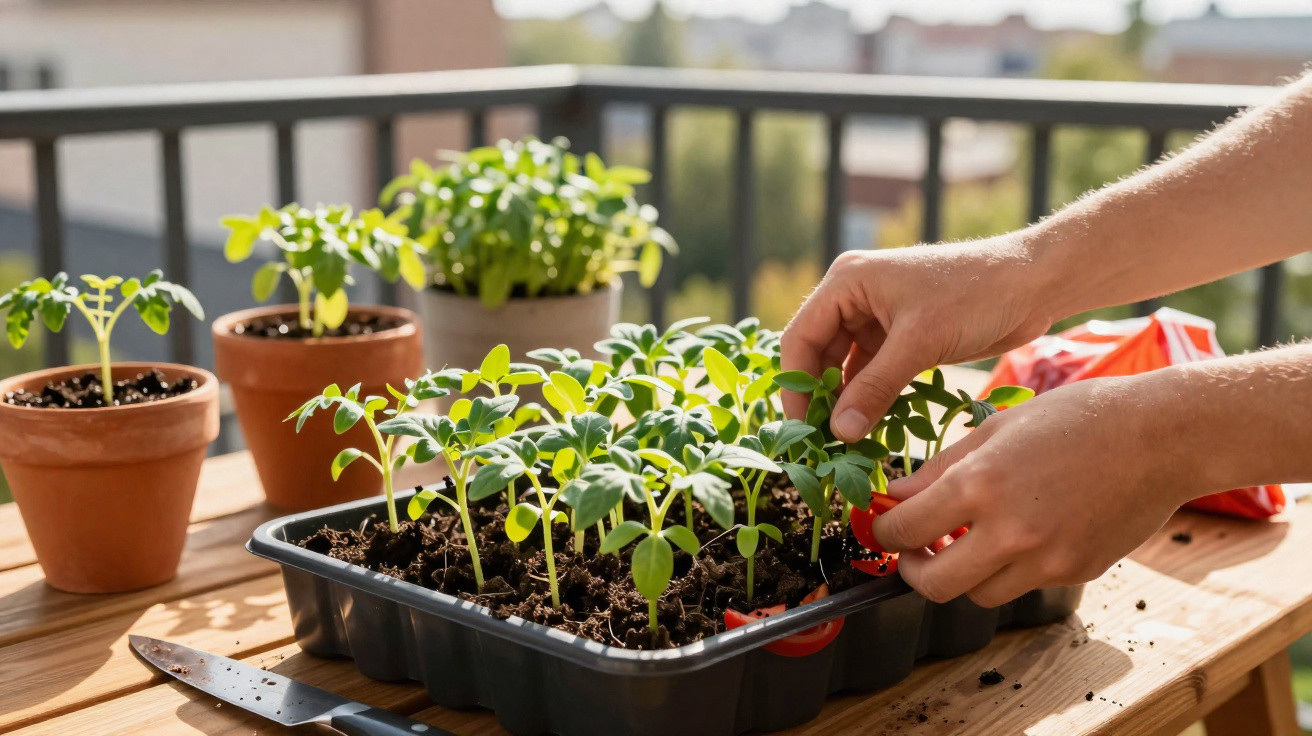
If you want to pick your own tomatoes in summer, you don’t need pricey seed packets or professional-level skills. A British gardening expert shares a surprisingly simple method: one supermarket tomato can produce a whole tray of young plants - perfect for anyone who doesn’t want to miss out on flavourful fruit as food prices rise.
Why a supermarket tomato is suddenly worth a second look
Tomatoes are a kitchen staple. Most people have them in the fridge, yet many still end up buying bland supermarket tomatoes through the warmer months. That’s exactly where gardening professional Simon Akeroyd’s hack begins: instead of starting with a bought seed packet, he uses an everyday supermarket tomato as the starting point.
"The idea: a tomato already contains dozens of viable seeds - you just need to put them in the right environment."
Rather than painstakingly scraping out the seeds, he slices the tomato and places the slices straight into a prepared container. With the seeds still held in the pulp, they’re much easier to sow and spread evenly.
The slice hack: how the method works step by step
Household materials you’ll need
The appeal of this approach is that you’ll likely have almost everything already. All you need is:
- a ripe supermarket tomato (organic is nice, but not essential)
- a shallow plastic tray, such as a fruit or berry punnet
- seed compost or fine multipurpose compost
- a spray bottle or watering can with a fine rose
- a bright, warm spot - for example, a sunny windowsill
Many fruit punnets already have small holes in the base. These act as drainage so excess water can escape. If you’re using a closed container, pierce a few holes in the bottom with a knife or nail to prevent waterlogging.
What to do
- Fill the plastic tray with lightly damp seed compost to a depth of about 2–3 cm, then level it off.
- Slice the tomato into 4–5 pieces around 0.5 cm thick.
- Lay the slices flat on the compost surface, leaving a little space between them.
- Sprinkle a thin layer of compost over the top - just enough so the pulp is no longer visible.
- Mist or water gently until everything is evenly moist, but not soaking wet.
"After around 10 to 14 days, the slices produce a real carpet of tiny tomato seedlings."
That “seed carpet” is the point of the method: one fruit can yield several dozen seedlings, giving you plenty of choice when selecting the strongest plants.
The critical phase: light, warmth and water
For reliable results, the seeds mainly need three things: warmth, light and steady moisture. In many homes, a bright windowsill above a radiator is enough. In mid-summer, however, intense midday sun through glass can become too hot; in spring it’s usually ideal.
The compost should never dry out completely, but it also mustn’t sit in water. A gentle press with your finger is a simple guide: if the surface feels dry, lightly water or mist again.
If your rooms are quite dim, a small LED grow light can help. This is particularly useful in early spring or in more northerly locations where sunshine can be scarce.
Pricking out seedlings: turning the carpet into individual plants
The right moment to move into pots
As soon as the seedlings have developed not only their first seed leaves but also a second pair - the so-called “true leaves” - it’s time for the key task: pricking out, the gardener’s term for separating young plants.
At this stage the seedlings are packed tightly together. If they’re left like that, they’ll compete for light and nutrients, become stunted, and face a higher risk of fungal problems. That’s why only the most vigorous plants are moved on.
How to prick out without damaging the plants
- Lightly moisten the compost in the tray shortly beforehand so it holds together.
- Use a wooden stick, the handle of a spoon, or a dibber to lift individual seedlings carefully.
- Handle seedlings by a leaf, never by the stem - the stem bruises easily.
- Place each seedling into a small pot filled with fresh, loose compost and firm in gently.
- Water in carefully and return them to a bright spot.
"Better to raise ten strong young plants than thirty weak ones - quality beats quantity."
The remaining weaker seedlings can stay in the tray and be composted later. Keeping numbers manageable also makes care easier and reduces disease risk.
When it’s worth starting - and what applies in Central Europe
The timeframe recommended in the UK can be adapted well to Central Europe. The basic rule is the same: tomatoes need a long, warm season. Sow too late and you’ll lose yield; start too early and you’ll end up with tall, leggy plants stretching in the living room.
| Region | Recommended start period |
|---|---|
| milder areas, e.g. the Upper Rhine, Vienna, South Tyrol | late February to mid-March |
| large parts of Germany, Austria, Switzerland | early to late March |
| higher altitudes and very cool regions | mid-March to early April |
The important point is not to move plants outdoors unprotected before the last frosts in mid-May (often referred to as the “Ice Saints” period in parts of Europe). Tomatoes are sensitive to frost. If you don’t have a greenhouse, put the pots outside for a few hours during the day at first, then bring them back in overnight. This gradually acclimatises the plants to wind, temperature swings and direct sun.
Caring for slice-grown tomatoes in summer
Once the young plants are sturdy enough, they can be moved into the ground, into larger pots, or into a grow bag. From this point onwards, they’re no different from tomatoes raised from conventional seed.
- Position: as sunny as possible, sheltered from persistent rain and cold winds.
- Watering: regularly, but avoid splashing water over the leaves - aim for the root zone.
- Feeding: tomatoes are hungry plants and respond well to regular doses of tomato or vegetable feed.
- Support: long canes or strings keep plants upright as they grow.
- Pinching out sideshoots: for cordon tomatoes, remove side shoots from the leaf joints so more energy goes into fruit.
With good care, plants raised from slices will produce lots of flowers from high summer, followed by fruit. Yield depends heavily on variety, weather and nutrient supply, but even a few successful plants can provide noticeable amounts for salads, sauces and snacking.
What to consider with supermarket varieties
One point often sparks debate among gardeners: supermarket tomatoes frequently come from hybrid varieties bred for high yields and durability in transport. Their offspring can vary in growth habit, flavour and productivity.
For a home garden, that doesn’t have to be a drawback. Many hobby gardeners actually enjoy the slight mix of differences between plants. If you want to preserve a specific open-pollinated variety, though, you’re better off using traditional seed.
It’s also worth thinking about disease. Tomatoes from the shop should look healthy - no rotten patches, black spots or mould. Produce in that condition isn’t suitable for eating or sowing.
Why the trick is particularly worthwhile right now
Rising food prices and a growing interest in self-sufficiency make tomatoes an ideal starter project. The plants respond visibly to good care, grow relatively quickly, and reward you with a depth of flavour many people don’t associate with supermarket fruit.
"From a tomato worth maybe about 50p, you can raise young plants that would cost several times more at a garden centre."
The slice trick lowers the barrier to entry: if you’ve never dared to grow vegetables before, you can simply try it on a windowsill. In the worst case, not much happens - in the best case, you end up with a small tomato glut on your balcony or patio.
It’s a fun method for families with children too. Kids can watch tiny plants emerge from a buried slice and later carry red fruit, making food and growing feel real - and enjoyable.
If it whets your appetite, it’s easy to build on the idea: peppers, chillies or cucumbers don’t work in exactly the same slice-based way, but they can also be started off well in small containers. Add a few pots of herbs and, step by step, you’ve got a budget mini vegetable garden - all kicked off with one simple supermarket tomato.

Comments
No comments yet. Be the first to comment!
Leave a Comment