
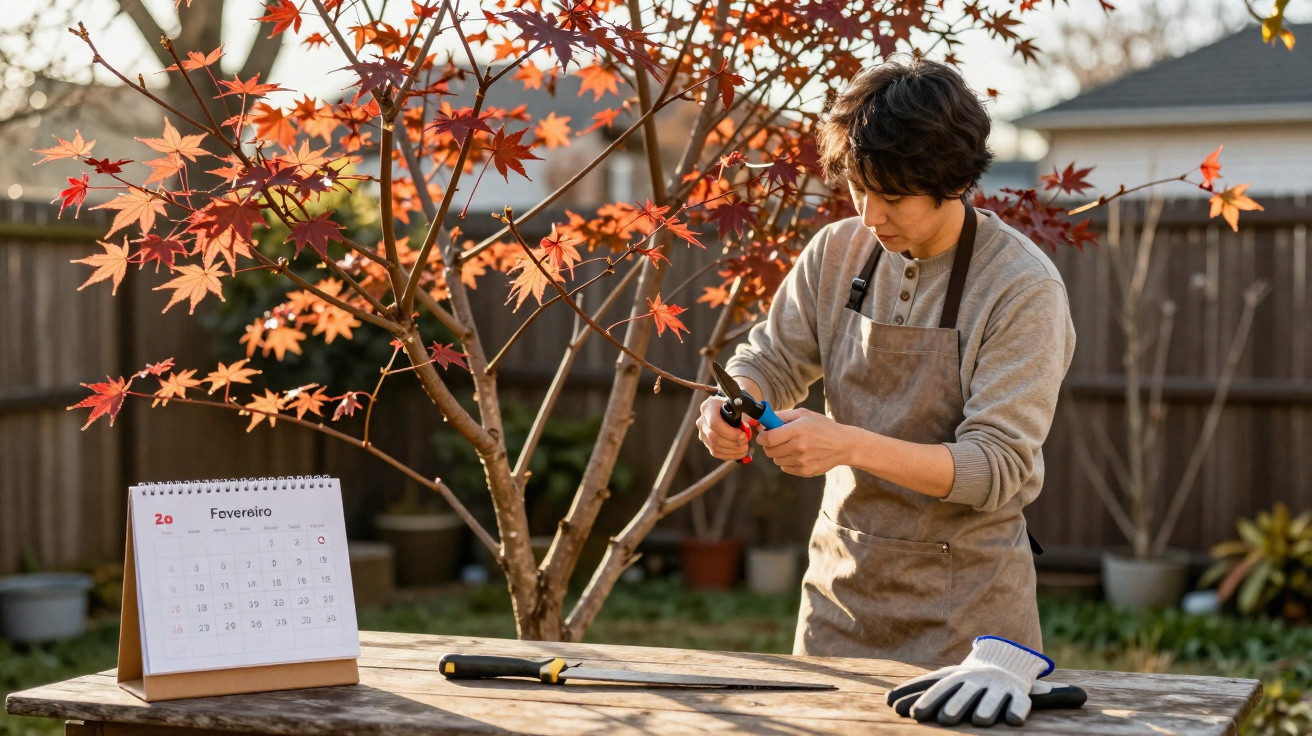
The elegant Japanese maple is often seen as a jewel in the garden - costly to buy, slow to put on growth, and capable of spectacular autumn colour. That is exactly why many owners reach for the secateurs in February to “tidy up” the crown. What feels like sensible maintenance can, at that point, seriously harm the tree and leave it more vulnerable to disease, frost damage and gradual decline.
Why Japanese maples react so sensitively to pruning
Japanese maples (Acer palmatum) grow at a measured pace, have thin bark, and close over pruning wounds slowly. That combination makes them far less forgiving of poor cuts than tougher shrubs or fruit trees.
The timing becomes critical as soon as late winter triggers the start of sap flow. At that stage, sap rises from the roots into the canopy to supply swelling buds. If you remove a thicker limb now, the maple can effectively “bleed”.
"Heavy sap loss weakens the tree, delays wound closure and leaves it wide open to fungi and bacteria."
For this reason, the UK’s Royal Horticultural Society advises pruning Japanese maples only when they are fully dormant - in late autumn or in the depths of winter. With low sap pressure, cuts bleed far less and the tree can cope better with the injury.
February: the last opportunity - and already a risky one
Many home gardeners schedule woody-plant jobs “sometime in February”. With a Japanese maple, that habit can backfire, because February often sits right on the boundary between winter dormancy and the start of spring. In milder spots, the tree may already be plumping buds and mobilising stored reserves.
Professional tree surgeons warn against underestimating this transition. Once the maple is no longer fully dormant, any substantial cut can quickly lead to pronounced sap flow. It may look alarming, but the bigger issue is that it also drains nutrients the tree needs for the season ahead.
- Swelling buds are a clear warning sign: from this point, prune only with great restraint.
- Removing large branches during this phase increases the risk of bleeding and knock-on damage.
- The milder the winter, the earlier sap movement begins - and the “safe window” becomes shorter.
If you garden in a relatively warm climate or a sheltered urban setting, it pays to watch the buds closely rather than relying on the calendar.
Pruning mistakes that put your Japanese maple at risk
A handful of common errors show up again and again in gardens - and Japanese maples tend to suffer the consequences particularly badly:
- Removing large limbs in late winter - often triggers heavy sap flow and creates big wounds that close poorly.
- Taking off more than a quarter of the living crown - places the tree under severe stress.
- Pruning during frost - newly cut wood can split in sub-zero temperatures and may literally burst.
- Using a powered hedge trimmer - shreds fine growth and leaves many small, badly positioned wounds.
"A Japanese maple is far better served by several very gentle interventions spread over years than by one radical operation in a single winter."
How to prune a Japanese maple safely in winter
If you want to look after the tree properly, treat pruning like a minor operation. Care matters more than speed, and attention to detail makes the difference.
Step 1: Prune only during dormant periods
The safest time is late autumn once the leaves have fallen, or mid-winter on days when temperatures stay above freezing. During dormancy, sap pressure remains low.
In February, you are only just about on safe ground if buds are still small and firm and there has not been a prolonged mild spell. Otherwise, it is wiser to postpone major work until the following winter and limit yourself to true emergencies.
Step 2: Focus on dead and unhealthy sections
For most owners, a light maintenance prune is all that is needed:
- remove dead, grey twigs that feel dry and brittle,
- take out diseased or damaged branches,
- cut shoots that cross and rub against each other.
Use sharp, clean tools for every cut. Aim for a smooth cut surface so the maple can callus over more quickly.
Step 3: Place cuts correctly
One frequent mistake is cutting into the main stem or leaving stubs behind. Both make wound closure harder.
A better approach is to cut at the branch collar - the slightly raised area where the side branch joins the larger limb - without damaging the main limb itself. This allows the tree to gradually seal the cut.
| Incorrect cut | Consequence | Better solution |
|---|---|---|
| Leaving a branch stub | a rotting “peg”, an entry point for fungi | cut cleanly at the branch collar |
| Nicking or cutting into the main stem | large wound, slow healing | remove side branches only |
| Many small cuts with a hedge trimmer | countless tiny wounds, unnatural shape | selectively cut individual shoots with hand secateurs |
What to do if you’ve missed the right moment
In real life, you often realise too late that the maple is already “awake”. In that situation, staying calm is more useful than launching into hasty corrective pruning.
- Put major pruning back until next winter.
- Remove only hazardous branches that could snap and cause damage.
- Keep the area around the trunk free of weeds so water and nutrients are not competed away by unwanted plants.
- Apply a thin mulch layer to help the soil stay evenly moist and maintain a more stable temperature.
Rather than cutting during a sensitive period, you can support the tree’s vigour directly: avoid waterlogging, keep the soil open and not compacted, do not hoe aggressively around the root zone, and if in doubt, it is better not to feed at all than to scorch fine roots with a strong general-purpose fertiliser.
How to recognise signs of stress in your Japanese maple
If you learn to read your maple’s response, you can avoid repeating pruning mistakes. Typical warning signs include:
- heavy sap bleeding from older cut sites in late winter,
- bark damage, discolouration, or sunken areas around wounds,
- smaller-than-usual leaves and weak spring growth,
- dieback at the tips, where individual twig ends gradually dry out.
If you notice these symptoms, future pruning should be much more conservative and paired with good site care. In some cases, it is sensible to consult a professional tree-care contractor, particularly for large, mature specimens.
Why Japanese maples have so many fans - and need special care
Japanese maples have been popular for years. They suit small city gardens, front gardens, and even large containers. Their delicate leaves, vivid autumn colour and often sculptural habit make them genuine focal points.
Those very qualities are also why poor use of the pruners is so frustrating: once the crown structure has been spoiled, it can take years to look balanced again. Severe cutbacks destroy the architectural form you effectively paid for when you bought the tree.
"If you think like a surgeon, not a lumberjack, you’ll enjoy your Japanese maple for far longer."
For home gardeners, it is worth committing one simple rule to memory with these sensitive ornamental trees: prune too little rather than too much - and when in doubt, wait until next winter instead of reaching for the saw at the wrong time.
Comments
No comments yet. Be the first to comment!
Leave a Comment